


Key cautions
- Do not use a seed cleanse instead of parasite testing and appropriate treatment, especially in children.
- Avoid medicinal seed use during pregnancy, breastfeeding or attempts to conceive: human safety is uncertain and animal extract studies raise reproductive concerns.
What’s inside
Benzyl glucosinolate (glucotropaeolin), myrosinase and benzyl isothiocyanate; the seed chemistry differs substantially from ripe pulp.
Uses in brief

- Traditional worm-expelling use and small pilot studies exist; evidence is insufficient to replace diagnosis and approved antiparasitic treatment.
History, folklore and reported uses
History, folklore and traditional uses
Papaya is a Central American crop that became widespread in tropical food cultures. The seed has its own history in worm remedies, distinct from eating ripe fruit. Small modern trials investigated that practice but did not establish a general treatment protocol.
Traditional, historical and reported uses
- Traditional worm remedies
Traditional accountWhy this label?
The exact claim is reported traditional seed use for intestinal worms, even though its citation is a pharmacology study.
A pharmacology study records seed preparations used to expel intestinal worms. This is historical documentation, not a recommendation.
- Pepper-like seed seasoning
Food or household practiceWhy this label?
The claim documents pepper-like seed seasoning as a culinary, craft, gardening, or practical material use; it reports neither a treatment outcome nor measured nutrient content.
Oxford botanist Stephen Harris records pungent papaya seeds used as pepper substitutes. This seed-food history is distinct from papaya flesh, leaf remedies and latex-derived papain; it does not validate concentrated seed products or large intake.
- Seed oil in experimental soap making
Laboratory/animal researchWhy this label?
The claim concerns a named experimental seed-oil soap formulation in an agroindustrial study; the research is nonclinical materials/formulation work.
Maciel and colleagues in Brazil used oil recovered from discarded Carica papaya seeds to replace animal fat in a transparent-soap formulation in a 2010 agroindustrial study. This documents modern seed-oil reuse, not a traditional medicine or a home soap recipe.
Only specifically supported historical or culinary uses are included; tradition is not evidence of effectiveness.
Historical-use additions reviewed 2026-10-08
Story sources
- NParks: Carica papaya
- Papaya seed glucosinolate and isothiocyanate composition
- Papaya-seed-fortified school food preliminary trial
- Papaya seed extract and fertility in male rats
- Papaya seed extract and jejunal contractions
- Dried papaya seeds against intestinal parasitosis pilot study
- Stephen Harris, Oxford University Plants 400: Carica papaya
- Maciel et al. (2010): Produção de sabonete translúcido utilizando óleo das sementes de mamão Hawai
Identity & detailed reference
Identity
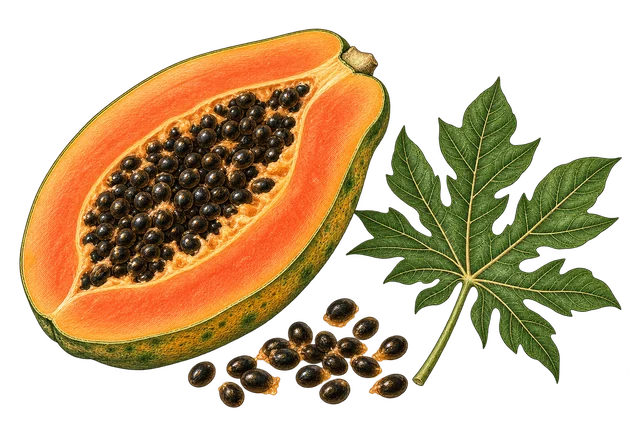
Black seeds from ripe Carica papaya fruit; separate from ripe pulp, green fruit latex, papain enzyme and papaya leaf.
Ingredient details, preparation and research
Also known as: Pawpaw seed (Carica papaya)
Source plant or material
Black seeds from ripe Carica papaya fruit; separate from ripe pulp, green fruit latex, papain enzyme and papaya leaf.
Plant family / material: Caricaceae
Forms and route
Fresh/dried seeds and seed extracts. Trials of particular preparations are not instructions for a home cleanse.
Vitamins and minerals
No nutrient serving is assigned to medicinal seeds or extracts. Do not substitute the familiar ripe-fruit nutrition panel.
Absorption and preparation
Crushing and extraction affect formation of isothiocyanates. Laboratory extraction procedures do not establish a safe or effective household preparation.
Traditional and reported uses
- Traditional worm-expelling use and small pilot studies exist; evidence is insufficient to replace diagnosis and approved antiparasitic treatment.
Contraindications and cautions
- Do not use a seed cleanse instead of parasite testing and appropriate treatment, especially in children.
- Avoid medicinal seed use during pregnancy, breastfeeding or attempts to conceive: human safety is uncertain and animal extract studies raise reproductive concerns.
Similar items and how they compare
- Grapefruit seed
Both fruit seeds have antimicrobial marketing.
Papaya has a glucosinolate/isothiocyanate profile; commercial GSE has separate adulteration concerns.
Human evidence
Small Nigerian and Kenyan pilot studies explored particular seed preparations and parasite outcomes. Their size, setting and design do not establish universal efficacy, species-specific treatment or long-term safety.
Reproductive uncertainty
Some seed extracts impair fertility in male rats. That is not proof that a culinary exposure causes infertility in humans, but it is a reason not to assume repeated medicinal seed use is safe.
Plant-part distinction
Seed analysis found a glucosinolate/isothiocyanate system markedly different from edible pulp. Claims about papain or the nutrients in fruit flesh cannot be transferred to seeds.
Evidence limits
- No safe general medicinal dose or long-term reproductive safety threshold is established.
Entry sources
- NParks: Carica papaya
- Papaya seed glucosinolate and isothiocyanate composition
- Papaya-seed-fortified school food preliminary trial
- Papaya seed extract and fertility in male rats
- Papaya seed extract and jejunal contractions
- Dried papaya seeds against intestinal parasitosis pilot study
- Stephen Harris, Oxford University Plants 400: Carica papaya
- Maciel et al. (2010): Produção de sabonete translúcido utilizando óleo das sementes de mamão Hawai
Reference entry 194 · Recorded content review: 2026-10-07 · Review scope and dates