


Key cautions
- Do not ingest parsley essential oil; apiol and myristicin can be toxic. Medicinal amounts need particular caution during pregnancy or breastfeeding.
- With warfarin, keep vitamin-K-rich food intake consistent and discuss major dietary changes; do not eliminate greens automatically.
What’s inside
Volatile compounds include apiol and myristicin; flavonoids and vitamins occur in leaves, with concentrations differing greatly from essential oil.
Uses in brief

- Culinary seasoning in soups, sauces, salads and finished dishes.
History, folklore and reported uses
History, folklore and traditional uses
Parsley remains a kitchen herb in both curly and flat-leaf forms. It also entered household lactation remedies, but recorded uses conflict: some traditions sought to reduce milk production and others to increase it. Neither direction is established by adequate trials.
Traditional, historical and reported uses
- Fresh seasoning
Food or household practiceWhy this label?
The claim documents fresh seasoning as a culinary, craft, gardening, or practical material use; it reports neither a treatment outcome nor measured nutrient content.
University extension guidance treats parsley as a delicate herb, added near the end of cooking or at serving to preserve flavor.
- Dried herb
Food or household practiceWhy this label?
The claim documents dried herb as a culinary, craft, gardening, or practical material use; it reports neither a treatment outcome nor measured nutrient content.
Commercial parsley is grown for fresh and dried-herb markets.
- Lactation folk practices
Traditional accountWhy this label?
LactMed is cited for conflicting lactation folk practices and poultices, not evidence of a reliable milk-supply or mastitis treatment.
LactMed records poultices for breast discomfort and conflicting milk-supply uses. These reports do not support using parsley to treat mastitis or alter milk production.
Only specifically supported historical or culinary uses are included; tradition is not evidence of effectiveness.
Regional reading paths
These sourced notes describe cultivation, trade, food traditions or material history. A regional connection does not claim exclusive origin.
Europe
Cultivated: UK and wider European herb gardens.
Fresh leaves and stems used as culinary herbs; concentrated extracts are different.
Antarctica
Controlled Antarctic greenhouse research.
Cultivated food crop; not native Antarctic flora.
Identity & detailed reference
Identity
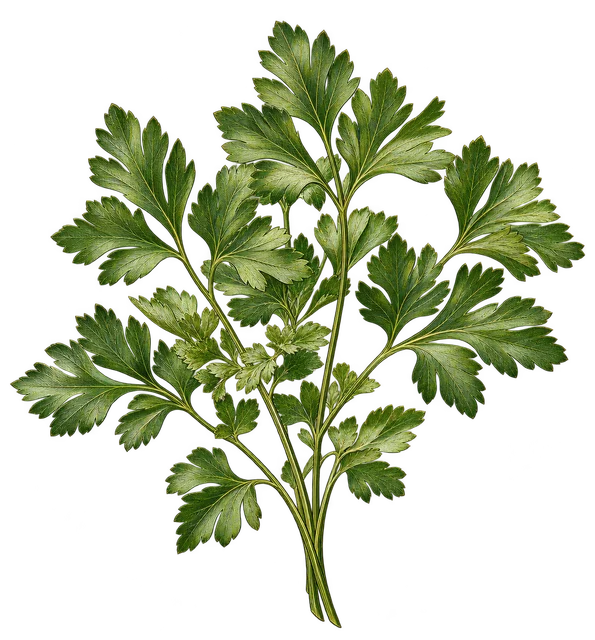
Flat-leaf and curly-leaf culinary parsley; this card focuses on leaves. Seed essential oil and medicinal root/seed extracts are separate materials.
Ingredient details, preparation and research
Also known as: Flat-leaf parsley; Curly parsley
Source plant or material
Flat-leaf and curly-leaf culinary parsley; this card focuses on leaves. Seed essential oil and medicinal root/seed extracts are separate materials.
Plant family / material: Apiaceae
Forms and route
Fresh or dried culinary leaves. Essential oil is much more concentrated and is not a food-equivalent home medicine.
Vitamins and minerals
Portion size matters: a garnish and a parsley-based salad have different nutrient contributions. Vitamin K intake is relevant to warfarin; consistency matters more than avoiding all green foods.
Absorption and preparation
Food nutrients are consumed with the leaves, unlike a strained infusion. No medicinal absorption-enhancing recipe is established.
Traditional and reported uses
- Culinary seasoning in soups, sauces, salads and finished dishes.
Contraindications and cautions
- Do not ingest parsley essential oil; apiol and myristicin can be toxic. Medicinal amounts need particular caution during pregnancy or breastfeeding.
- With warfarin, keep vitamin-K-rich food intake consistent and discuss major dietary changes; do not eliminate greens automatically.
- Apiaceae allergy can cross-react with celery, carrot or fennel. Do not identify wild lookalikes by this card.
Similar items and how they compare
- Cilantro
Another leafy Apiaceae seasoning.
Coriandrum sativum has a different aroma and identity; it is not parsley.
- Lemongrass
Both flavor dishes.
Lemongrass uses aromatic grass leaves/sheaths, not Apiaceae leaves.
Culinary versus medicinal
Culinary leaves are ordinary food. LactMed warns against essential oil because of apiol/myristicin toxicity and notes missing lactation safety data for medicinal products.
Vitamin K and medicines
Warfarin response can change with substantial changes in vitamin K intake. The practical principle is consistency and clinician-guided adjustment, not indiscriminate avoidance of leafy foods.
Evidence limits
No valid trials establish parsley as a way to suppress milk supply. Supplement preparations and dietary portions cannot be treated as equivalent.
Evidence limits
- No medicinal dose or claimed detox effect.
- No nutrient quantities without matching preparation and serving.
Entry sources
- University of Minnesota: Herbs
- University of Maryland Extension: Parsley
- NIH LactMed: Parsley
- NIH ODS: Vitamin K Health Professional Fact Sheet
- NCBI taxonomy: Petroselinum crispum
Reference entry 200 · Recorded content review: 2026-10-07 · Review scope and dates