


Key cautions
- Contains soy; some commercial products also contain wheat or other ingredients. Fermentation does not guarantee allergen removal or gluten-free status.
- A fermented paste may be salty. Check labels and the full dish if sodium intake is being managed.
What’s inside
Soy-derived protein components, amino acids and salt, with other fermentation products. Added grains and maturation alter flavour and composition.
Uses in brief

- Doenjang-jjigae seasoning
- Savoury paste condiment
History, folklore and reported uses
History, folklore and traditional uses
UNESCO documents jang making, keeping and sharing within Korean households. Maangchi describes doenjang as a central seasoning and records its use in familiar family dishes.
Traditional, historical and reported uses
- Doenjang-jjigae seasoning
Food or household practiceWhy this label?
The cited source documents this material, preparation or cultural practice; it does not establish treatment efficacy.
Doenjang provides the flavour base of a soybean-paste stew. Traditional examples may use anchovies, seafood or meat; select a plant-based stock and ingredients for a plant-only dish.
- Savoury paste condiment
Food or household practiceWhy this label?
The cited source documents this material, preparation or cultural practice; it does not establish treatment efficacy.
The finished paste also serves as a concentrated savoury seasoning. Its texture and saltiness vary, so use the actual product rather than substituting an equal quantity of any bean paste blindly.
2 supported featured food or cultural uses; no treatment claim.
Historical-use additions reviewed 2026-10-09
Regional reading paths
These sourced notes describe cultivation, trade, food traditions or material history. A regional connection does not claim exclusive origin.
Asia
Traditional processing: Korea; part of household jang-making culture.
Fermented soybean paste for soups, stews and seasonings.
Identity & detailed reference
Identity
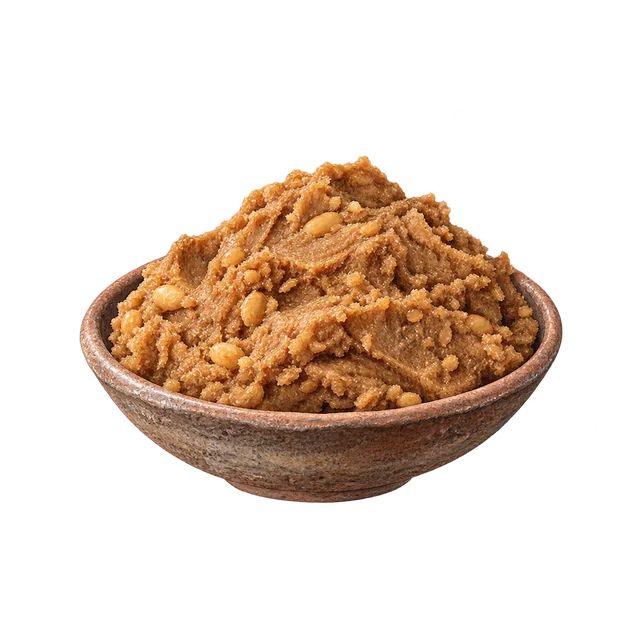
Korean fermented soybean paste, usually centred on Glycine max and traditional meju processing. It differs from Japanese miso, gochujang chilli paste and ordinary tofu; commercial formulations vary.
Ingredient details, preparation and research
Also known as: Korean soybean paste; Doenjang; Meju-based soybean paste
Source plant or material
Glycine max; mixed microbial fermentation
Plant family / material: Fabaceae; additional grain families depend on product
Forms and route
Commercial household-style or factory-produced paste, sometimes with grain ingredients or added seasonings. Ready-made soup bases are composite foods rather than plain doenjang.
Vitamins and minerals
No universal nutrient or sodium amount is assigned. A spoonful used for seasoning is not equivalent to a serving of whole cooked soybeans, and soup dilution changes the measured food.
Absorption and preparation
Fermentation modifies proteins and flavour compounds, but no quantitative improvement in nutrient absorption is established here for all doenjang.
Practical preparation
Use a food product from a reliable maker, follow opening and refrigeration directions and keep utensils clean. Traditional household accounts do not supply a validated modern salt ratio, drying method or aging schedule.
Combination notes
Use with vegetables, tofu or other meal ingredients, checking stock and sauce components if keeping the dish plant-only.
Traditional and reported uses
- Doenjang-jjigae seasoning
- Savoury paste condiment
Contraindications and cautions
- Contains soy; some commercial products also contain wheat or other ingredients. Fermentation does not guarantee allergen removal or gluten-free status.
- A fermented paste may be salty. Check labels and the full dish if sodium intake is being managed.
Heritage evidence has a defined boundary
UNESCO documents knowledge transmission and fermentation practice; the cooking sources document use. They do not establish that one household’s microbes or aging conditions deliver a reproducible clinical benefit.
Evidence limits
Finished seasoning profile; no disease claims or unvalidated home meju/fermentation instructions.
Entry sources
- UNESCO: Knowledge, beliefs and practices of jang making
- Maangchi: Doenjang-jjigae
- Maangchi: Fermented soybean paste
- FDA: Food allergies
Reference entry 366 · Recorded content review: 2026-10-09 · Review scope and dates