


Key cautions
- Use identified culinary fruit and remove the stem and calyx; do not eat unknown nightshade fruits or leaves based on resemblance.
- Eggplant dishes can take up considerable cooking oil. A vegetable ingredient does not make all fried or heavily sauced preparations nutritionally equivalent.
What’s inside
Water and fiber with plant phenolics; purple-skinned varieties contain anthocyanin pigments. Added frying oil and sauces can substantially change the finished dish.
Uses in brief

- Cooked vegetable dishes
- Kyoto Kamo-nasu dengaku
History, folklore and reported uses
History, folklore and traditional uses
Singapore NParks documents brinjal cultivation and cooked use. Japan MAFF records Kyoto’s Kamo eggplant and its dengaku preparation, connecting a particular local cultivar with a recognizable dish.
A closer look at its history
Modern eggplant skin-cancer claims
Dermatologists Janet Li and Jeremy Kampp included eggplant among herbal products advertised online as skin-cancer remedies in their 2019 review. This documents a modern alternative-remedy claim, not an established traditional cure. Edible eggplant is Solanum melongena. Published research on purified Solanum glycoalkaloid creams concerns different preparations and cannot establish that eating eggplant or applying the vegetable treats skin cancer. Do not use raw or applied eggplant in place of skin-cancer care. A changing or persistent skin lesion needs medical assessment.
- Li and Kampp (2019): Review of herbal products marketed for skin cancer
- Royal Botanic Gardens, Kew: Aubergine
- Cham and Meares (1987): Solanum glycoalkaloid cream research
- Punjabi et al. (2008): Randomized study of solasodine glycoside cream
- National Cancer Institute: Skin Cancer Treatment (PDQ), patient version
Additional history reviewed 2026-10-11
Traditional, historical and reported uses
- Cooked vegetable dishes
Food or household practiceWhy this label?
The cited source documents this material, preparation or cultural practice; it does not establish treatment efficacy.
NParks describes the fruit as a cooked vegetable. Different cultivars suit different cuts and cooking methods; choose by culinary texture rather than assuming one colour is universally superior.
- Kyoto Kamo-nasu dengaku
Food or household practiceWhy this label?
The cited source documents this material, preparation or cultural practice; it does not establish treatment efficacy.
MAFF documents the local eggplant served in a dengaku preparation. The seasoned dish includes components beyond eggplant, so its salt and energy depend on the recipe.
2 supported featured food or cultural uses; no treatment claim.
Historical-use additions reviewed 2026-10-09
Regional reading paths
These sourced notes describe cultivation, trade, food traditions or material history. A regional connection does not claim exclusive origin.
Asia
Cultivated: South and Southeast Asia, including Singapore.
Cooked fruit used as a vegetable.
Identity & detailed reference
Identity
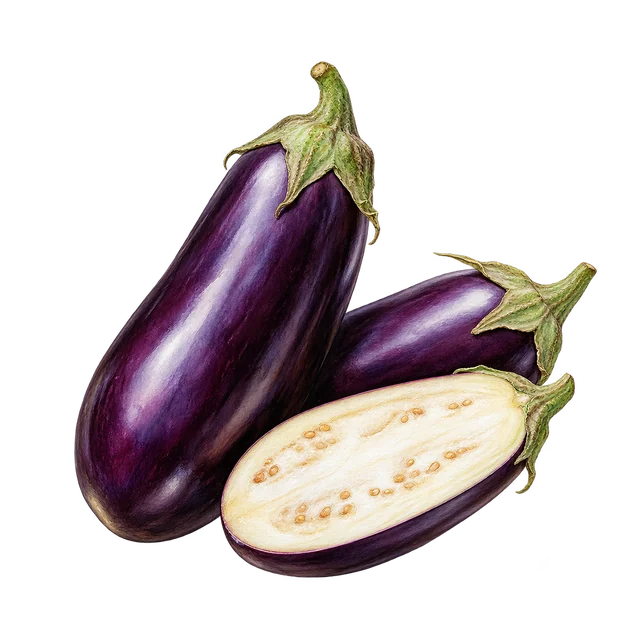
Solanum melongena edible fruit, known as eggplant, aubergine or brinjal. Cultivars differ in size, colour and shape; other Solanum fruits and leaves are not automatically edible substitutes.
Ingredient details, preparation and research
Also known as: Aubergine; Brinjal; Solanum melongena; Nasu
Source plant or material
Solanum melongena
Plant family / material: Solanaceae
Forms and route
Fresh culinary fruit cooked by roasting, steaming, frying or stewing; prepared spreads and regional preserved foods. Leaves and plant extracts are outside this food card.
Vitamins and minerals
No serving-specific nutrient numbers are assigned across varieties and cooking methods. Purple skin pigments are absent or less visible in other colours, but colour alone does not rank overall nutrition.
Absorption and preparation
Cooking changes texture; no special pairing is established to make eggplant compounds act as medicines or to guarantee improved absorption.
Practical preparation
Wash the fruit, trim the stem and cook until the desired tenderness. Salt or soak only when a recipe calls for it; this is a culinary choice, not a universal detoxification requirement.
Combination notes
Count oil, miso, sugar and other sauce ingredients when considering the finished dish.
Traditional and reported uses
- Cooked vegetable dishes
- Kyoto Kamo-nasu dengaku
Contraindications and cautions
- Use identified culinary fruit and remove the stem and calyx; do not eat unknown nightshade fruits or leaves based on resemblance.
- Eggplant dishes can take up considerable cooking oil. A vegetable ingredient does not make all fried or heavily sauced preparations nutritionally equivalent.
Cultivar heritage is more specific than a superfood claim
MAFF’s Kamo eggplant account documents local growing and food traditions. It supports regional identity, not a finding that this cultivar prevents cancer or treats cholesterol problems.
Evidence limits
Culinary fruit only; no leaf, raw-extract or disease-treatment recommendations.
Entry sources
- Singapore NParks: Know ten fruited vegetables
- NParks: Solanum melongena
- Japan MAFF: Kamo-nasu no dengaku
- FDA: Selecting and serving produce safely
Reference entry 360 · Recorded content review: 2026-10-09 · Review scope and dates