


Key cautions
- Do not eat bitter, unidentified melon or gourd flesh. The edible-kernel tradition does not make all parts of all cucurbits safe.
- Buy food-grade kernels with a trustworthy identity and discard moldy or rancid material. Ground oil-rich meal needs suitable sealed, cool storage.
What’s inside
Seed fat, protein and carbohydrate, with fiber and minerals depending on dehulling and processing. Seed composition differs markedly from watery dessert-watermelon flesh.
Uses in brief

- Soup thickener
- Seed paste and meal
History, folklore and reported uses
History, folklore and traditional uses
Cultivated: West Africa, notably Nigeria and Ghana.
A closer look at its history
A seed food with an archaeological surprise
A 2022 ancient-DNA study analyzed a Citrullus seed from Uan Muhuggiag in Libya, dated to 6,182–6,001 calibrated years before present. Much of its genome showed affinity with today’s bitter, seed-use egusi watermelon, but the ancient genomes also contained mixed ancestry from several Citrullus lineages. Predicted bitter flesh and seed damage consistent with human teeth support use of the seeds. This is evidence for an ancient seed-food tradition, not identification of today’s exact cultivar, proof of a fully domesticated crop at that site, or evidence that a present-day West African soup recipe existed there.
Shelling, seasoning and the meaning of egusi
The National Research Council’s 2006 account describes kernels thickening soups, entering steamed dumplings and being roasted into pastes. It names the Nigerian peanut-pepper-egusi accompaniment ose-oji and records fermented seasonings called ogiri-isi in Nigeria and avrouda in Benin. Shelling was also everyday household and market work, observed in Ghana and Cameroon. Crucially, egusi is a food name applied to seeds from several cucurbits. The older chapter’s broad botanical terminology should therefore not erase the species distinctions on this card or make every bitter melon an edible substitute.
Additional history reviewed 2026-10-09
Traditional, historical and reported uses
- Soup thickener
Food or household practiceWhy this label?
The source supports the named food, cosmetic or material practice; no treatment effect is inferred and the card’s form and safety limits remain attached.
The National Research Council describes egusi kernels ground into soups and sauces. The meal supplies texture and richness as part of a complete dish, rather than acting as a medicinal ingredient.
- Seed paste and meal
Food or household practiceWhy this label?
The source supports the named food, cosmetic or material practice; no treatment effect is inferred and the card’s form and safety limits remain attached.
Kew documents West African use of the seeds in stews and soups. A labeled food meal is the practical material; the bitter fruit of egusi watermelon is not thereby established as an edible vegetable.
2 sourced featured uses; cultural or material records are not clinical efficacy evidence.
Historical-use additions reviewed 2026-10-09
Regional reading paths
These sourced notes describe cultivation, trade, food traditions or material history. A regional connection does not claim exclusive origin.
Africa
Cultivated: West Africa, notably Nigeria and Ghana.
Dehulled kernels ground for soups and sauces; exact species should be labeled.
Identity & detailed reference
Identity
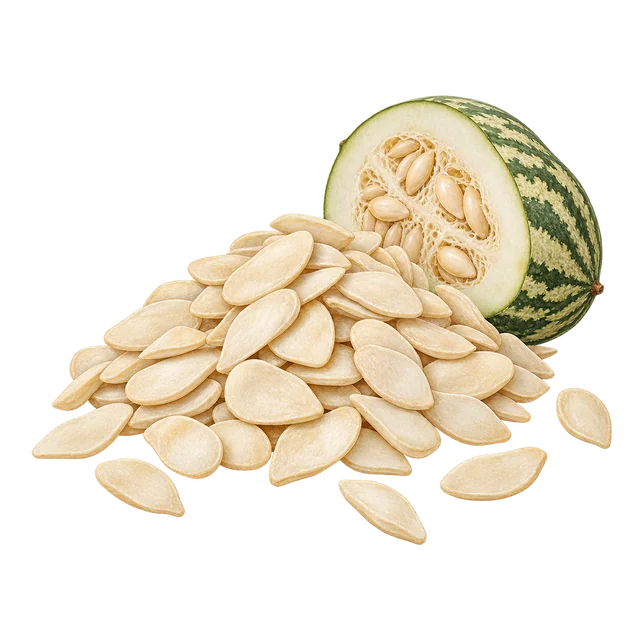
Edible melon kernels marketed as egusi, anchored here to Citrullus mucosospermus. The regional name can also cover other seed cucurbits, including Cucumeropsis mannii; it is not a single authenticated species label.
Ingredient details, preparation and research
Source plant or material
Citrullus mucosospermus and regionally distinct egusi-type cucurbits
Plant family / material: Cucurbitaceae
Forms and route
Dehulled dried kernels and ground culinary meal, cooked in soups and sauces. Fruit flesh, seed oil and concentrated extracts are different materials.
Vitamins and minerals
Kernels provide fat and protein unlike watermelon flesh. A dry-meal analysis cannot stand for a soup containing vegetables, water and additional oil; no universal portion value is assigned.
Absorption and preparation
Grinding and cooking alter texture and digestibility. Mineral content is not equivalent to absorbed mineral, and seed meals contain compounds such as phytate that can influence availability.
Practical preparation
Use purchased culinary kernels or meal in an established cooked recipe. Keep raw seed preparation separate from ready-to-eat food and refrigerate prepared dishes appropriately.
Traditional and reported uses
- Soup thickener
- Seed paste and meal
Contraindications and cautions
- Do not eat bitter, unidentified melon or gourd flesh. The edible-kernel tradition does not make all parts of all cucurbits safe.
- Buy food-grade kernels with a trustworthy identity and discard moldy or rancid material. Ground oil-rich meal needs suitable sealed, cool storage.
Modern identity clarifies older names
Kew recognizes Citrullus mucosospermus and links ancient seed material to this lineage. Older literature often placed egusi within Citrullus lanatus; that nomenclature should not erase the seed-food versus sweet-fruit distinction.
Evidence limits
A culinary group with an explicit species anchor, not a guarantee that every product called egusi has the same botanical identity or nutrient composition.
Entry sources
- National Research Council, Lost Crops of Africa: Egusi
- Kew: Ancient watermelon genome identifies West African egusi
- Kew: Citrullus mucosospermus accepted identity and range
Reference entry 307 · Recorded content review: 2026-10-09 · Review scope and dates