


Key cautions
- Use food-grade Nelumbo seeds, not ornamental seed stock or an unrelated plant bearing the common name lotus.
- Dense whole seeds or paste-filled pastries need age-appropriate textures; fillings may contain additional allergens.
What’s inside
Starch and seed protein, with fiber and other plant constituents. Added sugar and oil can dominate the composition of a commercial pastry filling.
Uses in brief

- Cooked seeds in dessert soups
- Lotus-seed pastry paste
History, folklore and reported uses
History, folklore and traditional uses
NParks links lotus seeds with Chinese mooncake fillings and dessert soups. Kew describes the aquatic source plant; its symbolic importance in Asia does not imply that all plant parts have the same food use.
Traditional, historical and reported uses
- Cooked seeds in dessert soups
Food or household practiceWhy this label?
The cited source documents this material, preparation or cultural practice; it does not establish treatment efficacy.
Seeds are cooked until tender and used in sweet soups, including combinations with dried fruit. The surrounding sweetener and other ingredients determine the final dish’s composition.
- Lotus-seed pastry paste
Food or household practiceWhy this label?
The cited source documents this material, preparation or cultural practice; it does not establish treatment efficacy.
Cooked seeds can be pureed into a smooth filling for mooncakes and other pastries. The Woks of Life documents a cooked paste with added sugar and oil, not a raw medicinal extract.
2 supported featured food or cultural uses; no treatment claim.
Historical-use additions reviewed 2026-10-09
Regional reading paths
These sourced notes describe cultivation, trade, food traditions or material history. A regional connection does not claim exclusive origin.
Asia
Native/cultivated: Asia; Chinese lotus-seed paste tradition.
Cooked seeds or paste in soups and pastries.
Identity & detailed reference
Identity
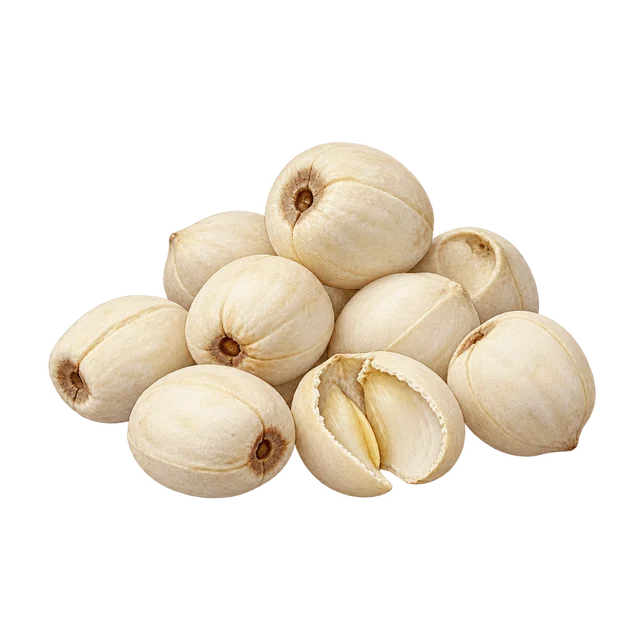
Nelumbo nucifera edible seeds, distinct from the plant’s rhizome and from unrelated water lilies or products called fox nuts. The bitter green embryo may be removed in culinary preparation.
Ingredient details, preparation and research
Also known as: Lian zi; Lianzi; Sacred lotus seeds
Source plant or material
Nelumbo nucifera
Plant family / material: Nelumbonaceae
Forms and route
Fresh peeled seeds, dried hulled seeds and cooked sweet or unsweetened seed paste. Sweetened paste may contain added oil; embryonic-plumule teas are a separate material.
Vitamins and minerals
Dry seeds, hydrated cooked seeds and sweetened paste are different foods. No uniform nutrient serving is assigned, and pastry fillings should not be described as equivalent to plain seeds.
Absorption and preparation
Cooking softens the seed and makes starch accessible for digestion. This does not establish a special medicinal absorption advantage.
Practical preparation
Sort and rinse dried food seeds, follow package soaking guidance, then cook until tender. Remove tough or unwanted parts as the recipe directs; refrigerate cooked seeds and paste rather than keeping moist preparations at room temperature.
Combination notes
Sweeteners, fats and pastry wrappers change the meal; evaluate the finished recipe rather than the seed name alone.
Traditional and reported uses
- Cooked seeds in dessert soups
- Lotus-seed pastry paste
Contraindications and cautions
- Use food-grade Nelumbo seeds, not ornamental seed stock or an unrelated plant bearing the common name lotus.
- Dense whole seeds or paste-filled pastries need age-appropriate textures; fillings may contain additional allergens.
Different parts of one plant
Botanical sources distinguish lotus seed from rhizome, leaves and flowers. Traditional uses of one part cannot be transferred to a concentrated extract or another part merely because they share a species name.
Evidence limits
Food-seed profile; bitter embryo preparations, medicinal dosing and supplement studies are outside scope.
Entry sources
Reference entry 349 · Recorded content review: 2026-10-09 · Review scope and dates