


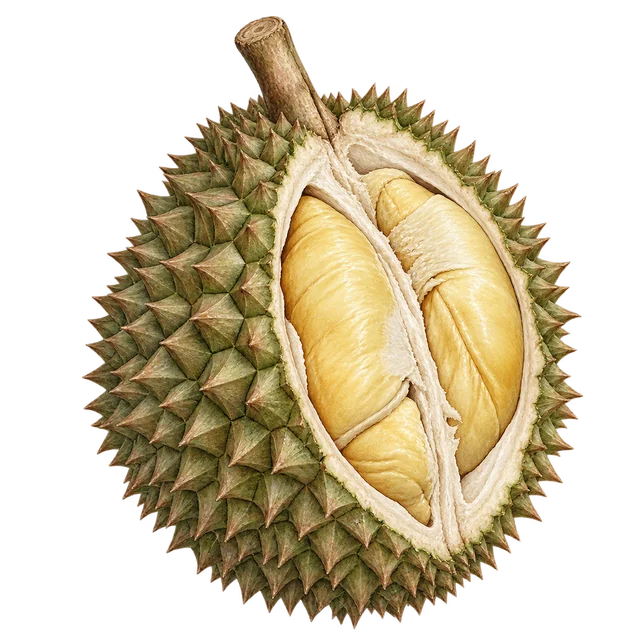
Key cautions
- Spiny rind and a heavy whole fruit can injure hands; buy prepared flesh if safe opening is difficult. Remove hard seeds before serving.
- Use appropriate portions for the full meal and any individual dietary plan.
What’s inside
Carbohydrates, fat and fiber, with a distinctive volatile aroma and minerals that vary among cultivars. Fresh fruit and rich manufactured desserts differ substantially.
Uses in brief

- Fresh ripe arils
- Frozen fruit for later use
History, folklore and reported uses
History, folklore and traditional uses
NParks identifies Sumatra and Borneo in the species’ native distribution. FAO describes durian cultivation and cultivar variation in Vietnam and neighbouring countries; these cultural and crop connections are nonexclusive.
Traditional, historical and reported uses
- Fresh ripe arils
Food or household practiceWhy this label?
The cited source documents this material, preparation or cultural practice; it does not establish treatment efficacy.
The soft flesh is commonly eaten fresh after separating it from the seed and rind. Its strong normal aroma does not eliminate the need to recognize spoilage and handle cut fruit hygienically.
- Frozen fruit for later use
Food or household practiceWhy this label?
The cited source documents this material, preparation or cultural practice; it does not establish treatment efficacy.
FAO describes storing prepared flesh by freezing. Commercial frozen fruit should be thawed and held according to its label, rather than treated as a shelf-stable food after opening.
2 supported featured food or cultural uses; no treatment claim.
Historical-use additions reviewed 2026-10-09
Regional reading paths
These sourced notes describe cultivation, trade, food traditions or material history. A regional connection does not claim exclusive origin.
Asia
Native: Sumatra and Borneo; cultivated across Southeast Asia.
Ripe edible arils, fresh or in desserts.
Identity & detailed reference
Identity
Durio zibethinus ripe edible arils, the soft flesh surrounding the seeds. Other Durio species, the spiny rind and seeds are not interchangeable with this fruit-flesh entry.
Ingredient details, preparation and research
Also known as: Durio zibethinus; Thurian; Sau rieng
Source plant or material
Durio zibethinus
Plant family / material: Malvaceae
Forms and route
Fresh ripe flesh, commercially frozen flesh and desserts made with durian. Prepared sweets may contain added sugar, dairy or coconut ingredients.
Vitamins and minerals
Composition varies among cultivars and ripeness stages. No universal sugar, fat or potassium figure is assigned, and an ice cream or sweet filling is not the same food as plain flesh.
Absorption and preparation
A rich texture or strong smell does not indicate superior nutrient absorption. No special food combination is established as necessary or medically protective.
Practical preparation
Choose sound food fruit or a reliable frozen product. Use clean tools, keep the edible flesh separate from the outside rind and refrigerate promptly after opening; follow commercial thawing directions.
Combination notes
Evaluate added sugar, fats and other ingredients in durian desserts separately from the fruit.
Traditional and reported uses
- Fresh ripe arils
- Frozen fruit for later use
Contraindications and cautions
- Spiny rind and a heavy whole fruit can injure hands; buy prepared flesh if safe opening is difficult. Remove hard seeds before serving.
- Use appropriate portions for the full meal and any individual dietary plan.
Cultivar composition, not a universal value
An original study analysed edible portions of indigenous durian varieties. Such work demonstrates food-composition variation; it does not validate antioxidant-treatment claims or predict every consumer’s nutrient exposure.
Evidence limits
Ripe-flesh food profile; no raw-seed use, alcohol-interaction claim or disease-specific intake advice.
Entry sources
- Singapore NParks: Durio zibethinus
- FAO: Fruits of Vietnam, durian
- Original study: Nutritional composition of indigenous durian varieties, FAO AGRIS record
Reference entry 358 · Recorded content review: 2026-10-09 · Review scope and dates