


Key cautions
- Check the label: red beans may mean a different species, and pastry fillings may include other allergens.
- Mochi or other dense rice-cake accompaniments pose a choking risk for some diners; the bean does not remove that risk.
What’s inside
Starch, protein and fiber in whole cooked beans; seed-coat compounds and moisture vary by processing. Smooth strained paste and sweetened filling are different foods.
Uses in brief

- Anko sweet bean paste
- Regional azuki-zoni
History, folklore and reported uses
History, folklore and traditional uses
Japan MAFF describes azuki use around Lake Shinji in sweet paste and rice preparations. Namiko Hirasawa Chen documents anko as a familiar Japanese dessert ingredient with chunky and smooth forms.
Traditional, historical and reported uses
- Anko sweet bean paste
Food or household practiceWhy this label?
The cited source documents this material, preparation or cultural practice; it does not establish treatment efficacy.
Cooked azuki beans are made into sweet paste for confectionery and fillings. Processing can retain or remove skins, and added sugar changes the finished composition.
- Regional azuki-zoni
Food or household practiceWhy this label?
The cited source documents this material, preparation or cultural practice; it does not establish treatment efficacy.
MAFF records a regional New Year-style preparation using azuki beans with rice cakes. This is a culinary custom, not a claim that celebratory food improves health.
2 supported featured food or cultural uses; no treatment claim.
Historical-use additions reviewed 2026-10-09
Regional reading paths
These sourced notes describe cultivation, trade, food traditions or material history. A regional connection does not claim exclusive origin.
Asia
Cultivated/traditional processing: Japan, including the Lake Shinji region.
Cooked red beans and sweet an paste; also rice dishes.
Identity & detailed reference
Identity
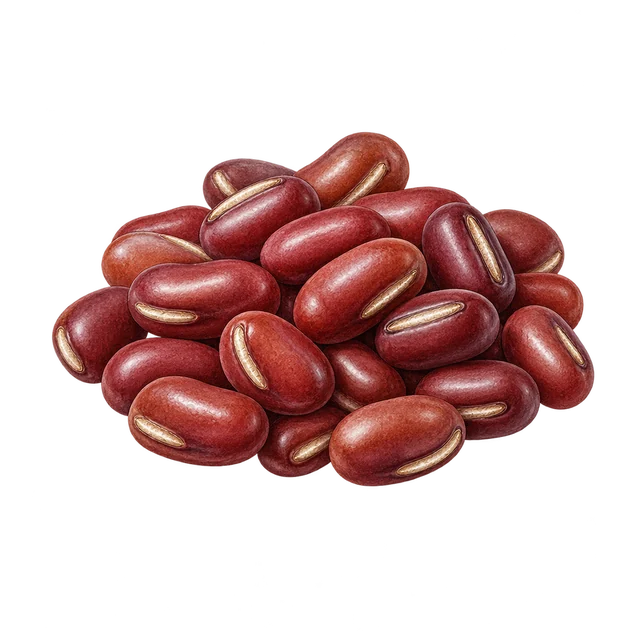
Vigna angularis edible seed, commonly called azuki or adzuki. It is distinct from red kidney bean and mung bean despite overlapping red-bean market names.
Ingredient details, preparation and research
Also known as: Azuki; Adzuki; Vigna angularis; Red adzuki bean
Source plant or material
Vigna angularis
Plant family / material: Fabaceae
Forms and route
Whole dried beans, plain cooked beans and sweetened anko paste, either chunky or smooth. Canned or packaged fillings vary in sugar and other ingredients.
Vitamins and minerals
No universal nutrient value is assigned to plain beans, smooth paste and sweetened commercial anko. Added sugar and water can change serving composition substantially.
Absorption and preparation
Cooking softens the pulse. A dark seed coat or polyphenol measurement does not establish an absorbed antioxidant dose.
Practical preparation
Sort and rinse dried food beans and cook until tender using suitable directions. Refrigerate cooked beans and paste promptly; a sweet taste does not establish shelf stability.
Combination notes
Rice, pastry and sweetener contribute to the finished dish; evaluate those ingredients rather than treating every bean dessert as a plain pulse serving.
Traditional and reported uses
- Anko sweet bean paste
- Regional azuki-zoni
Contraindications and cautions
- Check the label: red beans may mean a different species, and pastry fillings may include other allergens.
- Mochi or other dense rice-cake accompaniments pose a choking risk for some diners; the bean does not remove that risk.
Species and preparation define the food
Kew recognizes V. angularis as its own species. Culinary sources describe processing variants rather than one standardized red-bean paste, so laboratory values for one product should not be generalized to all anko.
Evidence limits
Culinary bean profile; no weight-loss or blood-glucose treatment claim.
Entry sources
Reference entry 355 · Recorded content review: 2026-10-09 · Review scope and dates