


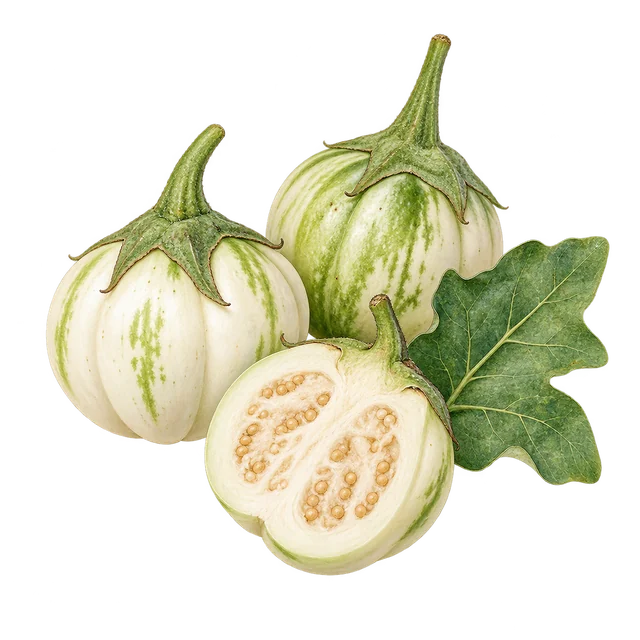
Key cautions
- Do not eat ornamental or unidentified nightshade fruit or leaves. The family includes hazardous species, and this card supplies no field identification method.
- Choose a recognized food cultivar and the edible part intended by the supplier. Some garden-egg varieties are naturally bitter; taste alone cannot identify whether an unfamiliar fruit or leaf is safe to eat.
What’s inside
Fruit water, fiber and phenolic compounds including chlorogenic acid; composition and bitterness vary among accessions and plant parts. Leaf and fruit nutrient profiles differ.
Uses in brief

- Fruit vegetable
- Selected cultivar leaves
History, folklore and reported uses
History, folklore and traditional uses
African domestication/cultivation: West and Central African markets.
Traditional, historical and reported uses
- Fruit vegetable
Food or household practiceWhy this label?
The source supports the named food, cosmetic or material practice; no treatment effect is inferred and the card’s form and safety limits remain attached.
The National Research Council describes garden-egg fruits in regional food use. Use a recognized food variety and the preparation appropriate to it, rather than assuming ornamental fruit is edible.
- Selected cultivar leaves
Food or household practiceWhy this label?
The source supports the named food, cosmetic or material practice; no treatment effect is inferred and the card’s form and safety limits remain attached.
The crop account recognizes edible-leaf uses within appropriate groups. This is a cultivar-specific tradition and does not authorize eating leaves from every eggplant or Solanum plant.
2 sourced featured uses; cultural or material records are not clinical efficacy evidence.
Historical-use additions reviewed 2026-10-09
Regional reading paths
These sourced notes describe cultivation, trade, food traditions or material history. A regional connection does not claim exclusive origin.
Africa
African domestication/cultivation: West and Central African markets.
Edible fruit and, in suitable cultivar groups, cooked leaves.
Identity & detailed reference
Identity
African or scarlet eggplant, Solanum aethiopicum, with edible cultivar groups selected for fruit and sometimes leaves. It differs from common S. melongena eggplant and S. macrocarpon gboma eggplant.
Ingredient details, preparation and research
Also known as: African eggplant; garden egg
Source plant or material
Solanum aethiopicum
Plant family / material: Solanaceae
Forms and route
Food-grade fruits and identified edible-leaf cultivars, used in appropriate regional dishes. Decorative Solanum plants and other nightshades are not substitutes.
Vitamins and minerals
Garden-egg fruit contributes water, fiber and variable micronutrients. Leaf figures and concentrated phenolic-extract measurements must not be assigned to ordinary fruit portions.
Absorption and preparation
Cooking and cultivar influence the food matrix. Chlorogenic-acid content and laboratory reducing capacity do not predict a clinical antioxidant benefit or a specific absorbed dose.
Practical preparation
Wash food-market produce and prepare it in an established recipe. Use leaves only where the food identity is confirmed, and refrigerate cooked or cut material appropriately.
Traditional and reported uses
- Fruit vegetable
- Selected cultivar leaves
Contraindications and cautions
- Do not eat ornamental or unidentified nightshade fruit or leaves. The family includes hazardous species, and this card supplies no field identification method.
- Choose a recognized food cultivar and the edible part intended by the supplier. Some garden-egg varieties are naturally bitter; taste alone cannot identify whether an unfamiliar fruit or leaf is safe to eat.
Breeding collections are not clinical trials
A study compared phenolics and biological assay results among scarlet and gboma eggplant accessions. It demonstrates variability and research potential, not treatment of diabetes, inflammation or another condition.
Evidence limits
Cultivated food types only; no universal edibility claim for Solanum leaves, fruit or ornamental cultivars.
Entry sources
- National Research Council, Lost Crops of Africa: Eggplant
- Primary study: Phenolics in African scarlet and gboma eggplant collections
- FAO: Compendium of forgotten foods and culinary traditions
Reference entry 332 · Recorded content review: 2026-10-09 · Review scope and dates