


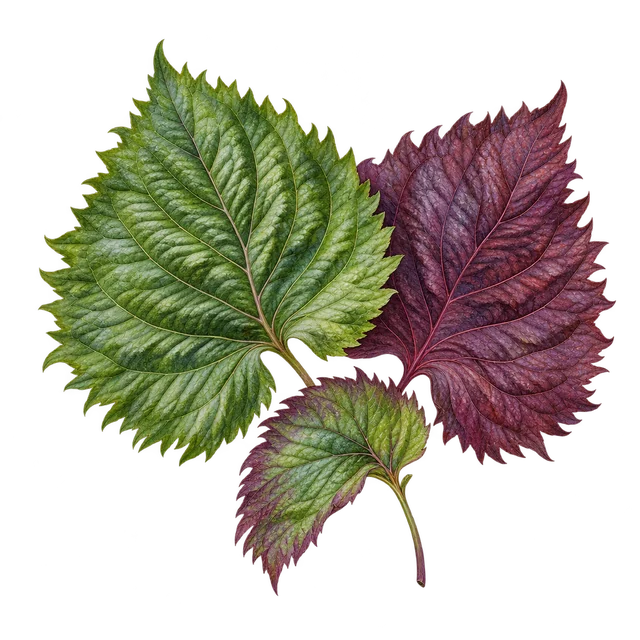
Key cautions
- Identify the purchased leaf; Korean perilla, Japanese shiso and seed oil should not be treated as interchangeable.
- Pickled and salted products may contribute substantial sodium; a fresh-leaf description does not cover a seasoned packet.
What’s inside
Aromatic leaf compounds and plant pigments; red forms contain anthocyanin pigments. Salted or dried seasonings have different sodium and moisture contents from fresh leaves.
Uses in brief

- Fresh green-leaf garnish
- Red-leaf pickle colouring
- Salted leaf ingredient
History, folklore and reported uses
History, folklore and traditional uses
Namiko Hirasawa Chen documents green and red shiso in Japanese cooking. MAFF records red shiso in Kyoto shibazuke and salted leaf production associated with plum-processing traditions.
Traditional, historical and reported uses
- Fresh green-leaf garnish
Food or household practiceWhy this label?
The cited source documents this material, preparation or cultural practice; it does not establish treatment efficacy.
Green shiso accompanies sushi, noodles and other foods for fragrance and texture. Garnishing raw food with a leaf does not sterilize it or replace safe food handling.
- Red-leaf pickle colouring
Food or household practiceWhy this label?
The cited source documents this material, preparation or cultural practice; it does not establish treatment efficacy.
MAFF describes red shiso in Kyoto shibazuke. This is a record of a regional preserved food, not a household fermentation schedule or a guarantee that a jar is shelf-stable.
- Salted leaf ingredient
Food or household practiceWhy this label?
The cited source documents this material, preparation or cultural practice; it does not establish treatment efficacy.
Salted red shiso is used in plum processing and other foods. Read the product instructions and account for salt already present before adding more seasoning.
3 supported featured food or cultural uses; no treatment claim.
Historical-use additions reviewed 2026-10-09
Regional reading paths
These sourced notes describe cultivation, trade, food traditions or material history. A regional connection does not claim exclusive origin.
Asia
Cultivated/traditional use: Japan.
Green leaves garnish food; red leaves colour pickles.
Identity & detailed reference
Identity
Perilla frutescens var. crispa; Japanese shiso leaves. Green and red forms are culinary variants. Korean perilla leaves and perilla seed oil are related but materially different products.
Ingredient details, preparation and research
Also known as: Ooba; Ōba; Aojiso; Akajiso; Japanese perilla
Source plant or material
Perilla frutescens var. crispa
Plant family / material: Lamiaceae
Forms and route
Fresh green leaves, red leaves used in colouring and pickling, dried leaf seasonings and commercially salted leaves. Seed oil is not this leaf food.
Vitamins and minerals
A garnish is a small food portion. No serving-specific nutrient amount is assigned; dried seasonings, fresh leaves and salty pickles differ greatly by weight.
Absorption and preparation
No special combination is established to increase absorption. Red colour indicates pigments, not a measured antioxidant benefit in the body.
Practical preparation
Wash fresh food-grade leaves, dry gently and refrigerate appropriately. Use commercially preserved forms according to their label, and keep prepared foods cold as required.
Combination notes
Use green leaves for fragrance and red forms where their colour is wanted; neither makes a raw dish microbiologically safe.
Traditional and reported uses
- Fresh green-leaf garnish
- Red-leaf pickle colouring
- Salted leaf ingredient
Contraindications and cautions
- Identify the purchased leaf; Korean perilla, Japanese shiso and seed oil should not be treated as interchangeable.
- Pickled and salted products may contribute substantial sodium; a fresh-leaf description does not cover a seasoned packet.
Processing changes the food being described
The MAFF records identify leaf preservation and regional pickle uses. Their cultural specificity is useful, but it does not establish probiotic effects or validate an improvised home-preservation method.
Evidence limits
Identified culinary leaf only; no concentrated perilla-oil or extract claims.
Entry sources
- Namiko Hirasawa Chen, Just One Cookbook: Shiso
- Japan MAFF: Kyoto shibazuke
- Japan MAFF: Salted red shiso geographical indication
Reference entry 347 · Recorded content review: 2026-10-09 · Review scope and dates