


Key cautions
- Begin with a culinary recipe: the tingling may be intense. Stop if irritation or an unexpected reaction occurs.
- Do not use spice or concentrated oil to numb pain, treat a wound or replace dental care.
What’s inside
Sanshool compounds produce tingling, while volatile constituents contribute citrus-like aroma. The sensations and composition vary among species and products.
Uses in brief

- Ground aromatic seasoning
- Mala cooking and infused flavour
History, folklore and reported uses
History, folklore and traditional uses
The Woks of Life documents red and green Sichuan pepper in Chinese cooking, including its partnership with chilli in mala flavours. Several Zanthoxylum species enter the spice trade.
Traditional, historical and reported uses
- Ground aromatic seasoning
Food or household practiceWhy this label?
The cited source documents this material, preparation or cultural practice; it does not establish treatment efficacy.
The dried husks can be toasted and ground for culinary use. Remove gritty seeds and stems according to the product and recipe, rather than grinding every hard fragment.
- Mala cooking and infused flavour
Food or household practiceWhy this label?
The cited source documents this material, preparation or cultural practice; it does not establish treatment efficacy.
Sichuan pepper supplies tingling alongside chilli heat in savoury dishes. Culinary infused oils are prepared food products, not instructions to swallow concentrated sanshool or essential oil.
2 supported featured food or cultural uses; no treatment claim.
Historical-use additions reviewed 2026-10-09
Regional reading paths
These sourced notes describe cultivation, trade, food traditions or material history. A regional connection does not claim exclusive origin.
Asia
Cultivated and traditional use: China, especially Sichuan.
Aromatic fruit husks give characteristic tingling; not Piper peppercorns.
Identity & detailed reference
Identity
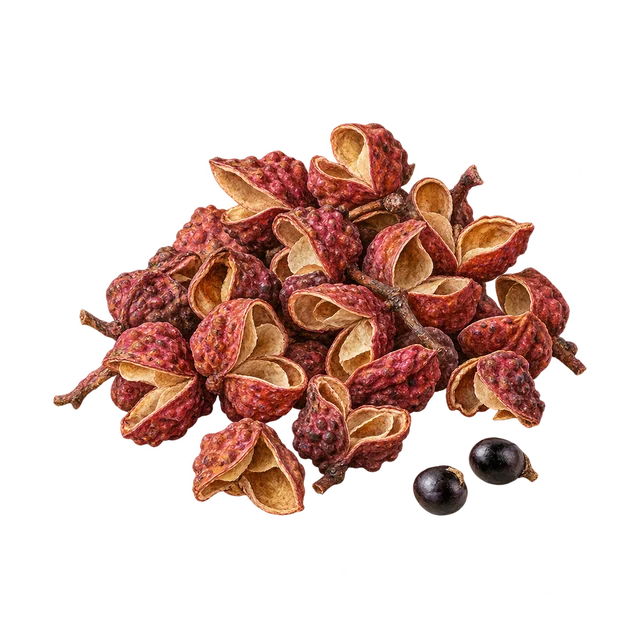
Sichuan pepper is the aromatic fruit husk of food-grade Zanthoxylum species, commonly Z. bungeanum and Z. armatum. It is unrelated to Piper black pepper and Capsicum chilli.
Ingredient details, preparation and research
Also known as: Huajiao; Szechuan pepper; Zanthoxylum pepper
Source plant or material
Zanthoxylum bungeanum and Zanthoxylum armatum
Plant family / material: Rutaceae
Forms and route
Dried red or green husks, freshly ground spice and commercially prepared culinary infused oil. Hard black seeds are commonly removed; concentrated extracts are separate.
Vitamins and minerals
Spice portions mainly contribute flavour. No mineral or vitamin serving amount is assigned, and oil products have a different nutrient profile from husks.
Absorption and preparation
A strong mouth sensation is not evidence of increased nutrient absorption. It reflects sensory stimulation rather than nutritional potency.
Practical preparation
Choose clean, fragrant food-grade husks, store airtight and grind close to use. Follow a reliable recipe when using an infused oil, and observe its storage directions.
Combination notes
Chilli supplies heat and Sichuan pepper supplies a different tingling sensation; one cannot simply substitute for the other.
Traditional and reported uses
- Ground aromatic seasoning
- Mala cooking and infused flavour
Contraindications and cautions
- Begin with a culinary recipe: the tingling may be intense. Stop if irritation or an unexpected reaction occurs.
- Do not use spice or concentrated oil to numb pain, treat a wound or replace dental care.
Human sensory research
A small psychophysical study investigated the vibration-like tingling produced by Sichuan pepper. It explains a sensory phenomenon; it was not a trial showing treatment of neuropathy, pain or disease.
Evidence limits
Culinary and sensory evidence; no therapeutic concentration, safety threshold or foraging identification is supplied.
Entry sources
- The Woks of Life: Sichuan peppercorns
- Hagura et al. (2013): Food vibrations, Asian spice sets lips trembling
- IPNI: Zanthoxylum bungeanum
Reference entry 343 · Recorded content review: 2026-10-09 · Review scope and dates