


Key cautions
- Use identified culinary leaves, not another plant sold under a similar curry name.
- Do not assume curry-leaf extracts, seeds or oils share the safety of a few leaves in food.
What’s inside
Volatile oils give the characteristic aroma; intact leaves also contain fiber and plant pigments. Small seasoning quantities differ from concentrated extracts.
Uses in brief

- Cooked curry and dal seasoning
- Fried or dried savoury flavour
History, folklore and reported uses
History, folklore and traditional uses
NParks records the species across South and Southeast Asia and describes its use in Singapore gardens. Regional cooking preserves a distinctive leaf aroma through fresh, fried, boiled or dried forms.
Traditional, historical and reported uses
- Cooked curry and dal seasoning
Food or household practiceWhy this label?
The cited source documents this material, preparation or cultural practice; it does not establish treatment efficacy.
NParks documents leaves in curries, dal and soups. They are a flavouring ingredient, not evidence that the resulting meal lowers blood glucose or treats digestive disease.
- Fried or dried savoury flavour
Food or household practiceWhy this label?
The cited source documents this material, preparation or cultural practice; it does not establish treatment efficacy.
Leaves can season snacks and other preparations after frying or drying. Added oil and salt belong to the finished dish and should not be presented as inherent leaf nutrients.
2 supported featured food or cultural uses; no treatment claim.
Historical-use additions reviewed 2026-10-09
Regional reading paths
These sourced notes describe cultivation, trade, food traditions or material history. A regional connection does not claim exclusive origin.
Asia
Cultivated and traditional use: Singapore and South Asian food traditions.
Leaves flavour curries, dal, soups and snacks.
Identity & detailed reference
Identity
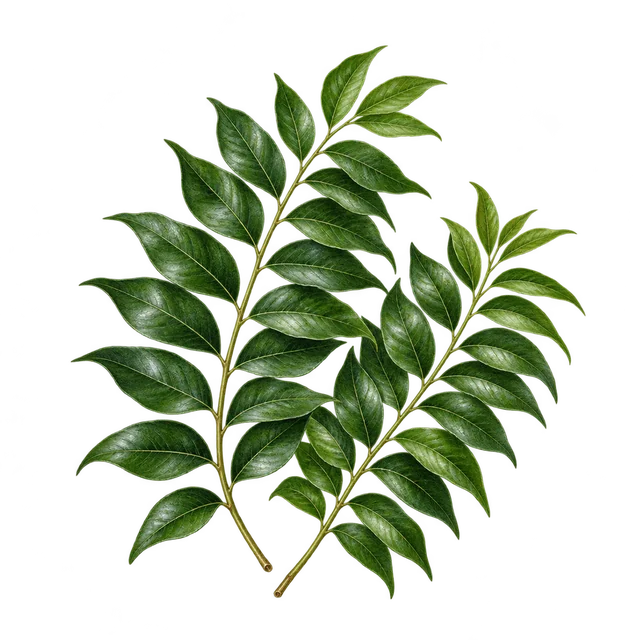
Bergera koenigii, widely known by the synonym Murraya koenigii; the fresh or dried culinary leaf. It is not curry powder, the curry plant Helichrysum italicum or neem.
Ingredient details, preparation and research
Also known as: Murraya koenigii; Bergera koenigii; Curry leaves
Source plant or material
Bergera koenigii (syn. Murraya koenigii)
Plant family / material: Rutaceae
Forms and route
Fresh leafy sprigs, frozen leaves and dried leaves. Seed, bark, concentrated extract and essential oil are outside this culinary-leaf card.
Vitamins and minerals
The amount eaten as seasoning is usually small. No serving-specific vitamin or mineral values are assigned, and values for leaf powder should not describe a strained dish.
Absorption and preparation
Cooking in oil distributes aroma; it is not an established therapeutic absorption strategy for curry-leaf compounds.
Practical preparation
Rinse fresh leaves and dry them well before adding to hot oil to reduce splattering. Remove spoiled leaves and store the remaining product as directed; dried leaves must remain dry.
Combination notes
Use as one aromatic in dal, soups or snacks. It does not replace all the spices in a curry blend.
Traditional and reported uses
- Cooked curry and dal seasoning
- Fried or dried savoury flavour
Contraindications and cautions
- Use identified culinary leaves, not another plant sold under a similar curry name.
- Do not assume curry-leaf extracts, seeds or oils share the safety of a few leaves in food.
A taxonomic name change, not a new ingredient
NParks lists Bergera koenigii with Murraya koenigii as a synonym. This explains why older books and current labels differ. Botanical identification supports the ingredient name without establishing medicinal efficacy.
Evidence limits
Leaf-food and horticultural evidence only; claims about diabetes, hair growth or concentrated preparations are not assessed.
Entry sources
- Singapore NParks: Growing five culinary herbs and spices
- NParks: Bergera koenigii
- NParks: Fort Canning Spice Garden trail
Reference entry 345 · Recorded content review: 2026-10-09 · Review scope and dates