


Key cautions
- Avoid with kidney problems or an advised low-oxalate diet; do not use large portions.
- Contact may cause dermatitis. Cooking is not a guarantee of complete oxalate removal.
What’s inside
Oxalic acid in leaves; tannins increase the bitterness of older foliage.
Uses in brief

- Reference for a traditional cooked spring green, subject to oxalate limits.
History, folklore and reported uses
History, folklore and traditional uses
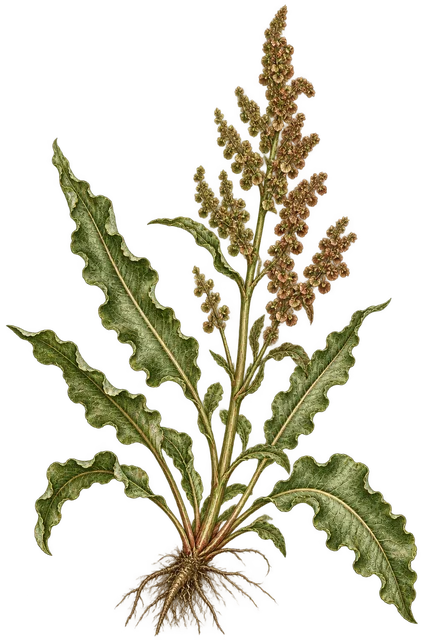
Missouri’s conservation account describes curly dock’s two different household lives: tender spring leaves as greens and roots marketed as yellow dock. It also records seeds ground into flour. Those uses concern different tissues and preparations. The modern caution belongs in the same story: the leaf’s tartness comes with oxalates, and older leaves become bitter rather than becoming a better medicine.
Traditional, historical and reported uses
- Spring potherb
Food or household practiceWhy this label?
The claim documents spring potherb as a culinary, craft, gardening, or practical material use; it reports neither a treatment outcome nor measured nutrient content.
MDC records young leaves cooked in changes of water.
- Seed flour
Food or household practiceWhy this label?
The claim documents seed flour as a culinary, craft, gardening, or practical material use; it reports neither a treatment outcome nor measured nutrient content.
The same account records ground seed use, without supplying a validated household safety protocol.
- Yellow root dye
Food or household practiceWhy this label?
The claim documents yellow root dye as a culinary, craft, gardening, or practical material use; it reports neither a treatment outcome nor measured nutrient content.
The SERNEC botanical account records Pima, Cheyenne and Choctaw use of Rumex crispus roots for yellow dye. This nonfood root use is distinct from cooked young leaves.
Only specifically supported uses are included; historical or culinary use is not clinical proof.
Historical-use additions reviewed 2026-10-08
Identity & detailed reference
Identity
Rumex crispus; young leaves are a recorded wild green. Medicinal yellow-dock root is a separate material.
Ingredient details, preparation and research
Source plant or material
Rumex crispus L.; Rumex crispus; young leaves are a recorded wild green. Medicinal yellow-dock root is a separate material.
Plant family / material: Polygonaceae
Forms and route
Prepared young leaves; historical ground seeds; separate root products requiring their own review.
Vitamins and minerals
No verified serving-based nutrient estimate is supplied; the amount remaining after repeated boiling is not interchangeable with raw-leaf data.
Absorption and preparation
No absorption-boosting regimen is established. Oxalate concerns take priority over claims that a wild green is a superior mineral source.
Practical preparation
MDC describes young leaves boiled in changes of water. Treat this as a documented practice, not a safety certification for an unknown plant or a therapeutic root preparation.
Traditional and reported uses
- Reference for a traditional cooked spring green, subject to oxalate limits.
Contraindications and cautions
- Avoid with kidney problems or an advised low-oxalate diet; do not use large portions.
- Contact may cause dermatitis. Cooking is not a guarantee of complete oxalate removal.
Similar items and how they compare
- Wood sorrel
Both have tartness and oxalate concerns.
Oxalis stricta is unrelated at family level.
- Garden sorrel
Both belong to Rumex.
R. acetosa is a distinct cultivated leaf crop; do not substitute species by name alone.
Food and root are separate
This card does not recommend root tincture, laxative dosing, or treating anemia with dock. The reviewed source establishes use history rather than clinical benefit.
Livestock evidence stays in context
Oregon State’s livestock warning supports the presence of concerning oxalates, but animal poisoning observations do not establish a human safe dose.
Individual oxalate advice
Stone-prevention diets depend on stone type and individual findings. Do not restrict dietary calcium on your own or treat this plant card as an individualized kidney diet.
Entry sources
- Missouri Department of Conservation: Curly dock
- Oregon State Extension expert response: Curly dock and livestock oxalate toxicity
- National Kidney Foundation: Kidney stone diet plan and prevention
- SERNEC herbarium portal: Rumex crispus ethnobotany
Reference entry 178 · Recorded content review: 2026-10-07 · Review scope and dates