


Key cautions
- No RDA or UL is not proof of unlimited safety.
- Oral food-grade products and inhaled industrial crystalline-silica dust are distinct exposures.
- EMA warns that horsetail may be adulterated with Equisetum palustre when gathered by unqualified people. Its traditional-use assessment does not support use in children under 12. Oral use is not recommended in pregnancy or breastfeeding; topical use is not recommended in pregnancy, and preparations should not be applied to the breast during breastfeeding. Oral horsetail can also cause mild stomach or gut complaints.
- Kidney disease and long-term supplement use deserve individual review. The U.S. reference assessment reports rare silicon-containing urinary stones associated with prolonged high antacid intake; this is not evidence that ordinary silicon-containing foods cause stones. Bring antacids, botanical products and supplements to a medication review rather than counting only products labeled silicon.
- Amorphous does not mean safe to inhale. Avoid breathing powders; respiratory symptoms after substantial workplace silica exposure require assessment of the exposure and the lungs, not a dietary “detox.” The separate research discussion explains crystalline-silica disease and why industrial powders and desiccants are not oral substitutes.
What’s inside
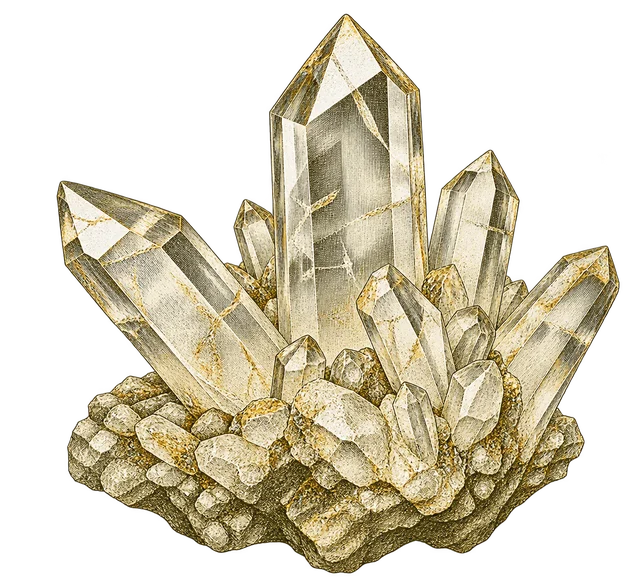
Silica is silicon dioxide, SiO2. Quartz is crystalline silica; food-additive E 551 is synthetic amorphous silica, meaning it lacks that ordered crystal structure. Orthosilicic acid is a small soluble silicon-containing molecule. Choline-stabilized orthosilicic acid is a formulated preparation, not powdered quartz. Silicone, with an extra “e,” refers to polymers used in products such as sealants and some cosmetics.
Royal Society of Chemistry: Silicon, element information and history · EFSA (2024): Silicon dioxide E 551 re-evaluation, plain-language summary · Sripanyakorn et al. (2009): The comparative absorption of silicon from different foods and food supplements
Identity and human requirement
Silicon is an element; silica is its dioxide. Neither a human RDA nor AI has been established, and the U.S. reference review could not set a silicon UL. Animal connective-tissue observations do not establish a required human supplement. Likewise, “plant silica” is not enough to identify the botanical species, extraction method or available silicon.
Institute of Medicine (2001): Dietary Reference Intakes, silicon section
Read the amount as well as the ingredient
Milligrams of silicon describe the element’s mass, not the total weight of silica, an extract or a capsule. The words “plant silica” do not specify the species, plant part or extraction. A dried herb’s composition also cannot be transferred directly to its infusion: EMA notes that only part of horsetail’s silicon-containing material is water-soluble.
Sripanyakorn et al. (2009): The comparative absorption of silicon from different foods and food supplements · EMA (2016): Assessment report on Equisetum arvense L., herba
Uses in brief

- Some defined preparations have preliminary skin, hair or bone research.
- Food and water contribute silicon without an established intake target.
History, folklore and reported uses
From flint to an isolated element
Sharp flint supplied early cutting tools, while rock crystal and sand entered crafts and glassmaking. The material was familiar long before its chemistry was understood. Gay-Lussac and Thénard produced an impure form of silicon in 1811; Berzelius obtained relatively pure silicon in 1824. These histories concern minerals, tools and chemical discovery, not an ancient practice of taking purified silicon supplements.
Royal Society of Chemistry: Silicon, element information and history
Horsetail for urinary flushing
EMA records preparations of the aerial parts of Equisetum arvense L., including herbal tea, juice and extracts, for increasing urine flow in minor urinary complaints. Its conclusion rests on long-standing use; the small clinical study it considered was insufficient to establish clinical efficacy. This does not demonstrate a diuretic effect for isolated silicon.
Horsetail for superficial wounds
The separate external tradition uses horsetail preparations on superficial wounds. EMA records infusions or decoctions applied to skin and notes the absence of clinical wound-treatment studies in its assessment. An oral silica capsule is neither the same preparation nor the same route.
The modern beauty-supplement story
BioSil’s own timeline dates its company foundation to 1994 and its first drops in U.S. health-food stores to 1995. Its current collagen, skin, hair and nail positioning centers on choline-stabilized orthosilicic acid. This documents a modern commercial formulation history; the manufacturer’s explanations and claims are not a substitute for the individual trials. Bone-support research on this preparation is described separately in the research section.
BioSil: Company and product timeline · BioSil: Science and product description · Spector et al. (2008): Choline-stabilized orthosilicic acid with calcium and vitamin D in osteopenic women
Skin measurements and self-rated brittleness
Barel and colleagues’ 2005 study assigned 50 women with photodamaged facial skin to oral choline-stabilized orthosilicic acid providing 10 mg silicon daily or placebo for 20 weeks. Skin roughness measures moved in a favorable direction with the preparation. Hair and nail brittleness ratings improved compared with the treated group’s own starting scores; that comparison alone does not establish a benefit over placebo. This small, preparation-specific study does not establish treatment of skin disease or hair loss.
Barel et al. (2005): Oral choline-stabilized orthosilicic acid in women with photodamaged skin
Hair-fiber strength is not hair regrowth
Wickett and colleagues studied 48 women with fine hair in a randomized, double-blind trial: 10 mg silicon daily as choline-stabilized orthosilicic acid or placebo for nine months. Mechanical testing found less deterioration in some strength and elasticity measures with the preparation. Hair cross-sectional area increased against baseline in the treated group. These are measurements of hair fibers, not proof of reversing baldness or reducing shedding, and the trial amount is not a general supplement recommendation.
Wickett et al. (2007): Hair tensile strength and morphology in women with fine hair
Identity & detailed reference
Identity
Silicon is an element; silica is silicon dioxide. Human essentiality and a required intake are not established. Soluble silicon compounds and particulate silica are not interchangeable.
Ingredient details, preparation and research
Source plant or material
Silicon occurs in foods, water and minerals. Extracts may have plant origins, but isolated silicon compounds have no single botanical source.
Plant family / material: Not applicable to silicon or silica. A plant extract must be identified separately by species.
Forms and route
Silicon dioxide, orthosilicic acid and stabilized preparations; some products contain botanical extracts. The chemical form and labeled silicon amount matter.
Food sources
Grains, green beans, bananas and drinking water contribute variable silicon. Available data are not sufficiently standardized for universal food rankings or percent-requirement claims.
Vitamins and minerals
One small study measured 13.6 mg silicon in 250 g peeled banana and 6.1 mg in 250 g cooked green beans. Scaled to ordinary portions, that is approximately 6.4 mg in a medium banana (118 g) or 1.5 mg in 1/2 cup cooked beans (about 63 g); these are illustrative study-based estimates, not universal composition values.
Absorption and preparation
Form and solubility affect absorption. Small human studies measured different uptake from foods and preparations; a better-absorbed form has not thereby been shown to improve health more.
Combination context
Eat silicon-containing foods for their overall nutrition. No required silicon pairing or evidence-based silicon-to-calcium ratio is established. Calcium/vitamin D used alongside silicon in a trial does not prove that everyone needs the combination.
Nutritional role and uses
Marketed for skin, hair, nails and bone support. Small human studies of particular preparations are preliminary; they do not establish a general need for silicon supplements or reliable fracture or hair-loss treatment.
Contraindications and cautions
- No established RDA, AI or UL means insufficient evidence, not that unrestricted supplement amounts are safe.
- Long-term and pregnancy-specific supplement evidence is limited; kidney disease or ongoing medicines warrant product-specific review.
- Do not substitute industrial powders or desiccants for an oral product. Avoid inhaling dust; crystalline-silica inhalation is a separate, serious lung hazard.
- EMA warns that horsetail may be adulterated with Equisetum palustre when gathered by unqualified people. Its traditional-use assessment does not support use in children under 12. Oral use is not recommended in pregnancy or breastfeeding; topical use is not recommended in pregnancy, and preparations should not be applied to the breast during breastfeeding. Oral horsetail can also cause mild stomach or gut complaints.
- Kidney disease and long-term supplement use deserve individual review. The U.S. reference assessment reports rare silicon-containing urinary stones associated with prolonged high antacid intake; this is not evidence that ordinary silicon-containing foods cause stones. Bring antacids, botanical products and supplements to a medication review rather than counting only products labeled silicon.
- Amorphous does not mean safe to inhale. Avoid breathing powders; respiratory symptoms after substantial workplace silica exposure require assessment of the exposure and the lungs, not a dietary “detox.” The separate research discussion explains crystalline-silica disease and why industrial powders and desiccants are not oral substitutes.
Similar items and how they compare
- Boron
Both trace elements appear in products marketed for bone or connective-tissue support, while neither has an established human dietary requirement.
They are different elements with different chemistry; shared marketing does not establish matching biological functions.
- Calcium
Both appear in bone-oriented supplement discussions; this comparison concerns intended use rather than equivalent structural or nutritional roles.
Calcium’s essential skeletal role is established; silicon’s essentiality and required human intake remain unestablished.
Common uses and evidence boundary
Hair, nail, skin and bone claims usually concern a specific soluble preparation, not every product labeled silica. Biological plausibility, a food-intake association and an improvement in a laboratory marker are different kinds of evidence. They do not establish a universal product recommendation or a treatment for osteoporosis or hair loss.
A bone trial in context
A 12-month placebo-controlled study randomized 184 women with low bone density; 136 completed it. Everyone also received calcium and vitamin D. One collagen-formation marker improved with choline-stabilized orthosilicic acid without a clear dose response; lumbar-spine bone density did not improve significantly. This does not establish fracture prevention or equal results from silica powder.
Food estimates with explicit limits
In a small absorption experiment, 250 g banana supplied 13.6 mg silicon and 250 g cooked green beans supplied 6.1 mg. Scaling those particular samples gives about 6.4 mg for 118 g banana (one medium fruit) and 1.5 mg for 63 g beans (about 1/2 cup). These are illustrative calculations, not USDA silicon analyses or targets; soil, preparation and sample differences matter.
Absorption and chemical form
That experiment involved only small groups, often five people, and used short-term blood/urine measurements. Silicon availability differed markedly between green beans, bananas, soluble forms and colloidal silica. Its main lesson is that total content and absorption differ. The percentages should not be used as universal meal calculators or evidence that maximizing uptake improves outcomes.
Food additive safety has a specific scope
In 2024 EFSA found no safety concern for evaluated uses of E 551, a synthetic amorphous silica anticaking agent, while noting characterization and toxicology uncertainties. That assessment concerns the specified food additive and exposure conditions. It neither establishes a nutritional requirement nor validates every high-dose supplement, botanical powder or industrial silica source.
Inhalation is a different route
Respirable crystalline-silica dust can cause irreversible silicosis and other serious disease. This occupational inhalation evidence should not be presented as if it were a study of dietary silicon or food-grade amorphous silica. Conversely, ordinary oral exposure data do not make inhaling any powder safe. Industrial or unidentified powders and desiccant packets are not supplement substitutes.
Practical cautions and related nutrients
A missing UL reflects limited evidence, not permission for unlimited intake. Review prolonged supplement use, kidney disease, pregnancy or lactation with a qualified professional. Silicon cannot replace established calcium needs. Boron shares an unestablished human requirement but has different chemistry and its own safety limits; neither automatically improves the other’s uptake.
Evidence limits
- Silicon food quantities are explicitly scaled from one research study; household weights are approximate USDA portion references, not a comprehensive silicon database.
- Absorption endpoints, bone markers and clinically meaningful outcomes are distinguished. No dosage or clinical benefit is inferred for unspecified silica products.
- Food-additive assessment and inhaled crystalline dust are kept separate from oral supplement claims.
Entry sources
- National Academies: Dietary Reference Intakes, boron and silicon sections, 2001
- Sripanyakorn et al.: comparative silicon absorption from foods and supplements, small human study, 2009
- Spector et al.: choline-stabilized orthosilicic acid with calcium/vitamin D, 12-month randomized trial, 2008
- EFSA: Re-evaluation of silicon dioxide E 551, 2024 summary
- CDC/NIOSH: Silica and Worker Health, July 2026
- Sripanyakorn et al.: full food-composition and absorption methods, 2009
- ATSDR: Silica ToxFAQs, crystalline and amorphous exposure distinctions
- USDA FoodData Central: SR Legacy records 173944 and 169141 (household weights only)
- NIH ODS: Boron, consumer fact sheet
Reference entry 60 · Recorded content review: 2026-10-05 · Review scope and dates