


Key cautions
- Purchase identified culinary Rhus coriaria rather than using a general wild-sumac identification.
- Some products contain added salt or other ingredients. Stop using any food that causes an allergic reaction; family membership alone does not predict individual tolerance.
What’s inside
Organic acids provide tartness, with pigments and polyphenols in the fruit. Added salt and processing change the finished seasoning.
Uses in brief

- Palestinian musakhan seasoning
- Finishing tartness
History, folklore and reported uses
History, folklore and traditional uses
Palestinian cook Wafa Shami describes sumac-rich musakhan, with onions and bread. Regional food accounts also place the spice alongside grilled foods and salads, illustrating a culinary tradition rather than a medicinal dose.
Traditional, historical and reported uses
- Palestinian musakhan seasoning
Food or household practiceWhy this label?
The cited source documents this material, preparation or cultural practice; it does not establish treatment efficacy.
Sumac seasons the onions and other components of musakhan. The documented dish traditionally includes chicken; the spice itself is plant-derived and may also season vegetables.
- Finishing tartness
Food or household practiceWhy this label?
The cited source documents this material, preparation or cultural practice; it does not establish treatment efficacy.
Ground culinary sumac can provide a sour accent alongside grilled foods or vegetables. Salted blends contribute sodium as well as flavour, so taste and read the label.
2 supported featured food or cultural uses; no treatment claim.
Historical-use additions reviewed 2026-10-09
Regional reading paths
These sourced notes describe cultivation, trade, food traditions or material history. A regional connection does not claim exclusive origin.
Asia
Traditional processing/use: Palestine and neighbouring West Asian cuisines.
Ground dried fruit provides tartness, including in Palestinian musakhan.
Identity & detailed reference
Identity
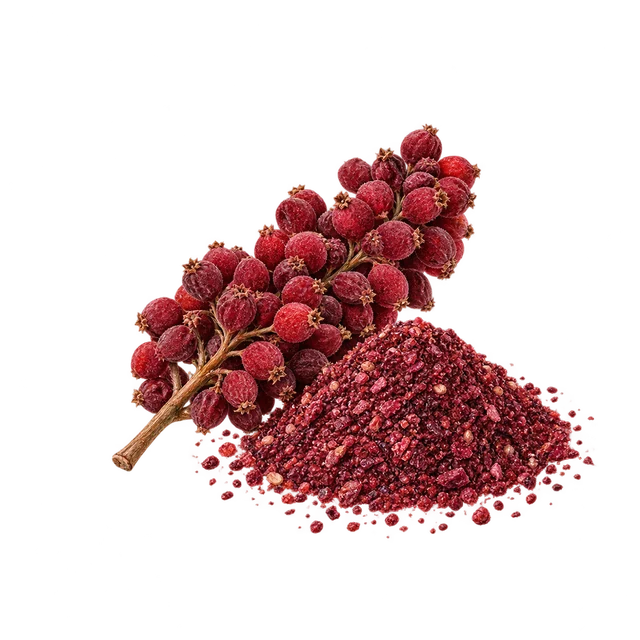
Culinary sumac is the dried fruit preparation of Rhus coriaria. It is not a generic label for every plant called sumac, and it does not authorize gathering look-alike wild plants.
Ingredient details, preparation and research
Also known as: Rhus coriaria; Summaq; Culinary sumac
Source plant or material
Rhus coriaria
Plant family / material: Anacardiaceae
Forms and route
Ground dried fruit, sometimes sold with salt; whole dried culinary clusters in some markets. Tea, bark products and extracts are separate materials.
Vitamins and minerals
No nutrient amount is assigned for a garnish. Whole berries, sifted powder and salted preparations are not interchangeable food-composition samples.
Absorption and preparation
Tart flavour does not demonstrate enhanced absorption of iron or any other nutrient. No special pairing is needed to make sumac medically active.
Practical preparation
Keep the powder dry, tightly sealed and away from light. Use a culinary recipe; discard moldy or contaminated product. Dried spice is not sterile and should be handled with clean utensils.
Combination notes
Use with onions, bread or cooked vegetables for acidity; account for salt already present in the dish.
Traditional and reported uses
- Palestinian musakhan seasoning
- Finishing tartness
Contraindications and cautions
- Purchase identified culinary Rhus coriaria rather than using a general wild-sumac identification.
- Some products contain added salt or other ingredients. Stop using any food that causes an allergic reaction; family membership alone does not predict individual tolerance.
Botany and kitchen evidence answer different questions
Kew supports the identity of R. coriaria; the regional food sources support particular culinary uses. Neither establishes that a sprinkle has the effects claimed for concentrated antioxidant extracts.
Evidence limits
An identified culinary-fruit profile, not a foraging guide or a clinical review of sumac extracts.
Entry sources
- Palestine in a Dish: Chicken musakhan
- Kew Plants of the World Online: Rhus coriaria
- Food and Travel: A cook’s guide to sumac
Reference entry 342 · Recorded content review: 2026-10-09 · Review scope and dates