


Key cautions
- Count kola toward total caffeine exposure from coffee, tea, energy drinks and supplements. It can interfere with sleep and cause unwanted stimulant effects.
- Pregnancy, breastfeeding, childhood and caffeine-sensitive conditions require particular caution and individualized advice. Do not combine unmeasured extracts with other stimulants.
- Persistent fatigue deserves assessment rather than escalating kola intake. Do not substitute Garcinia kola or unidentified seeds.
What’s inside
Caffeine and related methylxanthines, tannins and other phenolic constituents. Species, seed condition and preparation affect stimulant exposure, which cannot be judged reliably from common name alone.
Uses in brief

- Traditional chewing
- Beverage ingredient
History, folklore and reported uses
History, folklore and traditional uses
Native/cultivated: West Africa, including Nigeria and Côte d’Ivoire.
A closer look at its history
Kola linked forest markets with the savanna
Historian Paul Lovejoy’s study of nineteenth-century Hausa kola trading follows merchants from the Sokoto Caliphate through Borgu, Dagomba and Gonja to Asante markets. They exchanged goods including textiles, salt and leatherwork for kola nuts. A round journey from Kano to Asante could take six months to a year, and large caravans included families as well as pack animals. Kola therefore belonged to a substantial inland commercial system connecting ecological regions, not merely to the later story of a flavoring in bottled soft drinks.
Trade depended on relationships as well as transport
Lovejoy distinguishes merchants based in the Caliphate from residents of trading communities along the route toward the middle Volta basin. His analysis shows how Islamic affiliations and dispersed settlements supported commercial ties across long distances, while commerce also extended religious and social connections. This places kola within a history of specialist traders and institutions rather than presenting trade as a simple journey by anonymous travelers. It is a specifically nineteenth-century Hausa–Asante account; it should not be generalized into a claim that all West African kola customs had one origin or one religious meaning.
Additional history reviewed 2026-10-09
Traditional, historical and reported uses
- Traditional chewing
Traditional accountWhy this label?
An attributed cultural or herbal practice is recorded; it does not establish treatment benefit or a safe medicinal dose.
FAO records kola seed chewed as a stimulant. This documents a longstanding practice and caffeine exposure; it is not a suggestion to chew seeds for persistent fatigue.
- Beverage ingredient
Food or household practiceWhy this label?
The source supports the named food, cosmetic or material practice; no treatment effect is inferred and the card’s form and safety limits remain attached.
FAO records kola in beverage flavoring. A finished drink’s caffeine, sugar and other ingredients require its own label; the word cola does not authenticate the botanical source.
2 sourced featured uses; cultural or material records are not clinical efficacy evidence.
Historical-use additions reviewed 2026-10-09
Regional reading paths
These sourced notes describe cultivation, trade, food traditions or material history. A regional connection does not claim exclusive origin.
Africa
Native/cultivated: West Africa, including Nigeria and Côte d’Ivoire.
Caffeine-containing seeds traditionally chewed or used in beverages.
Identity & detailed reference
Identity
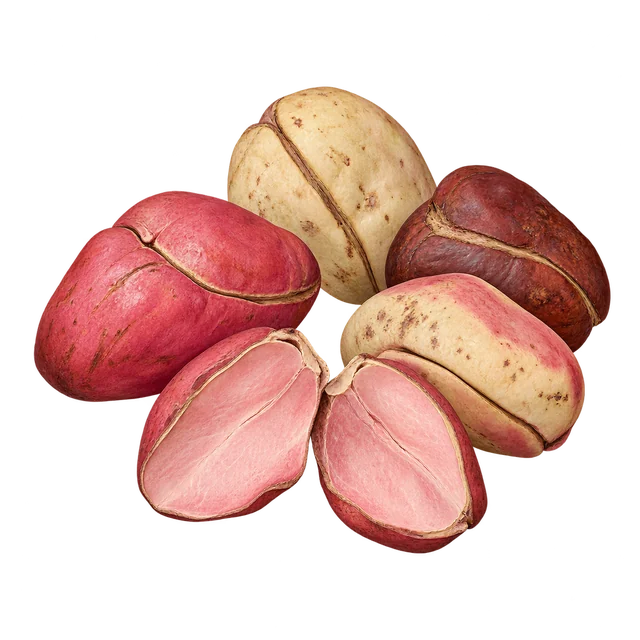
The caffeine-containing seeds of Cola nitida and Cola acuminata. Kola is not Garcinia kola, often called bitter kola, and not every modern cola drink contains kola seed.
Ingredient details, preparation and research
Source plant or material
Cola nitida and Cola acuminata
Plant family / material: Malvaceae (formerly Sterculiaceae)
Forms and route
Fresh or dried seed used in cultural chewing traditions, ground ingredients and formulated beverages. Standardized herbal products and concentrated extracts have different exposures.
Vitamins and minerals
Kola is not presented as a substantial nutrient food. The small cultural serving and caffeine exposure are more relevant than nutrient percentages from a dry-seed assay.
Absorption and preparation
Caffeine is pharmacologically active after ingestion. Ground seed, chewed seed and extracts differ; no safe dose can be inferred from seed count or color here.
Practical preparation
For a formulated food or beverage, follow its ingredient and caffeine labeling. No medicinal chewing schedule, extract dose or home concentration recipe is provided.
Traditional and reported uses
- Traditional chewing
- Beverage ingredient
Contraindications and cautions
- Count kola toward total caffeine exposure from coffee, tea, energy drinks and supplements. It can interfere with sleep and cause unwanted stimulant effects.
- Pregnancy, breastfeeding, childhood and caffeine-sensitive conditions require particular caution and individualized advice. Do not combine unmeasured extracts with other stimulants.
- Persistent fatigue deserves assessment rather than escalating kola intake. Do not substitute Garcinia kola or unidentified seeds.
Regulated herbal assessment is preparation-specific
EMA identifies the two Cola species in its seed assessment, while EFSA evaluates caffeine from all dietary sources. Neither source establishes that unrestricted seed chewing or a supplement is safe for everyone.
Evidence limits
Cultural/food-material reference with stimulant cautions; no medicinal dose, universal caffeine value or endurance claim.
Entry sources
- FAO: Edible nuts, Cola species
- FAO: Non-wood forest products in Africa, Cameroon
- EMA: Cola nitida and Cola acuminata seed assessment
- EFSA: Caffeine safety assessment
Reference entry 337 · Recorded content review: 2026-10-09 · Review scope and dates