


Key cautions
- Check the botanical label when replacing another cardamom. Similar names do not mean identical flavor, chemistry or appropriate amounts in a particular recipe.
- Use food-grade seed and avoid medicinal oil ingestion. A history of cooking does not establish the safety of concentrated extracts or high-dose use.
What’s inside
Volatile seed aroma compounds including 1,8-cineole, plus seed fiber and other ordinary nutrients. Geography and plant material affect the volatile profile.
Uses in brief

- Wot seasoning
- Regional spice mixtures
History, folklore and reported uses
History, folklore and traditional uses
Native/cultivated: Ethiopian highlands.
A closer look at its history
A forest spice for coffee, butter and wot
P. C. M. Jansen’s 1981 Ethiopian plant monograph describes korarima growing in habitats similar to wild coffee and records seeds ground with other spices for wot. It also identifies uses in coffee, sometimes tea, and a special bread; an earlier account from Kefa Province recorded butter flavored with korarima. Those details locate the spice in meals and drinks beyond a generic “cardamom” label. Korarima is an Aframomum species, so this Ethiopian history should not be transferred automatically to Asian green cardamom or large black cardamom.
A valued cash crop as well as a household remedy
A 2008 ethnobotanical survey in Gamo Gofa, Debub Omo and Kaffa found that most interviewed key informants ranked the income from korarima sales as its leading use category. The researchers also recorded medicinal practices involving seeds, leaves and rhizomes, but those interviews document local knowledge rather than prove treatment effects. Later post-harvest studies in southwestern Ethiopia examined how capsule maturity, drying and storage change the marketed spice. Together these records show a living agricultural and trading history, in which quality and income matter alongside customary household use.
Additional history reviewed 2026-10-09
Traditional, historical and reported uses
- Wot seasoning
Food or household practiceWhy this label?
The source supports the named food, cosmetic or material practice; no treatment effect is inferred and the card’s form and safety limits remain attached.
The Ethiopian Coffee and Tea Authority records ground fresh or dried korarima seed used to flavor wot, commonly together with other spices. The spice’s role is culinary aroma.
- Regional spice mixtures
Food or household practiceWhy this label?
The source supports the named food, cosmetic or material practice; no treatment effect is inferred and the card’s form and safety limits remain attached.
The same authority describes korarima in Ethiopian seasoning traditions. A blend contains multiple ingredients, so neither its flavor nor any safety assessment can be assigned to korarima alone.
2 sourced featured uses; cultural or material records are not clinical efficacy evidence.
Historical-use additions reviewed 2026-10-09
Regional reading paths
These sourced notes describe cultivation, trade, food traditions or material history. A regional connection does not claim exclusive origin.
Africa
Native/cultivated: Ethiopian highlands.
Fresh or dried seeds season wot and spice mixtures.
Identity & detailed reference
Identity
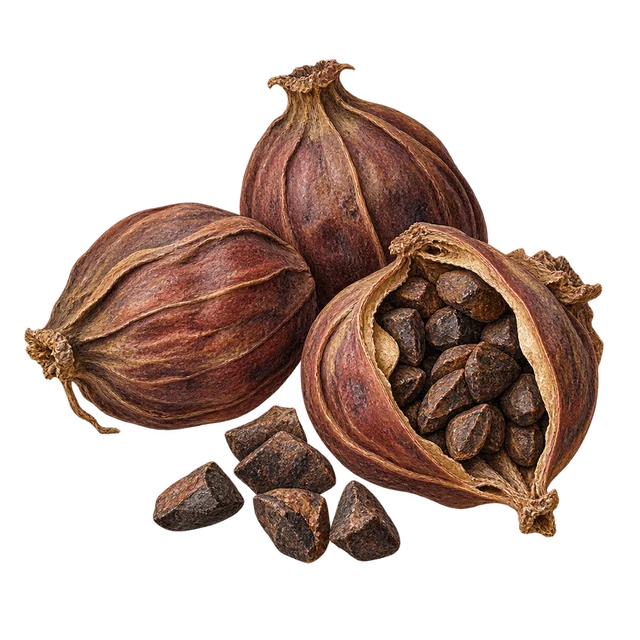
Aframomum corrorima seeds, usually sold within dried capsules as korarima or Ethiopian cardamom. This is an African ginger-family spice, distinct from green Elettaria cardamom and Aframomum melegueta.
Ingredient details, preparation and research
Also known as: Korarima; Ethiopian cardamom
Source plant or material
Aframomum corrorima
Plant family / material: Zingiberaceae
Forms and route
Dried seed capsules, removed seeds and ground culinary mixtures; fresh seeds are also documented. Distilled seed oil and oils from other plant parts are different products.
Vitamins and minerals
A small seasoning quantity makes a different nutritional contribution from a dry-seed laboratory sample. No specific mineral or vitamin serving value is assigned.
Absorption and preparation
Distillation enriches volatile molecules while leaving most other seed components behind. Oil chemistry cannot be treated as absorption data for cooked whole seed.
Practical preparation
Open purchased dried capsules if the recipe calls for seed only, then grind for the dish. Store tightly closed away from dampness and replace stale or moldy material.
Traditional and reported uses
- Wot seasoning
- Regional spice mixtures
Contraindications and cautions
- Check the botanical label when replacing another cardamom. Similar names do not mean identical flavor, chemistry or appropriate amounts in a particular recipe.
- Use food-grade seed and avoid medicinal oil ingestion. A history of cooking does not establish the safety of concentrated extracts or high-dose use.
Diversity within the crop
An Ethiopian study compared 44 collections and found variation in physical and phytochemical traits; selected seed oils were examined by GC-MS. This supports product variability, not a universal chemical profile or medicinal benefit.
Evidence limits
Crop and food-use evidence, not a clinical monograph. No oil dose, supplement effect or treatment claim is extrapolated.
Entry sources
- Ethiopian Coffee and Tea Authority: Major spices booklet
- FAO Ecocrop: Aframomum corrorima
- Hailu et al.: Diversity of Ethiopian korarima capsules, seeds and oils
Reference entry 296 · Recorded content review: 2026-10-09 · Review scope and dates