


Key cautions
- Use cultivated yams sold as food, peel and cook them according to reliable instructions. Do not collect wild yams or apply this guidance to unidentified species.
- Medicinal wild-yam creams or capsules are not food substitutes.
What’s inside
Starch is the major food component, with fiber and variable minerals and other nutrients. Species, cultivar, storage and processing alter texture and composition.
Uses in brief

- Boiled or otherwise cooked tuber
- Pounded staple foods
History, folklore and reported uses
History, folklore and traditional uses
Native/domesticated: West African yam belt, including Nigeria and Ghana.
A closer look at its history
The new-yam harvest as a named community event
Yams carry social meaning as well as providing starch. IITA’s September 2010 reporting describes a new-yam festival at Ukpo Dunukofia in Anambra State, Nigeria, with dancing, drumming and public celebration of the harvest. Its interviews situate the event within Igbo experience rather than treating it as a ceremony practiced identically across Africa. The crop could express achievement, hospitality and continuity between generations. This named place and dated account provide firmer cultural context than attaching an undifferentiated “ancient fertility” story to every edible yam species.
Farmers’ variety names are part of the history
IITA’s 2010 annual report describes work with producers in Benin to document roughly 250 distinct yam types and more than 1,000 named varieties. Farmers reported losing some traditional varieties as pests, disease, soils, moisture and cultivation costs changed. Collecting and conserving their material was therefore also an effort to preserve accumulated selection and local knowledge. This makes the diversity behind “yam” tangible: choices about storage, growing conditions and preferred foods exist below the level of the broad market name, and a general yam profile should not imply a single species or uniform crop.
Additional history reviewed 2026-10-09
Traditional, historical and reported uses
- Boiled or otherwise cooked tuber
Food or household practiceWhy this label?
The source supports the named food, cosmetic or material practice; no treatment effect is inferred and the card’s form and safety limits remain attached.
IITA documents cultivated yams as starchy staples. Food tubers are prepared by established cooking methods, not eaten as unprocessed medicinal roots.
- Pounded staple foods
Food or household practiceWhy this label?
The source supports the named food, cosmetic or material practice; no treatment effect is inferred and the card’s form and safety limits remain attached.
FAO describes cooked tubers transformed into pastes and related staples. Pounding changes texture; it does not turn the tuber into a nutritionally complete meal.
2 sourced featured uses; cultural or material records are not clinical efficacy evidence.
Historical-use additions reviewed 2026-10-09
Regional reading paths
These sourced notes describe cultivation, trade, food traditions or material history. A regional connection does not claim exclusive origin.
Africa
Native/domesticated: West African yam belt, including Nigeria and Ghana.
Cultivated tubers cooked and eaten in pieces or pounded foods.
Identity & detailed reference
Identity
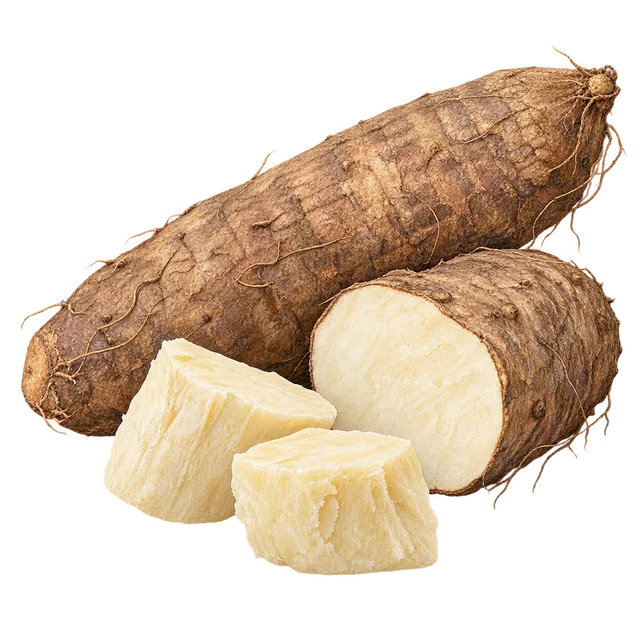
Cultivated African food-yam tubers, anchored to Dioscorea rotundata and D. cayenensis. These are not sweet potatoes, North American medicinal D. villosa, or a blanket category of edible wild Dioscorea.
Ingredient details, preparation and research
Source plant or material
Dioscorea rotundata and D. cayenensis
Plant family / material: Dioscoreaceae
Forms and route
Fresh food tubers, cooked pieces, pounded yam and processed flour intended for cooking. Peel, raw wild tubers and supplement extracts require different assessment.
Vitamins and minerals
Yam contributes carbohydrate and some fiber and micronutrients. Added oil, water and other recipe ingredients change a pounded or fried dish; dry flour differs from boiled tuber.
Absorption and preparation
Cooking makes the starch more accessible, while the meal and preparation affect glycemic response. No special pairing neutralizes an unknown toxic yam species.
Practical preparation
Buy a known food variety, remove damaged material and prepare it using an established cooked recipe. Store cut or cooked yam appropriately and keep flour dry and sealed.
Traditional and reported uses
- Boiled or otherwise cooked tuber
- Pounded staple foods
Contraindications and cautions
- Use cultivated yams sold as food, peel and cook them according to reliable instructions. Do not collect wild yams or apply this guidance to unidentified species.
- Medicinal wild-yam creams or capsules are not food substitutes.
Crop history and species boundaries
IITA’s work traces the West African identity of white and yellow Guinea yams and investigates domestication. It supports a precise crop distinction, not edibility of the entire genus or an extract-related medicinal effect.
Evidence limits
Cultivated food-yam scope; no wild-species processing, hormone claim or fixed nutrient comparison with sweet potato.
Entry sources
- IITA: Research to nourish Africa, yam and plantain systems
- IITA: Yam, cultivated species and uses
- FAO: Roots, tubers, plantains and bananas in human nutrition; cooking and processing
- IITA: Hybrid origin of white Guinea yam
Reference entry 334 · Recorded content review: 2026-10-09 · Review scope and dates