


Key cautions
- Confirm species if the distinction matters; a West African place name on a rice bag does not automatically prove Oryza glaberrima.
- Cook grain properly and cool and refrigerate leftovers promptly. Do not leave moist cooked rice at room temperature for prolonged periods.
What’s inside
Mainly starch, with cereal protein and amounts of fiber, lipids and minerals influenced by retention of bran and germ. Species name alone does not identify the polishing level.
Uses in brief

- Cooked rice
- Rice-flour foods
History, folklore and reported uses
History, folklore and traditional uses
Native/domesticated: West Africa, including Guinea, Sierra Leone and Mali.
A closer look at its history
West Africa domesticated its own rice
African rice, Oryza glaberrima, is a separately domesticated crop rather than merely Asian rice grown in Africa. A 2016 genomic study of 93 landraces places its domestication in West Africa roughly 3,000 years ago and finds evidence of a prolonged population history, rather than a simple one-step origin. The study also examined differences in salt tolerance between geographical populations. Such work gives scientific substance to the long histories of farmers maintaining rice suited to local conditions, while leaving room for debate about the detailed route and timing of domestication.
From regional rice foods to NERICA breeding
The National Research Council records rice flour and honey made into special ceremonial bread among Mandingo and Susu communities, alongside ordinary cooked-rice uses. A later chapter in the crop’s history began in 1992, when a team led by Monty Jones at AfricaRice pursued crosses between African and Asian cultivated rice. The resulting NERICA varieties sought to combine yield potential with African rice’s useful adaptation traits. NERICA is consequently a family of interspecific varieties, not another name for pure O. glaberrima, and the breeding story does not erase the older crop or its regional foods.
Additional history reviewed 2026-10-09
Traditional, historical and reported uses
- Cooked rice
Food or household practiceWhy this label?
The source supports the named food, cosmetic or material practice; no treatment effect is inferred and the card’s form and safety limits remain attached.
The National Research Council records African rice used for ordinary rice dishes. Food-grade grain is cooked as a staple, with texture depending on the cultivar and processing.
- Rice-flour foods
Food or household practiceWhy this label?
The source supports the named food, cosmetic or material practice; no treatment effect is inferred and the card’s form and safety limits remain attached.
The same account documents regional rice-flour preparations, including ceremonial sweet foods. Added honey or other ingredients change the final food and do not establish medicinal benefits.
2 sourced featured uses; cultural or material records are not clinical efficacy evidence.
Historical-use additions reviewed 2026-10-09
Regional reading paths
These sourced notes describe cultivation, trade, food traditions or material history. A regional connection does not claim exclusive origin.
Africa
Native/domesticated: West Africa, including Guinea, Sierra Leone and Mali.
Cooked rice and rice-flour foods; distinct from Asian Oryza sativa.
Identity & detailed reference
Identity
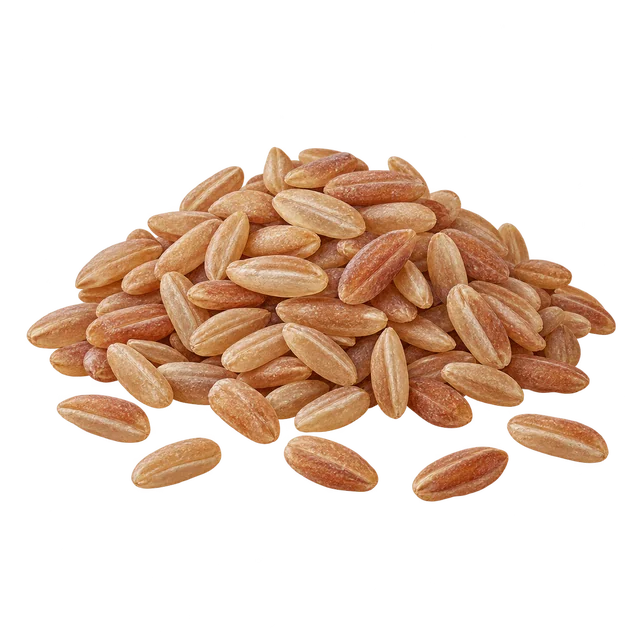
Cultivated African rice, Oryza glaberrima. It is a different domesticated species from Asian Oryza sativa; NERICA varieties are interspecific breeding products and should not be labeled pure African rice.
Ingredient details, preparation and research
Source plant or material
Oryza glaberrima
Plant family / material: Poaceae
Forms and route
Hulled brown or more-polished grain, flour and cooked rice foods. Processing and variety affect color, texture, cooking behavior and nutrient retention.
Vitamins and minerals
Less-polished grain generally retains more bran-associated nutrients than heavily polished rice, but that is a processing distinction. No universal superiority or nutrient number is assigned to the species.
Absorption and preparation
Digestion and glycemic response depend on variety, milling, cooking and the meal. A breeding or biodiversity record does not establish a diabetes-treatment food.
Practical preparation
Prepare food-grade rice according to its label, accounting for brown versus polished form. Use safe water, clean utensils and appropriate storage of both dry grain and leftovers.
Traditional and reported uses
- Cooked rice
- Rice-flour foods
Contraindications and cautions
- Confirm species if the distinction matters; a West African place name on a rice bag does not automatically prove Oryza glaberrima.
- Cook grain properly and cool and refrigerate leftovers promptly. Do not leave moist cooked rice at room temperature for prolonged periods.
Conservation and breeding clarify identity
AfricaRice conserves Oryza glaberrima and explains NERICA as a cross between African and Asian rice. Those records support taxonomy and crop value; they are not clinical comparisons of all rice products.
Evidence limits
Identified food rice only; no cultivar authentication by appearance, diabetes prescription or nutrient ranking.
Entry sources
- National Research Council, Lost Crops of Africa: African Rice
- AfricaRice Biodiversity Center: African rice
- AfricaRice: NERICA interspecific rice varieties
Reference entry 324 · Recorded content review: 2026-10-09 · Review scope and dates