


Key cautions
- Use leaves sold for food, not industrial jute material or unknown wild plants. A common name is not enough to establish a safe edible species.
- Handle fresh leaves as perishable produce. Drying does not sterilize a contaminated crop; discard moldy or otherwise spoiled dried greens.
What’s inside
Mucilaginous polysaccharides that thicken liquids, leaf fiber, carotenoids and variable vitamins and minerals. Cultivation and processing affect composition.
Uses in brief

- Thickened soups
- Leaf vegetable accompaniment
History, folklore and reported uses
History, folklore and traditional uses
Cultivated: North and tropical Africa, including Egypt and Nigeria.
A closer look at its history
A leaf texture preserved across the dry season
PROTA’s crop account describes Corchorus olitorius as a major leaf vegetable in several African countries and as molokhia in Egypt and the Middle East. In Nigeria, the leaves’ sticky texture makes a sauce that accompanies starchy balls of cassava, yam or millet. Drying and powdering leaves allows that texture to be recreated when fresh growth is unavailable. East African preparations combine the leaves with other vegetables, pulses or animal foods. These are regional cooking traditions with different accompaniments, rather than one uniform dish shared by every place growing the plant.
The vegetable is related to the fiber in a sack
The same species also belongs to the history of jute, but PROTA distinguishes leaf-vegetable types from types selected for fiber. In South Asia, stems supplied a durable, comparatively inexpensive packaging material, while the fiber crop was far less important in Africa. Jute manufacture also generated cuttings and woody stem residues that could be pulped into paper or board. This is a useful botanical connection between a soup leaf and an industrial material, not a suggestion to cook packaging fiber or to assume that a fiber cultivar has the same culinary qualities as a vegetable selection.
Additional history reviewed 2026-10-09
Traditional, historical and reported uses
- Thickened soups
Food or household practiceWhy this label?
The source supports the named food, cosmetic or material practice; no treatment effect is inferred and the card’s form and safety limits remain attached.
FAO’s crop and food sources document jute mallow as a leaf vegetable. Chopped leaves contribute their characteristic mucilaginous texture to cooked soups rather than acting as a pharmaceutical thickener.
- Leaf vegetable accompaniment
Food or household practiceWhy this label?
The source supports the named food, cosmetic or material practice; no treatment effect is inferred and the card’s form and safety limits remain attached.
Fresh or preserved food leaves can be cooked as a vegetable component. The complete dish’s salt and fat content depends on stock, seasonings and other additions.
2 sourced featured uses; cultural or material records are not clinical efficacy evidence.
Historical-use additions reviewed 2026-10-09
Women’s Health: traditions, evidence and cautions
Historical use does not establish benefit or safety. Pregnancy, breastfeeding and fertility care require particular caution: food, tea, essential oil and concentrated extract are not interchangeable. These records are not treatment, dosing or pregnancy-management instructions. Discuss supplements with a qualified clinician or pharmacist; do not delay evaluation of persistent symptoms.
Jute mallow / ayoyo
Corchorus olitorius L.
- Plant part / material
- Edible leaves
- Preparation studied or reported
- Vegetable/food preparation; recipe not specified
Ghanaian interviews recorded jute leaves in lactation traditions.
lactation
original ethnobotanical food-use record; efficacy unproven
Reported or traditional useLeaves were named as a milk-supply food.
What the evidence supportsThe survey establishes reported practice, not clinical effectiveness.
No reliable pregnancy or breastfeeding safety evidence was located for this exact medicinal material. The historical record does not establish that it is safe to use. This does not imply that an ordinary correctly prepared vegetable serving is equivalent to a concentrated medicinal extract.
- Describe this as regional food history, not a demonstrated milk-production effect.
Regional reading paths
These sourced notes describe cultivation, trade, food traditions or material history. A regional connection does not claim exclusive origin.
Africa
Cultivated: North and tropical Africa, including Egypt and Nigeria.
Cooked mucilaginous leaves in soups and vegetable dishes.
Identity & detailed reference
Identity
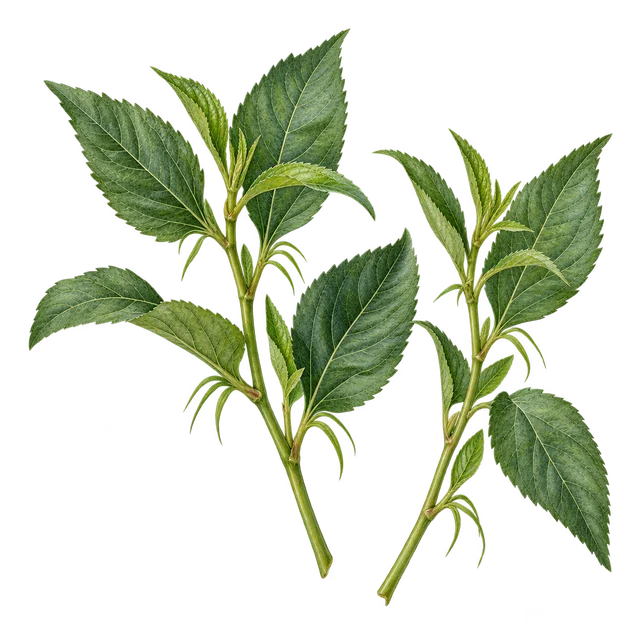
The edible leaves and tender shoots of Corchorus olitorius, known in different cuisines as jute mallow, molokhia or ewedu. Fiber-crop stems and other Corchorus species are not automatically equivalent food materials.
Ingredient details, preparation and research
Also known as: Jute mallow; molokhia; ewedu
Source plant or material
Corchorus olitorius
Plant family / material: Malvaceae
Forms and route
Fresh or dried food leaves, frozen chopped greens and cooked soups or sauces. The named dish may contain meat, stock, garlic, oils and other ingredients beyond the leaf.
Vitamins and minerals
Leaf foods contribute fiber and micronutrients, but raw, dried and hydrated cooked forms have different concentrations. No universal nutrient value is assigned to a bowl of molokhia.
Absorption and preparation
Cooking and the food matrix affect nutrient retention and availability. Mucilage’s thickening action is not clinical evidence of detoxification or treatment of digestive disease.
Practical preparation
Wash fresh food leaves with safe water and cook in an established dish. Follow storage and cooking directions for frozen or dried products and refrigerate prepared soups.
Traditional and reported uses
- Thickened soups
- Leaf vegetable accompaniment
Contraindications and cautions
- Use leaves sold for food, not industrial jute material or unknown wild plants. A common name is not enough to establish a safe edible species.
- Handle fresh leaves as perishable produce. Drying does not sterilize a contaminated crop; discard moldy or otherwise spoiled dried greens.
Agronomy changes measured composition
An Egyptian experiment compared fertilization approaches and assessed plant growth, yield and composition. This supports food-crop variability, not claims that a particular fertilizer treatment or leaf preparation treats human disease.
Evidence limits
Leaf vegetable profile, excluding industrial fiber, seed medicines and universal nutrient figures for a multisource soup recipe.
Entry sources
- FAO: State of plant genetic resources, underutilized crops
- Original Egyptian study: Growth, yield and composition of Corchorus olitorius
- FAO: Compendium of forgotten foods and culinary traditions
Reference entry 331 · Recorded content review: 2026-10-09 · Review scope and dates