


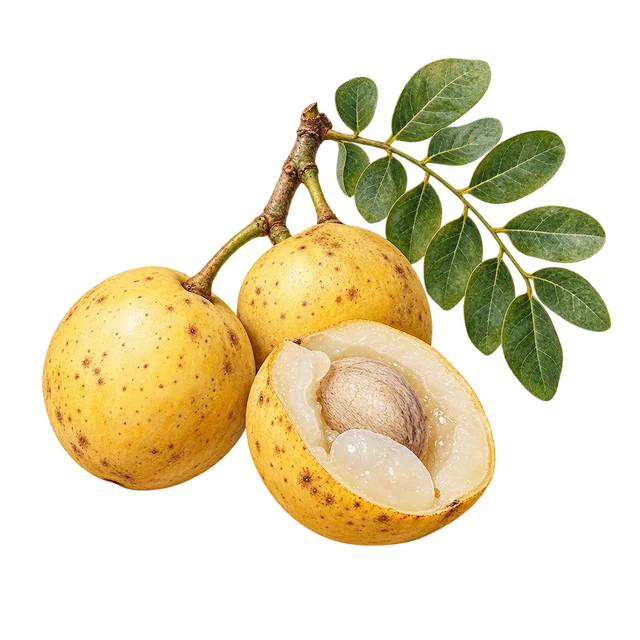
Key cautions
- Avoid swallowing the hard stone and keep it from young children. Buy edible ripe fruit, wash it and discard damaged or spoiled material.
- Alcoholic marula drinks and cream liqueurs are not nutritionally equivalent to fresh fruit and are unsuitable during pregnancy or when alcohol must be avoided.
What’s inside
Water, sugars, organic acids and vitamin C in the fruit flesh. Values vary with maturity and processing; seed-oil fatty-acid data do not describe fruit juice.
Uses in brief

- Fresh fruit
- Jelly and fruit foods
- Fermented beverage heritage
History, folklore and reported uses
History, folklore and traditional uses
Native/traditional food: Southern Africa, including South Africa and Namibia.
Traditional, historical and reported uses
- Fresh fruit
Food or household practiceWhy this label?
The source supports the named food, cosmetic or material practice; no treatment effect is inferred and the card’s form and safety limits remain attached.
SANBI records ripe marula as an edible fruit. The hard central stone is excluded from the serving, and fresh fruit is not a standardized vitamin preparation.
- Jelly and fruit foods
Food or household practiceWhy this label?
The source supports the named food, cosmetic or material practice; no treatment effect is inferred and the card’s form and safety limits remain attached.
SANBI and FAO’s Namibian account describe preserves and other fruit processing. Added sugar and cooking change the food, including the retention of heat-sensitive constituents.
- Fermented beverage heritage
Food or household practiceWhy this label?
The source supports the named food, cosmetic or material practice; no treatment effect is inferred and the card’s form and safety limits remain attached.
SANBI records mukumbi and other alcoholic uses. This documents a cultural food process, not a recommendation to drink alcohol or an instruction for uncontrolled fermentation.
3 sourced featured uses; cultural or material records are not clinical efficacy evidence.
Historical-use additions reviewed 2026-10-09
Regional reading paths
These sourced notes describe cultivation, trade, food traditions or material history. A regional connection does not claim exclusive origin.
Africa
Native/traditional food: Southern Africa, including South Africa and Namibia.
Fruit eaten fresh or used in preserves and beverages.
Identity & detailed reference
Identity
The edible ripe flesh of Sclerocarya birrea fruit. Marula kernels, kernel oil, bark and leaf preparations are different materials; this card does not cover them as equivalent foods.
Ingredient details, preparation and research
Source plant or material
Sclerocarya birrea
Plant family / material: Anacardiaceae
Forms and route
Fresh ripe fruit, juice, jelly and other prepared fruit foods. Fermented alcoholic drinks and cream liqueurs include additional processing and ingredients.
Vitamins and minerals
Fresh flesh can contribute vitamin C, but juice dilution, heating and storage affect the amount. Kernel fat and protein must not be assigned to an ordinary fruit serving.
Absorption and preparation
Whole flesh and strained juice have different fiber content. A composition value does not predict absorption from every preserve or fermented drink.
Practical preparation
Wash food-grade fruit, separate the flesh from the stone and use an established recipe for preserves. Refrigerate prepared products as directed; no home alcohol-fermentation timetable is provided.
Traditional and reported uses
- Fresh fruit
- Jelly and fruit foods
- Fermented beverage heritage
Contraindications and cautions
- Avoid swallowing the hard stone and keep it from young children. Buy edible ripe fruit, wash it and discard damaged or spoiled material.
- Alcoholic marula drinks and cream liqueurs are not nutritionally equivalent to fresh fruit and are unsuitable during pregnancy or when alcohol must be avoided.
Distinct food parts and processing
The National Research Council and Namibian accounts document multiple marula products. Their shared tree source does not make fruit, nuts, oil and alcoholic drinks interchangeable in nutrient or safety comparisons.
Evidence limits
Fruit-food and cultural scope; no medicinal bark use, therapeutic vitamin dose or oil-benefit transfer.
Entry sources
- SANBI PlantZAfrica: Sclerocarya birrea
- National Research Council: Lost Crops of Africa, Marula
- FAO: Non-wood forest products in Namibia, marula products
Reference entry 329 · Recorded content review: 2026-10-09 · Review scope and dates