


Key cautions
- Buy correctly identified fresh fruit and discard decay or mold. The label bush mango alone can refer to another plant and cannot authenticate safou.
- Do not swallow the large central seed or assume it shares the pulp’s food use. An extracted oil requires its own food-grade labeling.
What’s inside
An unusually lipid-containing fruit pulp, with protein, fiber and phenolic compounds. Skin pigments and polyphenol profiles change during ripening.
Uses in brief

- Heated fruit flesh
- Meal accompaniment
History, folklore and reported uses
History, folklore and traditional uses
Native/cultivated: Cameroon, Gabon and Congo Basin.
Traditional, historical and reported uses
- Heated fruit flesh
Food or household practiceWhy this label?
The source supports the named food, cosmetic or material practice; no treatment effect is inferred and the card’s form and safety limits remain attached.
The National Research Council describes safou eaten after softening with heat. The fleshy portion, rather than the large central seed, is the principal food covered here.
- Meal accompaniment
Food or household practiceWhy this label?
The source supports the named food, cosmetic or material practice; no treatment effect is inferred and the card’s form and safety limits remain attached.
FAO’s forest-food inventory documents safou flesh as a regional food. Its richness makes it an accompaniment in mixed meals; the dietary context differs from a sweet juice fruit.
2 sourced featured uses; cultural or material records are not clinical efficacy evidence.
Historical-use additions reviewed 2026-10-09
Regional reading paths
These sourced notes describe cultivation, trade, food traditions or material history. A regional connection does not claim exclusive origin.
Africa
Native/cultivated: Cameroon, Gabon and Congo Basin.
Oily fruit flesh generally softened by heating before eating.
Identity & detailed reference
Identity
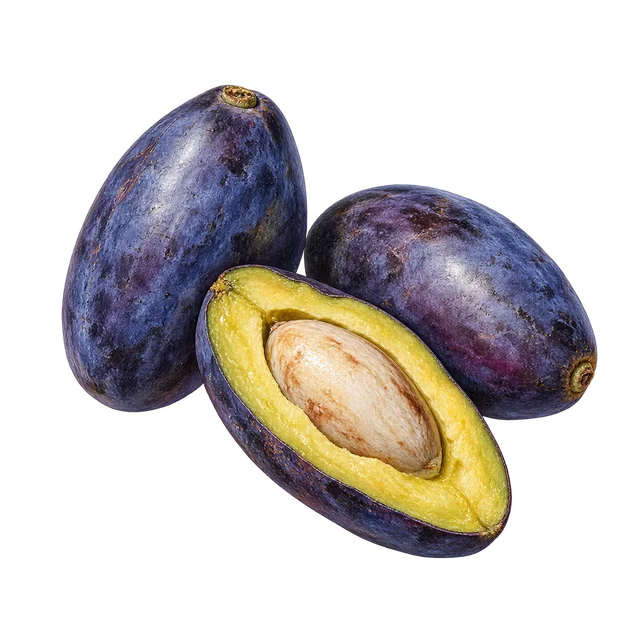
The edible fruit flesh of Dacryodes edulis, called safou, African pear or butterfruit. It is not a Pyrus pear, avocado or the Irvingia kernel food also called bush mango.
Ingredient details, preparation and research
Also known as: Safou; African pear
Source plant or material
Dacryodes edulis
Plant family / material: Burseraceae
Forms and route
Fresh ripe fruit usually softened by heating, cooked flesh and regional prepared foods. The central seed and extracted pulp oil are separate materials.
Vitamins and minerals
Compared with many watery fruits, safou supplies substantial fat in its flesh. Cultivar, ripeness and preparation affect composition; no fixed energy or nutrient value applies to every fruit.
Absorption and preparation
Pulp lipids and the whole-food matrix differ from a purified extract. Detecting phenolics in skin or flesh does not establish a specific systemic antioxidant benefit.
Practical preparation
Wash purchased food fruit with safe water, prepare the edible flesh using an established cooking method and remove the seed. Keep prepared fruit under appropriate refrigeration.
Traditional and reported uses
- Heated fruit flesh
- Meal accompaniment
Contraindications and cautions
- Buy correctly identified fresh fruit and discard decay or mold. The label bush mango alone can refer to another plant and cannot authenticate safou.
- Do not swallow the large central seed or assume it shares the pulp’s food use. An extracted oil requires its own food-grade labeling.
Ripening changes chemistry
An original study measured flavonols and anthocyanins in different fruit zones and ripening stages. It supports attention to maturity and plant part, but does not demonstrate disease prevention from eating safou.
Evidence limits
Edible flesh only; no seed-processing recipe, clinical lipid-lowering claim or equivalence with avocado or Irvingia.
Entry sources
- National Research Council, Lost Crops of Africa: Butterfruit
- FAO: Commonly consumed forest and farm tree foods in the West African humid zone
- Original study: Flavonols and anthocyanins in ripening Dacryodes edulis fruit
Reference entry 328 · Recorded content review: 2026-10-09 · Review scope and dates