


Key cautions
- High sodium intake can raise blood pressure; follow any prescribed sodium restriction. Pink or sea salt is not a low-sodium treatment.
- Do not eat mined samples, industrial salt or bath products. Potassium-based substitutes may be unsuitable with kidney disease or certain medicines.
What’s inside
Sodium and chloride; iodized products have added iodine compounds. Color-associated trace constituents do not establish a nutritionally significant mineral supplement.
Uses in brief

- Seasoning
- Iodized food salt
History, folklore and reported uses
History, folklore and traditional uses
Salt production has distinct geological and processing histories in Senegal; Pakistan’s Salt Range and Khewra; England’s Cheshire Basin and Poland’s Wieliczka and Bochnia; the United States, Canada and Mexico; Maras in Peru; and Lake Grassmere in New Zealand. These regional records concern salt production and heritage, not an endorsement of eating untested mined or harvested material.
Traditional, historical and reported uses
- Seasoning
Food or household practiceWhy this label?
The source supports the named food, cosmetic or material practice; no treatment effect is inferred and the card’s form and safety limits remain attached.
WHO recognizes salt as the principal dietary sodium source. Use food-grade salt for flavor while considering sodium already present in packaged foods, sauces and the full meal.
- Iodized food salt
Food or household practiceWhy this label?
The source supports the named food, cosmetic or material practice; no treatment effect is inferred and the card’s form and safety limits remain attached.
NIH and UNICEF describe iodized salt in iodine-deficiency prevention. Choose a labeled product when appropriate; using iodized salt does not require increasing total salt intake.
2 sourced featured uses; cultural or material records are not clinical efficacy evidence.
Historical-use additions reviewed 2026-10-09
Story sources
- UNICEF-GAIN: Brighter Futures, Senegal salt production and iodization
- Pakistan Mineral Development Corporation: Khewra pink rock salt
- British Geological Survey: The Pennines and adjacent areas, salt and gypsum
- UNESCO: Wieliczka and Bochnia Royal Salt Mines
- USGS: Mineral Commodity Summaries 2022, Salt
- PROMPERÚ: Maras-Moray, salt of the Andes
- Te Ara: Salt
- WHO: Sodium reduction
- NIH ODS: Iodine consumer fact sheet
Regional reading paths
These sourced notes describe cultivation, trade, food traditions or material history. A regional connection does not claim exclusive origin.
Africa
Geological and processed: Senegal’s salt-producing sector.
Food-grade salt is a seasoning and preservation ingredient; raw deposits are not automatically food-safe.
Asia
Geological: Salt Range, Punjab, Pakistan; Khewra mining heritage.
Mineral and material reference; food-grade salt is a seasoning, not a trace-mineral cure.
Europe
Geological and traditional processing: Cheshire Basin, England, and Wieliczka/Bochnia, Poland; historic European rock-salt mining.
Food-grade processed salt seasons food; raw geological samples are not food.
North America
Geological/processed: United States; Canada and Mexico are regional salt suppliers.
Food-grade salt seasons foods; mined or industrial salt is not automatically edible.
South America
geological and traditional processing; Peru, Maras
Food-grade salt for seasoning; raw deposits need qualification.
Australia & Oceania
geological/processed; New Zealand, Lake Grassmere
Food-grade salt for seasoning and preservation.
Identity & detailed reference
Identity
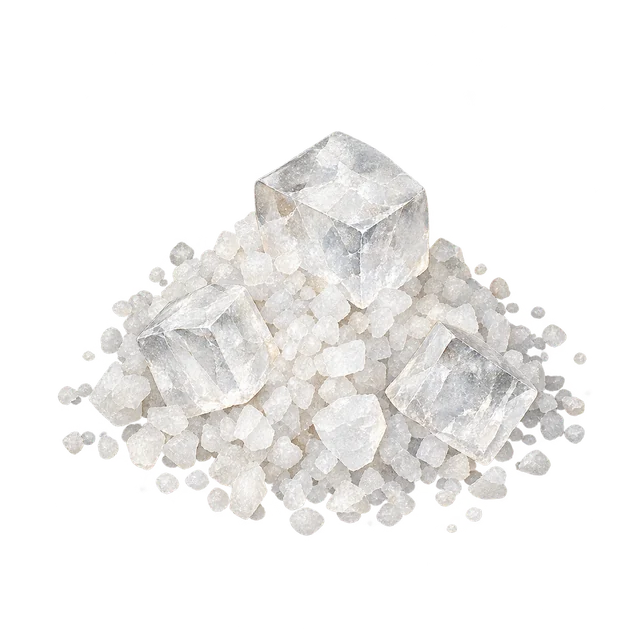
Food-grade sodium chloride; its natural mineral form is halite. Sea salt and mined rock salt share this main chemical identity. Industrial salt, mineral specimens and decorative salt products are outside the edible scope.
Ingredient details, preparation and research
Also known as: Salt; halite
Source plant or material
Sodium chloride (NaCl)
Plant family / material: Not applicable; mineral material
Forms and route
Food-grade fine or coarse salt, including products explicitly labeled iodized. Potassium-containing salt substitutes are different compositions and need separate medical considerations.
Vitamins and minerals
Salt supplies sodium; iodine content requires an iodized label. Do not assume a natural or artisanal salt provides dependable iodine.
Absorption and preparation
No special pairing makes sodium harmless. Trace minerals in colored salt do not offset its sodium content.
Practical preparation
Use only food-grade products. For preservation, follow a validated recipe with the specified salt and measurements; improvising low-salt preservation can compromise safety.
Nutritional role and uses
- Seasoning
- Iodized food salt
Contraindications and cautions
- High sodium intake can raise blood pressure; follow any prescribed sodium restriction. Pink or sea salt is not a low-sodium treatment.
- Do not eat mined samples, industrial salt or bath products. Potassium-based substitutes may be unsuitable with kidney disease or certain medicines.
Origin is not a health advantage
The regional sources document extraction and heritage across continents. WHO’s sodium guidance applies regardless of color or prestige; geological and tourism records do not establish ingestion purity or therapeutic superiority.
Evidence limits
Geological heritage plus food-grade use; no detox, salt-lamp, electrolyte-treatment or mineral-supplement claim.
Entry sources
- UNICEF-GAIN: Brighter Futures, Senegal salt production and iodization
- Pakistan Mineral Development Corporation: Khewra pink rock salt
- British Geological Survey: The Pennines and adjacent areas, salt and gypsum
- UNESCO: Wieliczka and Bochnia Royal Salt Mines
- USGS: Mineral Commodity Summaries 2022, Salt
- PROMPERÚ: Maras-Moray, salt of the Andes
- Te Ara: Salt
- WHO: Sodium reduction
- NIH ODS: Iodine consumer fact sheet
Reference entry 311 · Recorded content review: 2026-10-09 · Review scope and dates