


Key cautions
- Use food-grade grain and cook flour before eating. Discard moldy grain or rancid flour and observe the storage instructions of milled products.
- Verify ingredients and cross-contact if avoiding gluten. Ordinary pearl millet should not be assumed identical to a named biofortified trial grain.
What’s inside
Starch, cereal protein, fat, fiber and minerals. Phytate and polyphenols can influence availability; genetic lines vary in iron and zinc concentration.
Uses in brief

- Porridge and staple dough
- Steamed and bread-type foods
History, folklore and reported uses
History, folklore and traditional uses
African domestication/cultivation: Sahel, including Niger, Mali and Senegal.
A closer look at its history
Ancient cultivation recorded in Mali’s ceramics
A 2021 archaeobotanical study examined plant impressions and inclusions in pottery from northern Mali. It found evidence for exploitation of wild pearl millet in the fifth millennium BCE and probable cultivation before full domestication in the fourth millennium BCE. Changes in grain size and spikelet traits trace a gradual process, rather than a single moment when a wild grass became a crop. The research also follows domesticated millet’s spread into neighboring regions. This gives the Sahelian staple a specific archaeological history without borrowing the origin story of unrelated Asian millets.
An adaptable grain with many culinary textures
The National Research Council’s 1996 crop account describes pearl millet used whole, cracked, milled, made into dough or cooked like rice. Named preparations include roti, fermented breads, toh-type porridges and steamed couscous, alongside drinks and snacks. The repertoire links African and South Asian food histories without making them one cuisine. Grain form matters to this story: pounding, grinding, fermentation and steaming create different foods from the same harvest. Its longstanding usefulness in hot, dry farming environments belongs alongside these texture preferences when explaining why communities maintained the crop.
Additional history reviewed 2026-10-09
Traditional, historical and reported uses
- Porridge and staple dough
Food or household practiceWhy this label?
The source supports the named food, cosmetic or material practice; no treatment effect is inferred and the card’s form and safety limits remain attached.
The National Research Council documents pearl millet in West African staple foods. Cooked flour provides energy and can accompany legumes, vegetables and other components of a varied meal.
- Steamed and bread-type foods
Food or household practiceWhy this label?
The source supports the named food, cosmetic or material practice; no treatment effect is inferred and the card’s form and safety limits remain attached.
Regional cereal traditions use pearl millet in multiple textures. Whole-grain or flour preparations are substantive food uses, but their hydration and processing prevent direct nutrient equivalence.
2 sourced featured uses; cultural or material records are not clinical efficacy evidence.
Historical-use additions reviewed 2026-10-09
Regional reading paths
These sourced notes describe cultivation, trade, food traditions or material history. A regional connection does not claim exclusive origin.
Africa
African domestication/cultivation: Sahel, including Niger, Mali and Senegal.
Drought-adapted staple grain for porridges and breads.
Identity & detailed reference
Identity
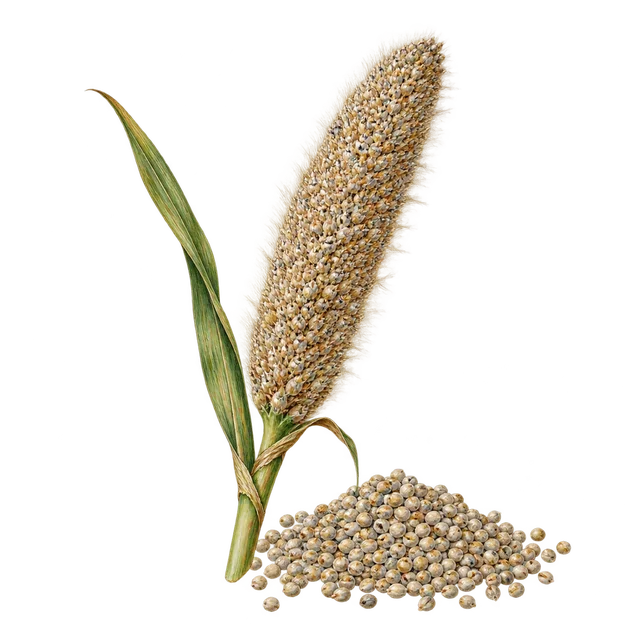
Pearl millet grain, Cenchrus americanus, also widely named Pennisetum glaucum. It is a distinct cereal from finger millet, proso millet and sorghum; “millet” alone is not a precise identity.
Ingredient details, preparation and research
Source plant or material
Cenchrus americanus (syn. Pennisetum glaucum)
Plant family / material: Poaceae
Forms and route
Whole or decorticated grain, flour and cooked foods. Conventional and iron/zinc-biofortified varieties differ, and a retail label must identify any fortification claim.
Vitamins and minerals
Whole grain contributes carbohydrate, protein and minerals; processing removes or redistributes grain fractions. No fixed high-iron claim is made for an unidentified product.
Absorption and preparation
A controlled human trial measured iron and zinc absorption from specific biofortified grain. It supports that formulation and comparison, not a universal absorption advantage for every pearl-millet food.
Practical preparation
Cook grain or flour using the purchased product’s directions. Keep flour dry and sealed, prepare a balanced meal with other foods and refrigerate cooked leftovers safely.
Traditional and reported uses
- Porridge and staple dough
- Steamed and bread-type foods
Contraindications and cautions
- Use food-grade grain and cook flour before eating. Discard moldy grain or rancid flour and observe the storage instructions of milled products.
- Verify ingredients and cross-contact if avoiding gluten. Ordinary pearl millet should not be assumed identical to a named biofortified trial grain.
Breeding and absorption evidence differ
Germplasm studies demonstrate mineral variability, while the cited trial tested particular grain in children in India. Neither permits copying its nutrient content or outcome to an unspecified Sahelian market flour.
Evidence limits
Species-specific food card; no universal fortification, anemia-treatment or low-glycemic claim.
Entry sources
- National Research Council, Lost Crops of Africa: Pearl Millet
- Association of grain iron and zinc with nutrients in pearl-millet germplasm
- Randomized trial: Iron and zinc absorption from biofortified pearl millet
Reference entry 322 · Recorded content review: 2026-10-09 · Review scope and dates