


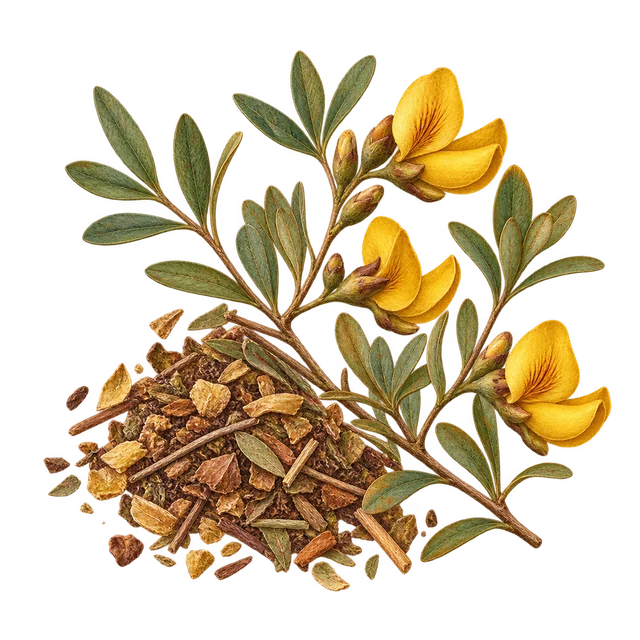
Key cautions
- Use material sold for food, with a recognizable species or established tea brand. Do not collect an unfamiliar Cyclopia for drinking on the basis of this card.
- Check blend ingredients and added sweeteners. Concentrated extracts require separate safety assessment and should not be treated as a larger cup of tea.
What’s inside
Polyphenols including mangiferin and hesperidin have been identified. Species, processing and extraction affect the profile; the familiar honey-like flavor does not mean honey is present.
Uses in brief

- Regional herbal infusion
History, folklore and reported uses
History, folklore and traditional uses
Native/cultivated: South African fynbos and Cape tea-producing regions.
Commercial honeybush includes particular Cyclopia species rather than the whole genus. Processing develops the familiar flavor, but colloquial “fermented tea” does not establish live probiotic organisms in the brewed drink.
Traditional, historical and reported uses
- Regional herbal infusion
Food or household practiceWhy this label?
The source supports the named food, cosmetic or material practice; no treatment effect is inferred and the card’s form and safety limits remain attached.
SANBI records a long South African tea tradition and the former cottage industry. The featured species provide aromatic tea; the account is cultural and botanical, not a therapeutic recommendation.
1 sourced featured uses; cultural or material records are not clinical efficacy evidence.
Historical-use additions reviewed 2026-10-09
Regional reading paths
These sourced notes describe cultivation, trade, food traditions or material history. A regional connection does not claim exclusive origin.
Africa
Native/cultivated: South African fynbos and Cape tea-producing regions.
Aromatic herbal tea; distinguish commercially used species.
Identity & detailed reference
Identity
Herbal tea from identified Cyclopia species, notably C. genistoides, C. intermedia and C. subternata. Honeybush is distinct from rooibos; not every Cyclopia species is commercially used as tea.
Ingredient details, preparation and research
Source plant or material
Cyclopia genistoides, C. intermedia and C. subternata
Plant family / material: Fabaceae
Forms and route
Dried processed tea material, green honeybush and prepared infusions. Concentrated oral or skin-care extracts differ from ordinary brewed tea.
Vitamins and minerals
The infusion is primarily water with extracted compounds. Whole-leaf or extract assays do not establish substantial vitamins, minerals or a health-promoting dose in a cup.
Absorption and preparation
An animal experiment detected metabolites after a concentrated honeybush extract. That does not quantify absorption in people drinking customary infusions or support a special nutrient pairing.
Practical preparation
Brew a commercial food-grade product with safe water as instructed. Refrigerate prepared tea when storing it, especially if milk, fruit or sweetener has been added.
Traditional and reported uses
- Regional herbal infusion
Contraindications and cautions
- Use material sold for food, with a recognizable species or established tea brand. Do not collect an unfamiliar Cyclopia for drinking on the basis of this card.
- Check blend ingredients and added sweeteners. Concentrated extracts require separate safety assessment and should not be treated as a larger cup of tea.
Species and research model
Chemical studies identify xanthones and flavanones in Cyclopia cultures. The cited absorption study used pigs and an extract; neither result demonstrates clinical benefit from drinking honeybush or from applying homemade tea to skin.
Evidence limits
No treatment claim, standardized polyphenol dose or safety conclusion for every Cyclopia species or extract.
Entry sources
- SANBI PlantZAfrica: Cyclopia pubescens, commercial honeybush species and history
- In vitro Cyclopia cultures and their xanthones and flavanones
- Honeybush-extract metabolites after oral administration to pigs
Reference entry 304 · Recorded content review: 2026-10-09 · Review scope and dates