


Key cautions
- Peanut allergy requires particular care: unrefined, cold-pressed or crude oil can contain allergenic protein. Do not test tolerance yourself; follow your allergist’s product-specific advice.
- Highly refined oil has different allergen labeling treatment in the United States, but the absence of a prominent allergen warning does not identify an unknown restaurant or market oil.
- Buy food-grade oil with traceable processing and discard rancid stock. A study found aflatoxin contamination in some sampled Sudanese oils; it is a quality-control concern, not a claim about all African oils.
What’s inside
Mainly triglycerides containing oleic and linoleic fatty acids, with cultivar-dependent composition. The oil has little of the protein or fiber found in whole peanuts, but unrefined products can retain allergenic protein.
Uses in brief

- Cooking oil
History, folklore and reported uses
History, folklore and traditional uses
Introduced/cultivated and processed: African edible-oil sectors, including Sudan.
Traditional-mill oils are a separate market form from highly refined products. Their sensory character does not prove absence of allergens, aflatoxins or other contaminants.
Traditional, historical and reported uses
- Cooking oil
Food or household practiceWhy this label?
The source supports the named food, cosmetic or material practice; no treatment effect is inferred and the card’s form and safety limits remain attached.
The Sudanese study sampled oils from factories and traditional mills, documenting an established edible-oil sector. Food-grade peanut oil supplies cooking fat and varies from mild to distinctly nutty in flavor.
1 sourced featured uses; cultural or material records are not clinical efficacy evidence.
Historical-use additions reviewed 2026-10-09
Regional reading paths
These sourced notes describe cultivation, trade, food traditions or material history. A regional connection does not claim exclusive origin.
Africa
Introduced/cultivated and processed: African edible-oil sectors, including Sudan.
Food-grade pressed or refined cooking oil; quality and allergen controls matter.
Identity & detailed reference
Identity
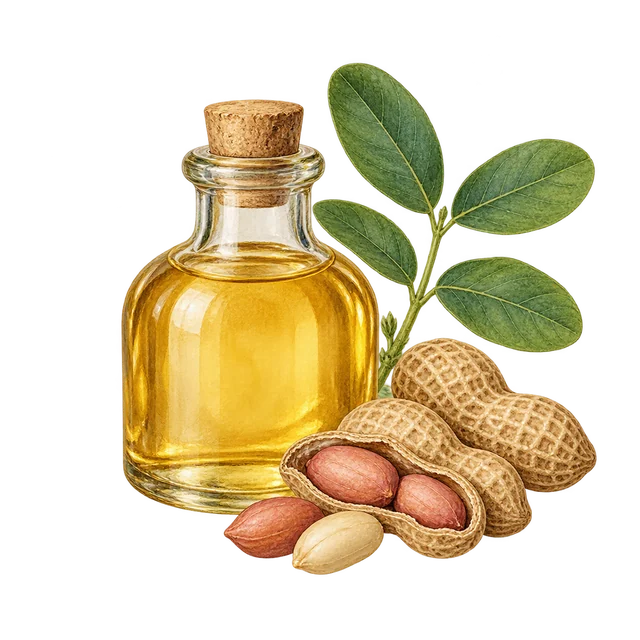
The fixed oil of Arachis hypogaea seeds. Groundnut is peanut; it is a legume, not a tree nut. Oil refinement is an essential part of identifying the product.
Ingredient details, preparation and research
Also known as: Groundnut; peanut oil
Source plant or material
Arachis hypogaea
Plant family / material: Fabaceae
Forms and route
Highly refined cooking oil, less-refined pressed oil and aromatic roasted oils. These forms differ in flavor and residual protein; cosmetic preparations are separate.
Vitamins and minerals
This is an energy-dense separated fat. Do not transfer the protein, fiber or mineral content of whole peanuts to peanut oil.
Absorption and preparation
Refining reduces residual proteins but does not turn oil into a protein food. There is no established special pairing that makes an allergenic oil safe.
Practical preparation
Use the intended cooking oil as its label directs, and keep it closed away from light and heat. Confirm the exact oil with food preparers when allergy matters.
Traditional and reported uses
- Cooking oil
Contraindications and cautions
- Peanut allergy requires particular care: unrefined, cold-pressed or crude oil can contain allergenic protein. Do not test tolerance yourself; follow your allergist’s product-specific advice.
- Highly refined oil has different allergen labeling treatment in the United States, but the absence of a prominent allergen warning does not identify an unknown restaurant or market oil.
- Buy food-grade oil with traceable processing and discard rancid stock. A study found aflatoxin contamination in some sampled Sudanese oils; it is a quality-control concern, not a claim about all African oils.
Processing and contamination are separate questions
FDA discusses the distinction between highly refined and unrefined allergen-derived oils. The Sudanese analytical study addresses aflatoxins; neither refinement status nor a negative single assay substitutes for reliable production controls.
Evidence limits
No individual allergy clearance, smoke-point promise or endorsement of a brand or traditional mill is provided.
Entry sources
- Idris et al.: Aflatoxin levels in Sudanese edible oils
- FDA: Food allergies and labeling
- FDA: Major-allergen threshold report, refined and unrefined oils
Reference entry 301 · Recorded content review: 2026-10-09 · Review scope and dates