


Key cautions
- Do not ingest a cosmetic oil or transfer the food status of baobab fruit pulp to seed oil. Read the complete ingredient and intended-use label.
- Stop if itching, redness or irritation occurs. Use a finished preserved product when water is present; adding water to plain oil does not create a reliably preserved lotion.
What’s inside
Fatty acids including oleic, linoleic and palmitic acids. Extraction, geographic source and storage influence the profile, peroxide value and minor constituents.
Uses in brief

- Skin-care ingredient
- Hair and cleansing products
History, folklore and reported uses
History, folklore and traditional uses
Native and processed: Zimbabwe, Senegal and South Africa.
Traditional, historical and reported uses
- Skin-care ingredient
Food or household practiceWhy this label?
The source supports the named food, cosmetic or material practice; no treatment effect is inferred and the card’s form and safety limits remain attached.
The Netherlands CBI documents African producers supplying baobab oil for creams, lotions and body oils. These are cosmetic material uses, not evidence that oil reverses aging or treats disease.
- Hair and cleansing products
Food or household practiceWhy this label?
The source supports the named food, cosmetic or material practice; no treatment effect is inferred and the card’s form and safety limits remain attached.
CBI and a Sudanese formulation study record oil in shampoos, conditioners, soaps and related products. Performance depends on the entire formula, not merely the seed-oil name.
2 sourced featured uses; cultural or material records are not clinical efficacy evidence.
Historical-use additions reviewed 2026-10-09
Regional reading paths
These sourced notes describe cultivation, trade, food traditions or material history. A regional connection does not claim exclusive origin.
Africa
Native and processed: Zimbabwe, Senegal and South Africa.
Fixed seed oil used in formulated skin and hair products.
Identity & detailed reference
Identity
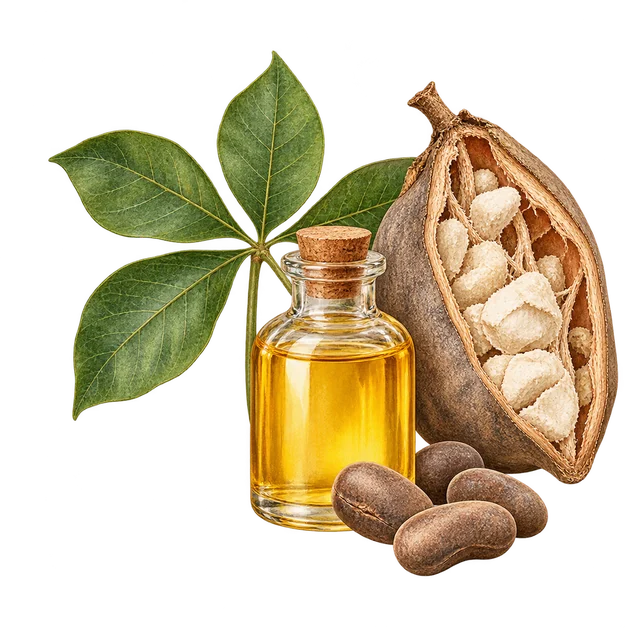
The fixed seed oil of Adansonia digitata. It is materially different from baobab’s dry edible fruit pulp, leaf foods, extracts and the oils of other Adansonia species.
Ingredient details, preparation and research
Source plant or material
Adansonia digitata
Plant family / material: Malvaceae
Forms and route
Pressed or refined cosmetic seed oil and finished skin or hair products. This card does not establish an edible use for an arbitrary baobab-oil bottle.
Vitamins and minerals
No dietary nutrient recommendation is made for this cosmetic preparation. Fruit-pulp vitamin C and fiber are not meaningful attributes to assign to a separated seed oil.
Absorption and preparation
Topical delivery differs from digestion. A study of skin hydration cannot establish systemic absorption, nutritional benefit or treatment of a skin disease.
Practical preparation
Apply only a labeled cosmetic product according to its instructions. Keep the container clean and closed, protect it from heat and light, and discard changed-smelling or visibly contaminated material.
Traditional and reported uses
- Skin-care ingredient
- Hair and cleansing products
Contraindications and cautions
- Do not ingest a cosmetic oil or transfer the food status of baobab fruit pulp to seed oil. Read the complete ingredient and intended-use label.
- Stop if itching, redness or irritation occurs. Use a finished preserved product when water is present; adding water to plain oil does not create a reliably preserved lotion.
A limited human pilot
Komane and colleagues conducted small irritancy, moisture and occlusivity studies with a particular baobab seed oil. The work is relevant to skin tolerability and material performance but does not establish universal safety or long-term clinical treatment.
Evidence limits
Cosmetic-material scope. No edible status, clinical dose or whole-fruit benefit is inferred for seed oil.
Entry sources
- Netherlands CBI: European market for baobab oil, African production and cosmetic use
- Komane et al.: Beauty in Baobab, seed-oil pilot studies
- Alia et al.: Sudanese baobab oil in soap, cream and shampoo formulations
Reference entry 300 · Recorded content review: 2026-10-09 · Review scope and dates