


Key cautions
- Pregnancy and breastfeeding safety is not established by this traditional record. Do not self-prescribe medicinal preparations when pregnant, trying to conceive, or breastfeeding; obtain clinician review.
- Do not substitute raw or merely dried root for the specifically prepared material.
- No home processing method or reproductive dose is provided.
What’s inside
Processing changes the root’s chemical profile. No constituent quantity or claim about glucose, iron or hormone replacement is assigned to all preparations.
Uses in brief

- Prepared-root role in Chinese blood/yin-nourishing traditions; not a biomedical efficacy claim.
History, folklore and reported uses
History, folklore and traditional uses
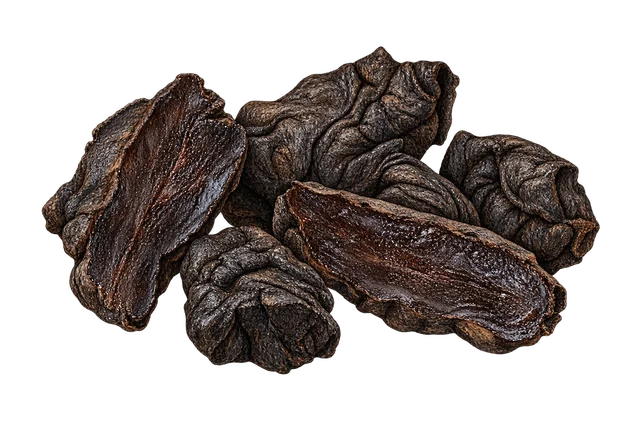
Prepared rehmannia occupies a different place from fresh or unprepared di huang in Chinese medicine. The processed root appears in Si Wu Tang and is recorded for traditional blood- and yin-deficiency patterns.
Hong Kong’s Chinese Medicine Regulatory Office distinguishes fresh, dried-unprepared and prepared root. The prepared material has a traditional blood- and yin-nourishing role; these terms are not a laboratory diagnosis or a claim to raise blood counts.
Prepared rehmannia appears in established Chinese compound formulas, including Si Wu Tang. Their traditional use depends on the whole formula and pattern assessment; a single-root benefit cannot be inferred.
Traditional, historical and reported uses
- menstruation
Traditional accountWhy this label?
Traditional use is established; clinical benefit of the single root is not established here. The Si Wu Tang pilot trial was not significantly better than placebo at treatment end.
The prepared material is recorded for irregular periods and uterine-bleeding complaints. Traditional use is established; clinical benefit of the single root is not established here. The Si Wu Tang pilot trial was not significantly better than placebo at treatment end.
- Blood- and yin-nourishing tradition
Traditional accountWhy this label?
Direct official text distinguishes prepared from unprepared root and explicitly assigns these traditional actions to Praeparata. Already-supported prose promoted into a genuine use account, not garden context.
The Hong Kong regulatory account records the prepared root in traditional blood- and yin-nourishing practice and in concepts of replenishing essence and marrow. These Chinese medical categories are not evidence of increased blood counts, improved bone marrow function or treatment of a diagnosed deficiency.
- Six-ingredient formula heritage
Traditional accountWhy this label?
Indexed primary institutional formula entry identifies Rehmanniae Radix Praeparata as ingredient and traditional framework. No recipe, proportions, dose or modern clinical claims reproduced.
HKBU records prepared rehmannia as a component of Liu Wei Di Huang Wan, the Six-Ingredient Rehmannia Pill, in a traditional liver-kidney yin-deficiency framework. This is a compound-formula history; it does not demonstrate a benefit from the root alone or establish treatment of modern kidney disease.
Coverage reflects verified sources, without a minimum use quota.
Story sources
- Hong Kong Baptist University: Rehmannia Root and prepared Shu di huang
- Yeh et al. (2007): randomized placebo-controlled Si Wu Tang trial
- Hong Kong CMRO: Radix Rehmanniae exhibition
- Yeh et al. 2007: Si Wu Tang placebo-controlled pilot trial
- Kew POWO: Rehmannia glutinosa
- Hong Kong CMRO: Unprepared versus prepared rehmannia identification
- HKBU: Six-Ingredient Rehmannia Pill
Women’s Health: traditions, evidence and cautions
Historical use does not establish benefit or safety. Pregnancy, breastfeeding and fertility care require particular caution: food, tea, essential oil and concentrated extract are not interchangeable. These records are not treatment, dosing or pregnancy-management instructions. Discuss supplements with a qualified clinician or pharmacist; do not delay evaluation of persistent symptoms.
Prepared rehmannia / shu di huang
Rehmannia glutinosa
- Plant part / material
- Prepared tuberous root (Rehmanniae Radix Praeparata)
- Preparation studied or reported
- Traditionally steamed root, sometimes wine-processed; compound decoctions and pills. Fresh, dried unprepared and prepared roots are distinct.
One exact-material card. Traditionally steamed root, sometimes wine-processed; compound decoctions and pills. Fresh, dried unprepared and prepared roots are distinct.. Keep preparations distinct; do not transfer findings from a named extract to every tea or powder.
Prepared rehmannia occupies a different place from fresh or unprepared di huang in Chinese medicine. The processed root appears in Si Wu Tang and is recorded for traditional blood- and yin-deficiency patterns.
Hong Kong’s Chinese Medicine Regulatory Office distinguishes fresh, dried-unprepared and prepared root. The prepared material has a traditional blood- and yin-nourishing role; these terms are not a laboratory diagnosis or a claim to raise blood counts.
Prepared rehmannia appears in established Chinese compound formulas, including Si Wu Tang. Their traditional use depends on the whole formula and pattern assessment; a single-root benefit cannot be inferred.
menstruation
Traditional account
Reported or traditional useThe prepared material is recorded for irregular periods and uterine-bleeding complaints. Traditional use is established; clinical benefit of the single root is not established here. The Si Wu Tang pilot trial was not significantly better than placebo at treatment end.
What the evidence supportsTraditional use is established; clinical benefit of the single root is not established here. The Si Wu Tang pilot trial was not significantly better than placebo at treatment end.
Pregnancy and breastfeeding safety is not established by this traditional record. Do not self-prescribe medicinal preparations when pregnant, trying to conceive, or breastfeeding; obtain clinician review. Do not substitute raw or merely dried root for the specifically prepared material. No home processing method or reproductive dose is provided. Unexplained bleeding or severe pelvic symptoms require medical assessment.
Blood- and yin-nourishing tradition
Traditional account
Reported or traditional useThe Hong Kong regulatory account records the prepared root in traditional blood- and yin-nourishing practice and in concepts of replenishing essence and marrow. These Chinese medical categories are not evidence of increased blood counts, improved bone marrow function or treatment of a diagnosed deficiency.
What the evidence supportsTraditional Chinese medical concepts and compound-formula history do not establish single-root clinical benefit.
Pregnancy and breastfeeding safety is not established by this traditional record. Do not self-prescribe medicinal preparations when pregnant, trying to conceive, or breastfeeding; obtain clinician review. Do not substitute raw or merely dried root for the specifically prepared material. No home processing method or reproductive dose is provided. Unexplained bleeding or severe pelvic symptoms require medical assessment.
Six-ingredient formula heritage
Traditional account
Reported or traditional useHKBU records prepared rehmannia as a component of Liu Wei Di Huang Wan, the Six-Ingredient Rehmannia Pill, in a traditional liver-kidney yin-deficiency framework. This is a compound-formula history; it does not demonstrate a benefit from the root alone or establish treatment of modern kidney disease.
What the evidence supportsTraditional Chinese medical concepts and compound-formula history do not establish single-root clinical benefit.
Pregnancy and breastfeeding safety is not established by this traditional record. Do not self-prescribe medicinal preparations when pregnant, trying to conceive, or breastfeeding; obtain clinician review. Do not substitute raw or merely dried root for the specifically prepared material. No home processing method or reproductive dose is provided. Unexplained bleeding or severe pelvic symptoms require medical assessment.
One exact-material card. Traditionally steamed root, sometimes wine-processed; compound decoctions and pills. Fresh, dried unprepared and prepared roots are distinct.. Keep preparations distinct; do not transfer findings from a named extract to every tea or powder.
- Pregnancy and breastfeeding safety is not established by this traditional record. Do not self-prescribe medicinal preparations when pregnant, trying to conceive, or breastfeeding; obtain clinician review.
- Do not substitute raw or merely dried root for the specifically prepared material.
- No home processing method or reproductive dose is provided.
- Unexplained bleeding or severe pelvic symptoms require medical assessment.
- Hong Kong Baptist University: Rehmannia Root and prepared Shu di huang
- Yeh et al. (2007): randomized placebo-controlled Si Wu Tang trial
- Hong Kong CMRO: Radix Rehmanniae exhibition
- Yeh et al. 2007: Si Wu Tang placebo-controlled pilot trial
- Kew POWO: Rehmannia glutinosa
- Hong Kong CMRO: Unprepared versus prepared rehmannia identification
- HKBU: Six-Ingredient Rehmannia Pill
Read the complete historical reference and its material distinctions
Identity & detailed reference
Identity
Rehmannia glutinosa; Prepared tuberous root (Rehmanniae Radix Praeparata).
Ingredient details, preparation and research
Also known as: shu di huang; Rehmanniae Radix Praeparata; prepared di huang
Source plant or material
Rehmannia glutinosa — Prepared tuberous root (Rehmanniae Radix Praeparata)
Plant family / material: Orobanchaceae (current Kew placement; older references use Scrophulariaceae)
Forms and route
Traditionally steamed root, sometimes wine-processed; compound decoctions and pills. Fresh, dried unprepared and prepared roots are distinct.
Vitamins and minerals
No nutrient quantities or daily-value claims are assigned to this medicinal material. Do not borrow the food nutrient profile of another plant part or use an extract as a dietary substitute.
Absorption and preparation
Preparation and route matter. A tea, whole powder, alcohol extract and isolated constituent can give different exposures. No food pairing or absorption-enhancement technique is established by the sources reviewed.
Traditional and reported uses
- The prepared material is recorded for irregular periods and uterine-bleeding complaints. Traditional use is established; clinical benefit of the single root is not established here. The Si Wu Tang pilot trial was not significantly better than placebo at treatment end.
- The Hong Kong regulatory account records the prepared root in traditional blood- and yin-nourishing practice and in concepts of replenishing essence and marrow. These Chinese medical categories are not evidence of increased blood counts, improved bone marrow function or treatment of a diagnosed deficiency.
- HKBU records prepared rehmannia as a component of Liu Wei Di Huang Wan, the Six-Ingredient Rehmannia Pill, in a traditional liver-kidney yin-deficiency framework. This is a compound-formula history; it does not demonstrate a benefit from the root alone or establish treatment of modern kidney disease.
Contraindications and cautions
- Pregnancy and breastfeeding safety is not established by this traditional record. Do not self-prescribe medicinal preparations when pregnant, trying to conceive, or breastfeeding; obtain clinician review.
- Do not substitute raw or merely dried root for the specifically prepared material.
- No home processing method or reproductive dose is provided.
- Unexplained bleeding or severe pelvic symptoms require medical assessment.
Similar items and how they compare
- Unprepared rehmannia
Same source species
Sheng di huang is a separate processed state and traditional material.
- Prepared fo-ti
Both can be dark processed roots
Polygonum/Reynoutria multiflora is unrelated and has a different safety profile.
Identity and composition
Rehmannia glutinosa; Prepared tuberous root (Rehmanniae Radix Praeparata). Processing changes the root’s chemical profile. No constituent quantity or claim about glucose, iron or hormone replacement is assigned to all preparations.
- Hong Kong Baptist University: Rehmannia Root and prepared Shu di huang
- Yeh et al. (2007): randomized placebo-controlled Si Wu Tang trial
- Hong Kong CMRO: Radix Rehmanniae exhibition
- Yeh et al. 2007: Si Wu Tang placebo-controlled pilot trial
- Kew POWO: Rehmannia glutinosa
- Hong Kong CMRO: Unprepared versus prepared rehmannia identification
menstruation: what evidence can say
Traditional use is established; clinical benefit of the single root is not established here. The Si Wu Tang pilot trial was not significantly better than placebo at treatment end. Pregnancy and breastfeeding safety is not established by this traditional record. Do not self-prescribe medicinal preparations when pregnant, trying to conceive, or breastfeeding; obtain clinician review.
Exact material and preparation boundaries
One exact-material card. Traditionally steamed root, sometimes wine-processed; compound decoctions and pills. Fresh, dried unprepared and prepared roots are distinct.. Keep preparations distinct; do not transfer findings from a named extract to every tea or powder.
- Hong Kong Baptist University: Rehmannia Root and prepared Shu di huang
- Yeh et al. (2007): randomized placebo-controlled Si Wu Tang trial
- Hong Kong CMRO: Radix Rehmanniae exhibition
- Yeh et al. 2007: Si Wu Tang placebo-controlled pilot trial
- Kew POWO: Rehmannia glutinosa
- Hong Kong CMRO: Unprepared versus prepared rehmannia identification
Medicines, pregnancy and breastfeeding
A dependable clinical interaction list and pregnancy/breastfeeding safety profile for prepared root alone were not established by the reviewed sources. Formula trial tolerability is not proof of safety for a different preparation or during pregnancy. Have a qualified clinician assess the named product and all its ingredients.
- Hong Kong Baptist University: Rehmannia Root and prepared Shu di huang
- Yeh et al. (2007): randomized placebo-controlled Si Wu Tang trial
- Hong Kong CMRO: Radix Rehmanniae exhibition
- Yeh et al. 2007: Si Wu Tang placebo-controlled pilot trial
- Kew POWO: Rehmannia glutinosa
- Hong Kong CMRO: Unprepared versus prepared rehmannia identification
Source-supported safety summary
Pregnancy and breastfeeding safety is not established by this traditional record. Do not self-prescribe medicinal preparations when pregnant, trying to conceive, or breastfeeding; obtain clinician review. Do not substitute raw or merely dried root for the specifically prepared material. No home processing method or reproductive dose is provided. Unexplained bleeding or severe pelvic symptoms require medical assessment.
- Hong Kong Baptist University: Rehmannia Root and prepared Shu di huang
- Yeh et al. (2007): randomized placebo-controlled Si Wu Tang trial
- Hong Kong CMRO: Radix Rehmanniae exhibition
- Yeh et al. 2007: Si Wu Tang placebo-controlled pilot trial
- Kew POWO: Rehmannia glutinosa
- Hong Kong CMRO: Unprepared versus prepared rehmannia identification
Evidence limits
- This is a focused educational source review, not a systematic review or a treatment plan.
- Traditional use documents a practice; it does not establish clinical benefit. Laboratory findings and multi-ingredient trials cannot establish a single ingredient’s effects.
- Some older Chinese materia-medica sources use Scrophulariaceae; current Kew placement is Orobanchaceae.
- No validated modern single-root clinical benefit or nutritional value is inferred from traditional blood/yin terminology.
Entry sources
- Hong Kong Baptist University: Rehmannia Root and prepared Shu di huang
- Yeh et al. (2007): randomized placebo-controlled Si Wu Tang trial
- Hong Kong CMRO: Radix Rehmanniae exhibition
- Yeh et al. 2007: Si Wu Tang placebo-controlled pilot trial
- Kew POWO: Rehmannia glutinosa
- Hong Kong CMRO: Unprepared versus prepared rehmannia identification
Reference entry 534 · Recorded content review: 2026-10-11 · Review scope and dates