


Key cautions
- Use identified food-grade Monodora seed in seasoning quantities. Do not transfer doses, safety assumptions or medicinal claims from ordinary nutmeg.
- Concentrated seed oils or extracts require separate assessment. Avoid unknown seeds sold only under a generic nutmeg label and discard rancid or moldy material.
What’s inside
Aromatic volatile compounds, lipids, protein and fiber; the amount delivered in a spice portion is much smaller than a laboratory flour sample.
Uses in brief

- Savory spice
- Experimental baking flavor
History, folklore and reported uses
History, folklore and traditional uses
Native and cultivated: West/Central Africa; Nigeria and Cameroon.
Traditional, historical and reported uses
- Savory spice
Food or household practiceWhy this label?
The source supports the named food, cosmetic or material practice; no treatment effect is inferred and the card’s form and safety limits remain attached.
FAO documents Monodora among Nigerian compound-farm spices and Cameroon market products. Ground culinary kernels add aroma to regional cooking without implying that larger amounts confer health benefits.
- Experimental baking flavor
Laboratory/animal researchWhy this label?
The cited preparation-specific experimental food study is not a traditional-use claim or a demonstration of human health benefit.
A Nigerian food-science study substituted African nutmeg flour for vanilla flavor in cookies and assessed composition and sensory acceptance. This is evidence of a tested food application, not an ancient cookie tradition.
2 sourced featured uses; cultural or material records are not clinical efficacy evidence.
Historical-use additions reviewed 2026-10-09
Regional reading paths
These sourced notes describe cultivation, trade, food traditions or material history. A regional connection does not claim exclusive origin.
Africa
Native and cultivated: West/Central Africa; Nigeria and Cameroon.
Ground seeds flavor cooking; distinct from Myristica nutmeg.
Identity & detailed reference
Identity
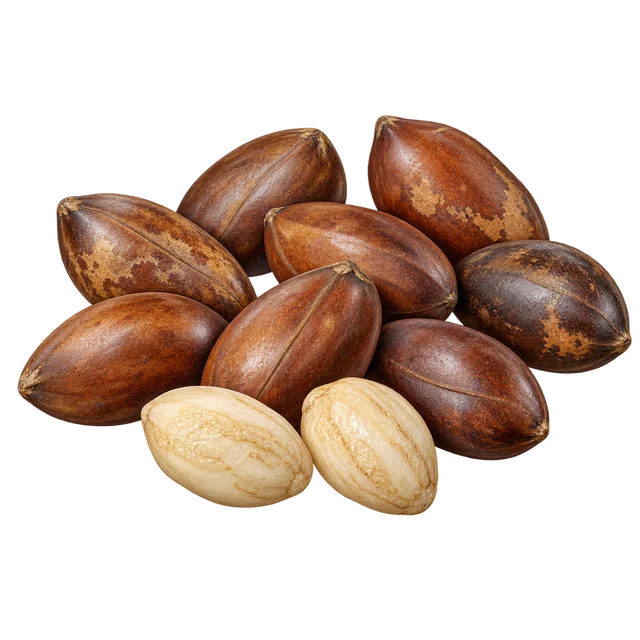
Monodora myristica seed kernels, called calabash or African nutmeg. They come from an African custard-apple relative, not Myristica fragrans, the source of ordinary nutmeg and mace.
Ingredient details, preparation and research
Source plant or material
Monodora myristica
Plant family / material: Annonaceae
Forms and route
Whole dried seeds and culinary seed powder. Extracts and distilled oil are separate materials and should not inherit the ordinary seasoning use.
Vitamins and minerals
Cookie composition reflects flour, fat, sugar and every other recipe ingredient. It is not the nutritional composition of pure Monodora, and it does not justify a high-nutrient claim for a pinch.
Absorption and preparation
The cookie experiment did not establish human nutrient bioavailability. No special pairing is needed to use this material as a flavoring.
Practical preparation
Keep whole culinary seeds dry and sealed; grind only the quantity needed. Follow a food recipe using the actual spice rather than adding unmeasured essential oil.
Traditional and reported uses
- Savory spice
- Experimental baking flavor
Contraindications and cautions
- Use identified food-grade Monodora seed in seasoning quantities. Do not transfer doses, safety assumptions or medicinal claims from ordinary nutmeg.
- Concentrated seed oils or extracts require separate assessment. Avoid unknown seeds sold only under a generic nutmeg label and discard rancid or moldy material.
Food-function evidence
The cookie study examined flour functionality, chemical measurements and sensory acceptance. Those endpoints support possible baking use but cannot establish treatment of diabetes, inflammation or infection, nor a safe medicinal intake.
Evidence limits
The evidence selected here supports food identity and flavor use. A full toxicological review of high-dose seed products has not been undertaken.
Entry sources
- FAO: Non-wood forest products in Africa, Cameroon
- Olatoye et al.: African nutmeg as a flavourant in cookie production
- FAO: Commonly consumed forest and farm tree foods in the West African humid zone
Reference entry 294 · Recorded content review: 2026-10-09 · Review scope and dates