


Key cautions
- Use culinary quantities of correctly labeled seed, not concentrated extract as an interchangeable seasoning. Stop using a product that causes mouth irritation or an allergic reaction.
- The shared term alligator pepper does not authenticate a species. This card provides no wild-plant identification method and no supplement regimen.
What’s inside
Pungent paradol- and gingerol-related compounds, volatile aroma compounds, and ordinary seed lipids and carbohydrates. A spice pinch is not a standardized dose of these chemicals.
Uses in brief

- Culinary seasoning
- Beverage flavoring
History, folklore and reported uses
History, folklore and traditional uses
Native: West Africa, including Ghana and Nigeria.
Traditional, historical and reported uses
- Culinary seasoning
Food or household practiceWhy this label?
The source supports the named food, cosmetic or material practice; no treatment effect is inferred and the card’s form and safety limits remain attached.
FAO records the aromatic seeds as a spice. Grind a labeled food product as a recipe requires; it contributes fragrance and pungency rather than replacing a whole serving of vegetables.
- Beverage flavoring
Food or household practiceWhy this label?
The source supports the named food, cosmetic or material practice; no treatment effect is inferred and the card’s form and safety limits remain attached.
FAO also records use in wine and beer. That is a flavoring tradition, not evidence that alcoholic beverages or the spice treat digestive or metabolic disorders.
2 sourced featured uses; cultural or material records are not clinical efficacy evidence.
Historical-use additions reviewed 2026-10-09
Regional reading paths
These sourced notes describe cultivation, trade, food traditions or material history. A regional connection does not claim exclusive origin.
Africa
Native: West Africa, including Ghana and Nigeria.
Aromatic culinary seeds for seasoning food and drinks.
Identity & detailed reference
Identity
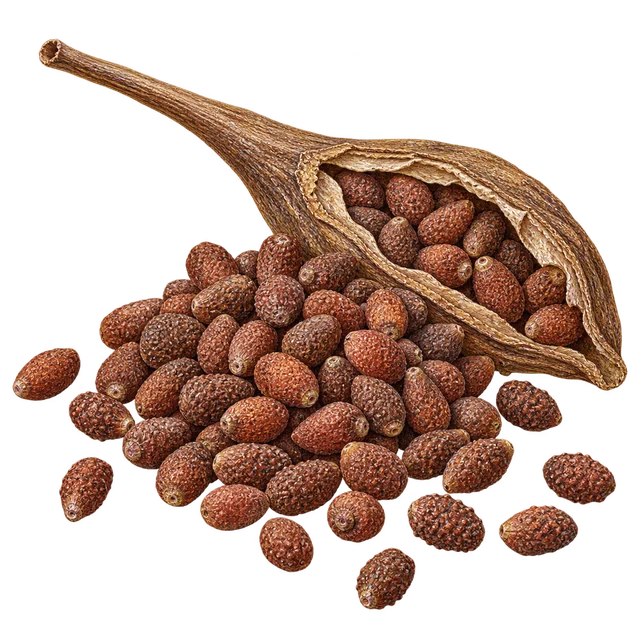
The aromatic seeds of Aframomum melegueta, a ginger-family species. Grains of paradise are not Xylopia grains of Selim or the unrelated Capsicum peppers; “alligator pepper” can denote other Aframomum species.
Ingredient details, preparation and research
Source plant or material
Aframomum melegueta
Plant family / material: Zingiberaceae
Forms and route
Whole dried culinary seeds or ground spice. Seed extracts, tinctures and essential oil concentrate different constituents and are outside this food-spice card.
Vitamins and minerals
Seed composition is not the same as the nutrient contribution of a small seasoning amount. No serving-specific nutrient number or high-source claim is assigned.
Absorption and preparation
Laboratory isolation of pungent compounds does not establish how much is absorbed from a cooked meal. No special absorption-enhancing pairing is established.
Practical preparation
Keep dry whole seeds tightly closed and grind when needed. Add the food-grade spice to a familiar recipe; protect ground material from moisture and discard visibly moldy stock.
Traditional and reported uses
- Culinary seasoning
- Beverage flavoring
Contraindications and cautions
- Use culinary quantities of correctly labeled seed, not concentrated extract as an interchangeable seasoning. Stop using a product that causes mouth irritation or an allergic reaction.
- The shared term alligator pepper does not authenticate a species. This card provides no wild-plant identification method and no supplement regimen.
Constituent research is not infection treatment
A primary study isolated paradol- and gingerol-related compounds and tested them in a mycobacterial laboratory model. This supports chemical identity, not treatment of tuberculosis, weight loss or a benefit from eating the spice.
Evidence limits
A food and chemistry profile, not a comprehensive clinical safety review of extracts. Regional use does not make every Aframomum seed or preparation equivalent.
Entry sources
- FAO Ecocrop: Aframomum melegueta
- FAO: Non-wood forest products in Africa, Cameroon
- Seeds of Aframomum melegueta: isolated paradol/gingerol compounds in a mycobacterial model
Reference entry 292 · Recorded content review: 2026-10-09 · Review scope and dates