


Key cautions
- Known strawberry allergy: avoid.
- Refrigerate and rinse before use.
- Use tested jam-preservation instructions.
What’s inside
Water, carbohydrate, fiber and vitamin C; fruit pigments and other phenolic compounds vary with cultivar and maturity.
Uses in brief

- Fresh fruit and smoothies
- Fruit desserts
- Jam and preserves
History, folklore and reported uses
History, folklore and traditional uses
Modern garden strawberries arose in eighteenth-century Europe from hybridization of Fragaria virginiana and Fragaria chiloensis, plants with American origins. This is the history of the cultivated hybrid, not the beginning of human strawberry use.
Seasonal fruit can be enjoyed fresh, and preservation extends its use beyond harvest. Food history here is kept separate from unsourced claims about strawberry leaves or remedies.
Traditional, historical and reported uses
- Fresh fruit and yogurt smoothies
Food or household practiceWhy this label?
The specific claim documents a food preparation or recorded culinary practice; safety qualifications remain attached and no treatment effect is inferred.
USDA features fresh or frozen strawberries as fruit and suggests blending them with yogurt. Use the actual ingredients when considering the finished drink’s sugar and protein.
- Layered fruit desserts
Food or household practiceWhy this label?
The specific claim documents a food preparation or recorded culinary practice; safety qualifications remain attached and no treatment effect is inferred.
University of Georgia Extension documents strawberry trifle, layering sliced fruit with cake and whipped topping. It illustrates a dessert use; its composition is different from a serving of plain berries.
- Jam, jelly and preserves
Food or household practiceWhy this label?
The specific claim documents a food preparation or recorded culinary practice; safety qualifications remain attached and no treatment effect is inferred.
The National Center for Home Food Preservation provides strawberry spreads using specified formulations. Freezer jam and properly processed shelf-stable jam require different storage.
3 supported featured uses; food practices are not claims of treatment benefit.
Historical-use additions reviewed 2026-10-09
Story sources
- NC State Extension: Fragaria x ananassa
- NC State Extension: Southern Regional Strawberry Plasticulture Production Guide
- USDA MyPlate: Strawberry fact card
- University of Georgia Extension: Strawberries
- National Center for Home Food Preservation: Jams & Jellies
- NIH ODS: Vitamin C, health-professional fact sheet
- FDA: Selecting and Serving Produce Safely
- AAAAI: Food Allergy
Regional reading paths
These sourced notes describe cultivation, trade, food traditions or material history. A regional connection does not claim exclusive origin.
Antarctica
Controlled Antarctic greenhouse research.
Cultivated food crop; not native Antarctic flora.
Identity & detailed reference
Identity
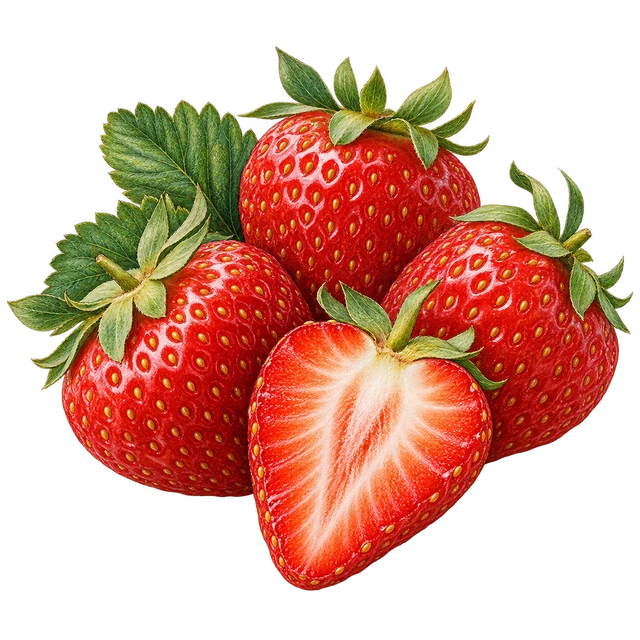
The ripe fruit of cultivated garden strawberry. The fleshy red portion bears tiny achenes on its surface. Woodland strawberry and other wild Fragaria species are related, but are not automatically the same crop.
Ingredient details, preparation and research
Also known as: Strawberry; Garden strawberry; Fresa; Frutilla
Source plant or material
Fragaria × ananassa
Plant family / material: Rosaceae
Forms and route
Fresh or unsweetened frozen fruit; cooked fruit, purée, jam and desserts. Leaf teas and extracts are outside this food profile.
Vitamins and minerals
NIH ODS lists 49 mg vitamin C in ½ cup fresh sliced strawberries. This is a reference portion, not the value for jam, dried fruit or a flavored drink.
Absorption and preparation
Vitamin C supports nonheme-iron absorption. Heat and prolonged storage can reduce it; this is not a treatment for iron deficiency.
Practical preparation
Keep berries chilled and rinse gently just before preparing. Remove the green caps after rinsing, then eat, slice or cook as the recipe requires.
Combination context
No medicinal pairing is required.
Combination notes
Yogurt, oats and other fruit are ordinary food partners. Sweetened yogurt and toppings change the dish.
Traditional and reported uses
- Fresh fruit and smoothies
- Fruit desserts
- Jam and preserves
Contraindications and cautions
- Avoid strawberries if you have a diagnosed strawberry allergy; seek urgent help for breathing trouble or a severe reaction.
- Refrigerate this perishable fruit. Rinse under running water before use; discard rotten berries. Washing does not sterilize fruit.
- For shelf-stable jam, use a tested preservation recipe rather than changing sugar, acidity or processing at will. Sweetened products differ from plain fruit.
Similar items and how they compare
- Woodland strawberry (Fragaria vesca)
Related edible-fruit species.
A separate species with different fruit size and crop characteristics; this card centers on garden strawberries.
- Strawberry-flavored syrup
Used for a similar flavor.
May contain little fruit and substantial added sugar; it does not inherit whole-fruit composition.
The hybrid is the identity boundary
NC State describes the American parent species and eighteenth-century European hybrid origin. A berry name or decorative picture cannot authenticate a wild plant.
A serving-specific vitamin C reference
The ½-cup figure is for fresh sliced berries. No numerical disease-prevention claim, extract dose or nutrient ranking follows from it.
Evidence limits
This food profile does not review leaf medicines or establish disease treatment. Cultivar, storage and recipes affect composition.
Entry sources
- NC State Extension: Fragaria x ananassa
- NC State Extension: Southern Regional Strawberry Plasticulture Production Guide
- USDA MyPlate: Strawberry fact card
- University of Georgia Extension: Strawberries
- National Center for Home Food Preservation: Jams & Jellies
- NIH ODS: Vitamin C, health-professional fact sheet
- FDA: Selecting and Serving Produce Safely
- AAAAI: Food Allergy
Reference entry 282 · Recorded content review: 2026-10-09 · Review scope and dates