


Key cautions
- Discard seeds before blending.
- Keep seed preparations away from eyes and scalp.
- Custard apple is an ambiguous name.
What’s inside
Sweet pulp supplies carbohydrate and vitamin C, with small amounts of other nutrients. A pulp composition table does not describe leaves or seeds.
Uses in brief

- Ripe dessert fruit
- Milkshakes and ice cream
- Caribbean leaf-use history
History, folklore and reported uses
History, folklore and traditional uses
Kew places Annona squamosa’s native range from Mexico to Colombia and records its spread across the Caribbean and other tropical regions. Its familiar presence in tropical home gardens is wider than that native range.
Caribbean names include sweetsop, anón and pomm kannel. The edible pulp has a straightforward dessert role; the same tree’s leaf and bud remedies belong to a separate documented history.
Traditional, historical and reported uses
- Ripe fresh dessert fruit
Food or household practiceWhy this label?
This records an identified food preparation or material practice, without claiming a medical outcome.
UF/IFAS identifies fresh dessert fruit as the principal use. The soft sweet pulp is eaten after separating the seeds; the segmented exterior is discarded.
- Milkshakes and smoothies
Food or household practiceWhy this label?
This records an identified food preparation or material practice, without claiming a medical outcome.
Seed-free sugar-apple pulp is used in milkshakes and blended fruit drinks. Remove all seeds before the blender is used, rather than hoping a strainer will remove ground seed material.
- Ice cream and desserts
Food or household practiceWhy this label?
This records an identified food preparation or material practice, without claiming a medical outcome.
UF/IFAS and NParks document the pulp in ice cream and other desserts. This is a culinary role for ripe fruit, not evidence of a medicinal effect.
- Caribbean leaf and bud remedy accounts
Traditional accountWhy this label?
The source records a community’s intended traditional use; it does not establish clinical benefit or a safe home treatment.
TRAMIL links reports from Martinique, Cuba and Antigua and Barbuda to leaf or bud preparations for complaints including digestive discomfort and colds. These are attributed traditions; they do not establish an effective or safe home treatment and are not instructions for using the fruit.
Distinct documented practices are featured without filling a quota. Food, material use and traditional remedy accounts retain separate evidence labels; none is a cure claim.
Historical-use additions reviewed 2026-10-09
Story sources
- Kew POWO: Annona squamosa L.
- UF/IFAS: Sugar Apple Growing in the Florida Home Landscape
- Singapore NParks: Annona squamosa L.
- NParks GardeningSG: Custard Apple (Annona squamosa)
- TRAMIL: Annona squamosa
- Nagaraja et al. (2016): Ocular toxicity by seeds of Annona squamosa
- Jamaica Forestry Department: Food and fruit tree inventory
- FDA: Selecting and Serving Produce Safely
Regional reading paths
These sourced notes describe cultivation, trade, food traditions or material history. A regional connection does not claim exclusive origin.
South America
Cultivated in Brazil, where agricultural literature documents pinha, fruta-do-conde and ata; do not assert an exclusively Brazilian origin.
Eat the ripe soft pulp; seeds and leaves are not included in the food use.
Identity & detailed reference
Identity
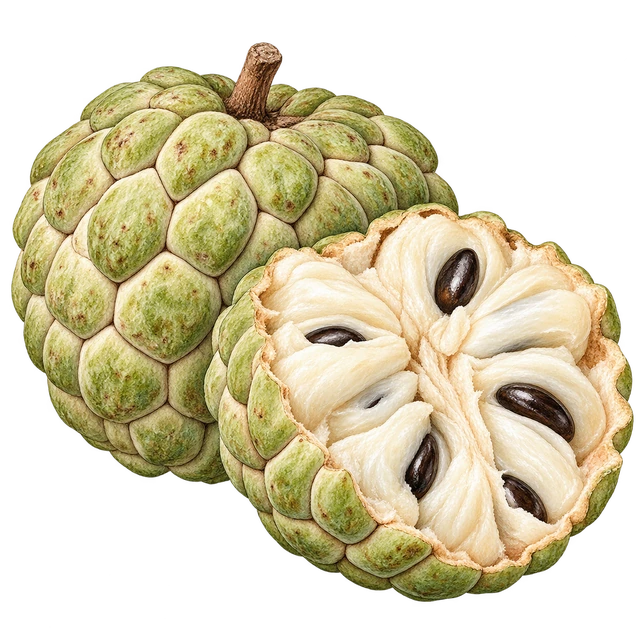
The ripe soft pulp of Annona squamosa, also called sweetsop. “Custard apple” is an ambiguous common name shared with other Annona fruits; this card excludes Annona reticulata, cherimoya and atemoya hybrids.
Ingredient details, preparation and research
Also known as: sugar apple; Sugar-apple; Sweetsop; Sweet sop; Anón; Anon; Pomm kannel; Pomme-cannelle; Custard apple (ambiguous common name)
Source plant or material
Annona squamosa L.
Plant family / material: Annonaceae
Forms and route
Fresh seed-free ripe pulp and pulp incorporated into milkshakes or desserts. Leaves, bark, seed powders and extracts are separate preparations.
Vitamins and minerals
UF/IFAS reports vitamin C and carbohydrate in sugar-apple pulp, with variation in its reference composition range. This card assigns no universal serving-specific copper value or “high in” label. Milkshakes and ice cream contain additional ingredients and are not nutritionally identical to plain pulp.
Absorption and preparation
No sugar-apple-specific absorption advantage is established. Laboratory work on leaf or seed compounds cannot be translated into a benefit from eating ripe pulp.
Practical preparation
Wash the outside, open the softened ripe fruit and separate the pulp from every seed and from the skin. Blend only after deseeding. Refrigerate prepared pulp and follow ordinary food-safe handling for milk-based desserts.
Combination context
No medicinal combination or required nutrient-absorption pairing is established for this food.
Combination notes
Milk is a documented culinary partner for the pulp. Added milk, cream or sweeteners change both the dish and its allergy and nutrition profile; no treatment effect is implied.
Traditional and reported uses
- Ripe dessert fruit
- Milkshakes and ice cream
- Caribbean leaf-use history
Contraindications and cautions
- Remove and discard the seeds; do not chew, grind or blend them into food. Sugar-apple seeds contain toxic substances.
- Do not make seed-based scalp or eye remedies. Clinical reports describe serious eye irritation and injury after seed preparations.
- Traditional leaf or bud remedies are not the edible pulp. This card gives no medicinal dose and does not establish their safety during pregnancy, breastfeeding or childhood.
- Buy identified fruit and allow mature fruit to soften; immature fruit may fail to ripen properly. Refrigerate ripe or prepared fruit and use promptly.
- The name custard apple alone does not distinguish this species from related fruits. No cancer, diabetes or other treatment claim is supported by its food use.
Similar items and how they compare
- Custard apple / bullock’s heart
The name custard apple can refer to both fruits.
Annona reticulata is a different species; use the scientific name to keep accounts separate.
- Atemoya
It is closely related and can have similar flesh.
Atemoya is an Annona cherimola × A. squamosa hybrid, not pure sugar apple.
- Soursop
Both are Annona fruits with white pulp and dark seeds.
Annona muricata has a soft-spined exterior and different fruit character; species-specific findings should not be merged.
Seeds require a different safety rule
NParks warns about toxic seeds. Published ophthalmology cases describe injury from seed preparations, reinforcing why historical insecticidal or scalp-remedy use must not become a household recommendation.
Ripening and shelf life
UF/IFAS advises harvesting mature fruit and allowing it to soften before refrigeration; ripe sugar apple is short-lived. A damaged, rotten or persistently hard immature fruit should not be forced into a recipe.
Evidence limits
This overview is specific to ripe Annona squamosa pulp. It does not establish medicinal leaf, bud or seed safety, and does not transfer extract findings or related-species data into treatment claims.
Entry sources
- Kew POWO: Annona squamosa L.
- UF/IFAS: Sugar Apple Growing in the Florida Home Landscape
- Singapore NParks: Annona squamosa L.
- NParks GardeningSG: Custard Apple (Annona squamosa)
- TRAMIL: Annona squamosa
- Nagaraja et al. (2016): Ocular toxicity by seeds of Annona squamosa
- Jamaica Forestry Department: Food and fruit tree inventory
- FDA: Selecting and Serving Produce Safely
Reference entry 269 · Recorded content review: 2026-10-09 · Review scope and dates