


Key cautions
- Avoid pepper dust and face/eye contact; use gloves for cutting.
- Ground spice is not a medicinal capsaicin dose.
What’s inside
Capsaicinoids supply heat. Drying removes water and changes concentration per gram; ground spice, fresh fruit and salted seasoning mixtures should not be treated as equivalent foods.
Uses in brief

- Louisiana gumbo seasoning
- Charbroiled-oyster seasoning
- Fresh or ground savory spice
History, folklore and reported uses
History, folklore and traditional uses
Cayenne types belong to Capsicum annuum, an American species with a broad native range including the Caribbean. This species-level origin does not identify the birthplace of every modern cayenne cultivar or retail powder.
Louisiana sources place cayenne within a wider seasoning tradition. Gumbo and other Cajun or Creole dishes vary between cooks; excessive heat is not a requirement of those cuisines.
Traditional, historical and reported uses
- Louisiana gumbo seasoning
Food or household practiceWhy this label?
The claim records a named culinary preparation or food practice, preserving the regional and exact-form limits; it makes no clinical-efficacy claim.
Explore Louisiana names cayenne as one way cooks adjust gumbo’s heat. Its account emphasizes recipe and family variation, so the use does not prescribe one universal level of spice.
- Charbroiled-oyster seasoning
Food or household practiceWhy this label?
The claim records a named culinary preparation or food practice, preserving the regional and exact-form limits; it makes no clinical-efficacy claim.
Louisiana’s official culinary dictionary lists cayenne in the butter, garlic and herb sauce used for fully cooked charbroiled oysters. This is a specific regional dish, not a safety instruction for raw seafood.
- Fresh or ground savory spice
Food or household practiceWhy this label?
The claim records a named culinary preparation or food practice, preserving the regional and exact-form limits; it makes no clinical-efficacy claim.
UF/IFAS describes cayenne used fresh and finely chopped or dried and ground in curries, meats, sauces and stews. These are culinary forms, not interchangeable medicinal doses.
- Flavoring while reducing added salt
Food or household practiceWhy this label?
The claim records a named culinary preparation or food practice, preserving the regional and exact-form limits; it makes no clinical-efficacy claim.
LSU AgCenter includes plain cayenne among spices that can help flavor food with less added salt. This practical substitution does not make every commercial cayenne-containing spice blend low in sodium.
Featured uses reflect distinct documented practices, up to seven where warranted. Food traditions and historical symbolism do not establish treatment benefits.
Historical-use additions reviewed 2026-10-09
Story sources
- Iowa State University Extension: Growing peppers in the home garden
- Kew POWO: Capsicum annuum L.
- UF/IFAS: Shopping for health, herbs and spices
- Explore Louisiana: Louisiana gumbo guide
- Explore Louisiana: Louisiana culinary dictionary, charbroiled oysters
- LSU AgCenter: Lets get spice-y
- National Capital Poison Center: Capsaicin, when the chili is too hot
- National Center for Home Food Preservation: Choice salsa
- FDA: Selecting and serving produce safely
Regional reading paths
These sourced notes describe cultivation, trade, food traditions or material history. A regional connection does not claim exclusive origin.
North America
Cultivated/traded: United States, including Louisiana cooking.
Dried pepper supplies culinary heat.
Identity & detailed reference
Identity
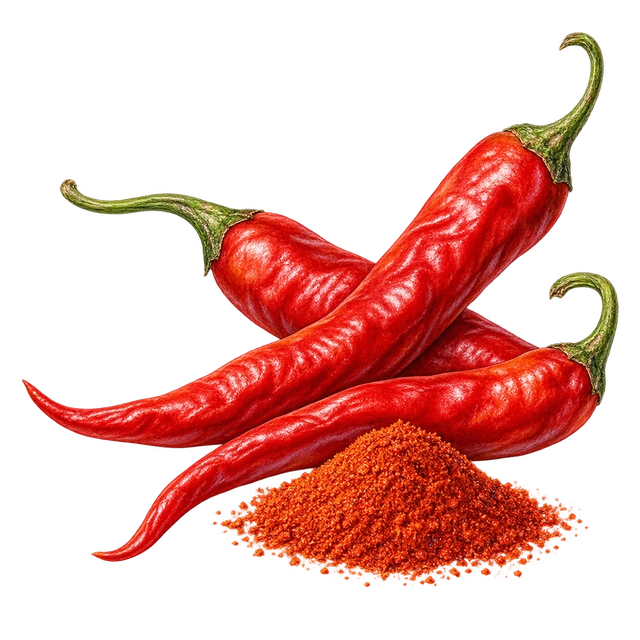
Cayenne types of Capsicum annuum, commonly with slender elongated hot fruits, and the culinary dried-ground spice made from them. A retail label such as “red pepper” can be broader, so check the actual product rather than assuming one cultivar.
Ingredient details, preparation and research
Also known as: Cayenne; Cayenne peppers; Ground cayenne; Cayenne powder; cayanne pepper
Source plant or material
Capsicum annuum L., cayenne cultivar types
Plant family / material: Solanaceae (nightshade family)
Forms and route
Fresh culinary fruits, whole dried peppers and food-grade ground cayenne used as seasoning. Spice blends, sauces, oleoresins, capsules and topical capsaicin products are separate preparations.
Vitamins and minerals
A pinch of ground cayenne is a seasoning portion, not a dependable vitamin supplement. No whole-fruit nutrient value is transferred to dried powder, and no numerical cultivar-specific figure is assigned. Check whether a blend or sauce adds salt or sugar.
Absorption and preparation
No special nutrient-absorption combination is needed or established. More cayenne or stronger capsaicin exposure does not mean more benefit.
Practical preparation
For fresh fruit, wash and trim the stem before cutting with gloves. Add ground cayenne gradually to food rather than tasting dry powder directly. Avoid breathing pepper dust, and store the spice dry in a tightly closed container.
Combination notes
Use small amounts in a soup, sauce or spice blend and adjust the finished dish to taste. Plain cayenne can add flavor without adding table salt; a prepared Cajun or Creole mix may still contain substantial sodium.
Traditional and reported uses
- Louisiana gumbo seasoning
- Charbroiled-oyster seasoning
- Fresh or ground savory spice
Contraindications and cautions
- Wear gloves when cutting hot peppers, avoid touching your face or eyes, and ventilate cooking areas. Capsaicin can irritate skin, eyes, airways and the digestive tract.
- Use culinary amounts to taste; concentrated capsaicin, homemade skin applications and extreme-heat challenges are different exposures.
- For shelf-stable pepper sauces or salsa, use a tested preservation recipe with its required acidity and process. Hotness does not establish preservation safety.
Similar items and how they compare
- Scotch bonnet pepper, card 264
Both are hot culinary chiles.
Scotch bonnet is a Capsicum chinense type with a distinct form and culinary identity.
- Paprika or chili-powder blends
May also be ground red-pepper seasonings.
They are not automatically cayenne; ingredients, pungency and added salt vary.
Fruit, powder and other red peppers
Iowa State places cayenne in Capsicum annuum and distinguishes Capsicum chinense peppers such as Scotch bonnet. Ground cayenne is a food spice; neither the word “pepper” nor a red color establishes a botanical identity or medicinal preparation.
Food seasoning and topical products
Culinary pepper cannot be substituted for a labeled capsaicin medicine. Keep raw pepper and powder off the eyes and skin; irritation can also affect the airways and gut.
Small serving and preservation limits
Spice use does not supply the same portion as whole fresh fruit. If peppers go into a preserved salsa, its acid and heat-processing requirements still apply regardless of how hot it tastes.
Evidence limits
This card does not assert one standardized retail cayenne cultivar, one heat value, or efficacy for weight loss, pain or circulation.
Entry sources
- Iowa State University Extension: Growing peppers in the home garden
- Kew POWO: Capsicum annuum L.
- UF/IFAS: Shopping for health, herbs and spices
- Explore Louisiana: Louisiana gumbo guide
- Explore Louisiana: Louisiana culinary dictionary, charbroiled oysters
- LSU AgCenter: Lets get spice-y
- National Capital Poison Center: Capsaicin, when the chili is too hot
- National Center for Home Food Preservation: Choice salsa
- FDA: Selecting and serving produce safely
Reference entry 270 · Recorded content review: 2026-10-09 · Review scope and dates