


Key cautions
- Gloves, ventilation and no hand-to-eye contact.
- Use small culinary amounts; follow tested preservation recipes.
What’s inside
Capsaicinoids provide pungency. Flavor, moisture and other fruit constituents vary with cultivar, ripeness and processing; a sauce is a mixture, not simply fresh pepper.
Uses in brief

- Jamaican jerk seasoning
- Jamaican rice and peas
- Jamaican pepper sauces
History, folklore and reported uses
History, folklore and traditional uses
Capsicum chinense is an American species; Kew places its native range in parts of Guyana, Suriname and northern Brazil. That species-level range is not a claim that every Scotch bonnet cultivar originated at one location.
Scotch bonnet has a particularly strong Jamaican food identity. Official Jamaican sources distinguish it from West Indian Red, while Iowa State lists Scotch bonnet and habanero as different peppers within the same species.
Traditional, historical and reported uses
- Jamaican jerk seasoning
Food or household practiceWhy this label?
The claim records a named culinary preparation or food practice, preserving the regional and exact-form limits; it makes no clinical-efficacy claim.
Visit Jamaica names Scotch bonnet alongside pimento, thyme, scallion, onion and garlic in jerk rubs or marinades. Jerk also refers to a cooking tradition; the pepper alone does not define the whole dish.
- Jamaican rice and peas
Food or household practiceWhy this label?
The claim records a named culinary preparation or food practice, preserving the regional and exact-form limits; it makes no clinical-efficacy claim.
Visit Jamaica records Scotch bonnet in rice and red kidney beans cooked with coconut milk, scallion and thyme. This example uses kidney beans; the word “peas” does not identify pigeon peas in every Caribbean recipe.
- Jamaican pepper sauces
Food or household practiceWhy this label?
The claim records a named culinary preparation or food practice, preserving the regional and exact-form limits; it makes no clinical-efficacy claim.
Jamaica’s Agro-Investment Corporation lists Scotch bonnet among peppers processed into pepper sauce and other seasonings. A commercial or home sauce has its own ingredients and preservation requirements; heat does not make it shelf-stable.
Featured uses reflect distinct documented practices, up to seven where warranted. Food traditions and historical symbolism do not establish treatment benefits.
Historical-use additions reviewed 2026-10-09
Story sources
- Iowa State University Extension: Growing peppers in the home garden
- Kew POWO: Capsicum chinense Jacq.
- Jamaica Agro-Investment Corporation: Hot pepper, West Indian Red and Scotch Bonnet (2023)
- Visit Jamaica: The secret to true Jamaican jerk
- Visit Jamaica: Food for the palate, food for the soul
- National Capital Poison Center: Capsaicin, when the chili is too hot
- National Center for Home Food Preservation: Choice salsa
- FDA: Selecting and serving produce safely
Regional reading paths
These sourced notes describe cultivation, trade, food traditions or material history. A regional connection does not claim exclusive origin.
North America
Cultivated: Caribbean, including Jamaica.
Hot culinary pepper; seeds and handling require sensible precautions.
Identity & detailed reference
Identity
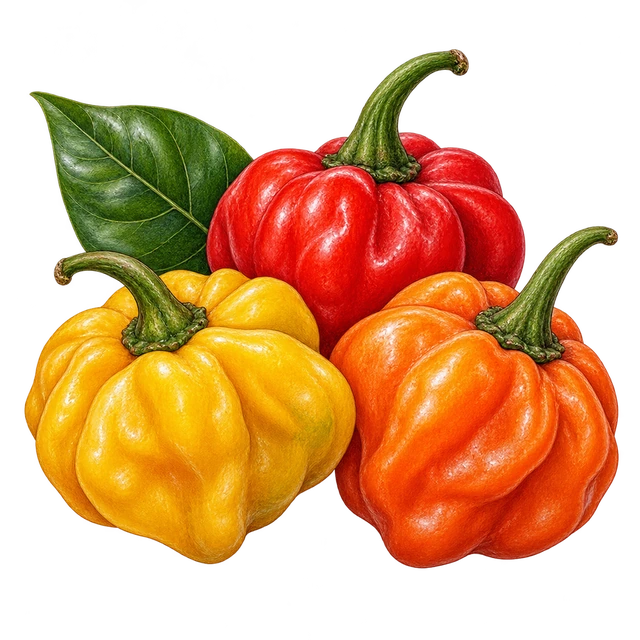
The highly pungent, usually squat and lobed fruits of Scotch bonnet types within Capsicum chinense. They share a species with habanero but retain a distinct culinary and cultivar identity; shape alone does not authenticate a pepper.
Ingredient details, preparation and research
Also known as: Scotch bonnets; Scotch bonnet peppers; Scotch bonnet; Jamaican Scotch bonnet
Source plant or material
Capsicum chinense Jacq., Scotch bonnet cultivar types
Plant family / material: Solanaceae (nightshade family)
Forms and route
Fresh ripe or unripe culinary fruit, food-grade dried or crushed pepper, prepared pepper sauce and jerk seasoning. Concentrated capsaicin and topical medicines are outside this food card.
Vitamins and minerals
This pepper is usually eaten in small seasoning amounts. No authenticated Scotch-bonnet-specific nutrient portion was established here. Generic hot-pepper, habanero or bell-pepper values are not presented as Scotch bonnet figures; use finished-sauce labels for sodium and other nutrients.
Absorption and preparation
No special absorption pairing is established for culinary use. Increasing heat does not establish a greater nutritional or medical benefit.
Practical preparation
Wash the fruit, remove the stem and use a small amount suited to the dish. Wear gloves for cutting and clean utensils afterward. Pepper heat can vary; a cultivar name is not a precise dose.
Combination notes
Jerk combines Scotch bonnet with ingredients such as pimento, thyme, scallion, onion and garlic. Rice-and-peas recipes use coconut milk and herbs; these are culinary pairings, not treatment combinations.
Traditional and reported uses
- Jamaican jerk seasoning
- Jamaican rice and peas
- Jamaican pepper sauces
Contraindications and cautions
- Wear gloves when cutting hot peppers, avoid touching your face or eyes, and ventilate cooking areas. Capsaicin can irritate skin, eyes, airways and the digestive tract.
- Use culinary amounts to taste; concentrated capsaicin, homemade skin applications and extreme-heat challenges are different exposures.
- For shelf-stable pepper sauces or salsa, use a tested preservation recipe with its required acidity and process. Hotness does not establish preservation safety.
Similar items and how they compare
- Habanero pepper, card 165
Also Capsicum chinense and highly pungent.
A different cultivar/culinary type; keep separate names and food-composition boundaries.
- Cayenne pepper, card 270
Another hot culinary pepper.
Cayenne types belong to Capsicum annuum and commonly have slender elongated fruits or a dried-ground spice form.
Separate from habanero
Both peppers belong to Capsicum chinense, but Scotch bonnet has its own horticultural forms and Jamaican culinary context. This card supplements Habanero pepper, card 165, without renaming it or borrowing its nutrient values.
Species origin and local food heritage
Kew describes the species-level native range; Jamaican agricultural and tourism sources describe local cultivation and use. These are different kinds of evidence and do not establish one exact Scotch-bonnet domestication event.
Handling and preservation
Capsaicin irritation and safe sauce preservation are separate issues. Gloves and ventilation reduce handling exposure; a tested recipe provides the appropriate acid and processing for a preserved sauce.
Evidence limits
No cultivar-authenticated nutrient serving, clinical benefit or medicinal dose is established. Broad weight-loss and topical-pain claims in promotional agricultural material were not transferred to this food. Sources document particular Jamaican uses, not an exhaustive Caribbean catalogue.
Entry sources
- Iowa State University Extension: Growing peppers in the home garden
- Kew POWO: Capsicum chinense Jacq.
- Jamaica Agro-Investment Corporation: Hot pepper, West Indian Red and Scotch Bonnet (2023)
- Visit Jamaica: The secret to true Jamaican jerk
- Visit Jamaica: Food for the palate, food for the soul
- National Capital Poison Center: Capsaicin, when the chili is too hot
- National Center for Home Food Preservation: Choice salsa
- FDA: Selecting and serving produce safely
Reference entry 264 · Recorded content review: 2026-10-09 · Review scope and dates