


Key cautions
- Check the source plant and ingredient label.
- Use tested canning recipes without thickener substitutions.
- Starch is not a medical treatment or complete infant food.
What’s inside
Purified arrowroot starch is principally carbohydrate, with little protein or fat. The FAO starch category is not a Maranta-specific cooked serving analysis; no mineral-rich or copper-source claim is made.
Uses in brief

- Thickening sauces and soups
- Puddings and smooth jellies
- Vincentian madungo bakes
History, folklore and reported uses
History, folklore and traditional uses
Kew places Maranta arundinacea’s native range in Mexico and tropical America. Arrowroot belongs to tropical American crop history, while its present culinary reach reflects later cultivation and trade.
Handler’s archival study traces British West Indian starch production, including the importance of enslaved and small-scale producers. Saint Vincent developed a particularly strong arrowroot trade. A government/UNIDO modernization document describes the island’s continuing processing industry; historical export rankings are not presented as current statistics.
Traditional, historical and reported uses
- Thickening sauces and soups
Food or household practiceWhy this label?
The claim records a named culinary use of the stated plant part and preparation. Regional and modern-recipe boundaries are retained; no clinical efficacy is asserted.
Arrowroot starch supplies body to sauces and soups. Handler records this culinary use; Penn State also identifies arrowroot as a thickener suited to foods intended for freezing. Home canning requires a separately tested recipe.
- Puddings and smooth jellies
Food or household practiceWhy this label?
The claim records a named culinary use of the stated plant part and preparation. Regional and modern-recipe boundaries are retained; no clinical efficacy is asserted.
FAO records arrowroot starch in jellies and pastes. Its kitchen value is texture; historical descriptions of invalid foods do not establish a treatment or a complete infant food.
- Vincentian madungo bakes
Food or household practiceWhy this label?
The claim records a named culinary use of the stated plant part and preparation. Regional and modern-recipe boundaries are retained; no clinical efficacy is asserted.
In WFP’s cookbook, Chef Genella Glasgow-McMillan shares arrowroot-starch bakes associated with the Greiggs Heritage Festival in Saint Vincent. Her family’s version combines starch with flour and spices before frying; it is not automatically gluten-free.
3 distinct food uses are featured. Regional accounts describe culinary practice, not clinical treatment; no biblical identification is asserted.
Historical-use additions reviewed 2026-10-09
Story sources
- Kew Plants of the World Online: Maranta arundinacea, accepted name and native range
- FAO EcoCrop: Maranta arundinacea, starch and food uses
- Jerome S. Handler (1971): The History of Arrowroot and the Origin of Peasantries in the British West Indies
- Saint Vincent and the Grenadines / UNIDO: Arrowroot Industry Modernization Project, engineering terms of reference
- ICAR–Central Tuber Crops Research Institute (2023): Minor Tuber Crops, Technical Bulletin 99
- Penn State Extension: Modified Food Starches, freezing and home-canning safeguards
- World Food Programme Caribbean: Returning to Our Roots, Exploring the Root Crop Cuisine of the Caribbean
- FAO: Starches and starchy roots, food-composition categories
Regional reading paths
These sourced notes describe cultivation, trade, food traditions or material history. A regional connection does not claim exclusive origin.
North America
Native tropical American plant; cultivated and processed in the Caribbean, with an especially well-documented Saint Vincent food tradition.
Food-grade rhizome starch thickens sauces and puddings and appears in Vincentian madungo bakes.
South America
Native tropical American starch plant; a Bahia Produtiva food-plant guide archived by Embrapa records traditional cultivation in Brazil’s Recôncavo Baiano.
Processed rhizome starch is a culinary thickener and baking ingredient.
Identity & detailed reference
Identity
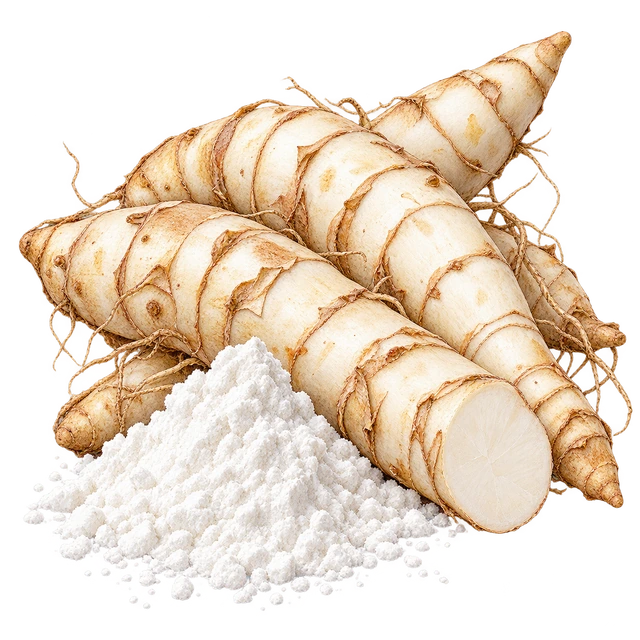
West Indian arrowroot, Maranta arundinacea, supplies starch from underground rhizomes. A powder labelled only “arrowroot” does not by itself verify the plant ingredient.
Ingredient details, preparation and research
Also known as: West Indian arrowroot; Arrow root; St Vincent arrowroot; Maranta starch; Arruruz
Source plant or material
Maranta arundinacea L.
Plant family / material: Marantaceae
Forms and route
Food-grade Maranta starch; cooked rhizome foods where the edible crop is authenticated. Whole rhizome, purified starch and mixed baking flour are separate forms.
Absorption and preparation
No distinctive human nutrient-absorption benefit is established here. Starch extraction removes much of the original plant material, so a rhizome analysis cannot describe the powder.
Practical preparation
For packaged starch, follow its food-use directions and a suitable cooked recipe. Keep the powder dry. For rhizomes, use a verified food crop and an established cooked preparation; this card is not a home starch-extraction guide.
Food notes
Use the stated edible part and preparation; whole foods, isolated starches and extracts are different materials.
Combination context
No special medicinal pairing or nutrient-absorption combination is established for this named food.
Combination notes
Madungo bakes document one local pairing of starch, flour and spices. The whole recipe determines gluten content, added sugar and frying fat.
Traditional and reported uses
- Thickening sauces and soups
- Puddings and smooth jellies
- Vincentian madungo bakes
Contraindications and cautions
- Buy food-grade starch with a clear ingredient list. Other plants also carry arrowroot names; an ornamental plant or unidentified root is not interchangeable.
- Do not replace the specified thickener in home-canning recipes with arrowroot. Unvalidated thickening can prevent adequate heat penetration.
- This starch is a food ingredient, not an antidote, diarrhea remedy or nutritionally complete infant feed. Do not apply raw plant material to wounds.
Similar items and how they compare
- Tapioca / cassava starch
Another culinary starch.
It comes from Manihot esculenta, not Maranta. A product using tapioca needs its own ingredient and preparation information.
- Queensland or East Indian arrowroot
They share an arrowroot common name.
ICAR distinguishes Canna and Curcuma sources from West Indian Maranta arrowroot; their plant identity and food forms should not be merged.
The ingredient name needs a plant boundary
ICAR’s crop bulletin treats Maranta, Canna and Curcuma arrowroots separately. Check a purchased powder’s ingredients rather than inferring its botanical source from a common name.
Food texture is not a medical outcome
Older sources describe arrowroot in convalescent foods. That is a dietary-history record, not clinical proof of benefit for intestinal illness, poisoning or wounds.
Canning and freezing have different rules
Penn State permits arrowroot as a freezing thickener but warns against starch additions or substitutions in untested canning recipes. A smooth sauce is not evidence that a jar received a safe heat process.
Evidence limits
No arrowroot-specific clinical benefit, absorption advantage or standardized nutrient serving was established. This card does not endorse historical poison-arrow treatments, medicinal powders, or infant-feeding claims.
Entry sources
- Kew Plants of the World Online: Maranta arundinacea, accepted name and native range
- FAO EcoCrop: Maranta arundinacea, starch and food uses
- Jerome S. Handler (1971): The History of Arrowroot and the Origin of Peasantries in the British West Indies
- Saint Vincent and the Grenadines / UNIDO: Arrowroot Industry Modernization Project, engineering terms of reference
- ICAR–Central Tuber Crops Research Institute (2023): Minor Tuber Crops, Technical Bulletin 99
- Penn State Extension: Modified Food Starches, freezing and home-canning safeguards
- World Food Programme Caribbean: Returning to Our Roots, Exploring the Root Crop Cuisine of the Caribbean
- FAO: Starches and starchy roots, food-composition categories
Reference entry 258 · Recorded content review: 2026-10-09 · Review scope and dates