


Key cautions
- Warfarin: keep vitamin K intake consistent; no automatic avoidance.
- Keep raw greens refrigerated and prevent cross-contamination.
- Use correctly identified, food-grade plants.
What’s inside
Vitamin K, vitamin C, vitamin A activity and potassium, within the whole leafy food. Amounts depend on the portion and preparation.
Uses in brief

- Fresh salads and toppings
- Cooked green and seasoning
- Edible flower garnish
History, folklore and reported uses
History, folklore and traditional uses
Cultivated rocket has been grown since Roman times and remains familiar in Italian cooking. Its peppery leaves now also appear in mixed salad greens.
The naming deserves care: Kew currently accepts Eruca sativa and lists Eruca vesicaria subsp. sativa as a synonym. Other references use a broader Eruca vesicaria treatment. None makes Diplotaxis tenuifolia the same species.
Traditional, historical and reported uses
- Fresh salads and finishing leaves
Food or household practiceWhy this label?
The claim describes ordinary use of edible leaves.
Tender leaves can join milder salad greens or top a sandwich, pizza or eggs. Baby arugula describes an early harvest stage, rather than a distinct plant species.
- Cooked greens and seasoning
Food or household practiceWhy this label?
The claim concerns cooking and flavor.
Rocket leaves also season warm dishes. FAO describes cooking or frying to moderate their sharpness; Illinois Extension gives pasta and grain dishes as examples.
- Edible flower garnish
Food or household practiceWhy this label?
The claim describes a culinary garnish.
Wisconsin Extension records the flowers as an edible garnish for salads or soups. Use flowers from a correctly identified crop grown for food.
- Seeds as condiment and oil crop
Food or household practiceWhy this label?
The claim concerns documented food and material use, without a therapeutic claim.
FAO records seeds used like mustard and Asian cultivation for seed oil, including culinary and nonfood uses. This history does not make an ornamental seed packet or an industrial oil a food product.
- Historical aphrodisiac association
Traditional accountWhy this label?
An extension retelling reports a traditional intended use without identifying a specific original historical record or demonstrating efficacy.
Wisconsin Extension notes historical seed concoctions intended as aphrodisiacs. This is a reported cultural belief, not evidence that eating rocket improves fertility or sexual function.
Culinary and historical uses are distinguished from medical evidence. The number of uses reflects distinct documented practices, not a fixed quota.
Historical-use additions reviewed 2026-10-09
Story sources
- Kew POWO: Eruca sativa Mill., accepted name and synonyms
- University of Wisconsin–Madison Extension: Arugula, Eruca sativa
- NC State Extension: Eruca vesicaria, cultivated and wild rocket distinction
- University of Illinois Extension: Arugula is not your average leafy green
- FAO Ecocrop: Eruca sativa, leaf and seed uses
Identity & detailed reference
Identity
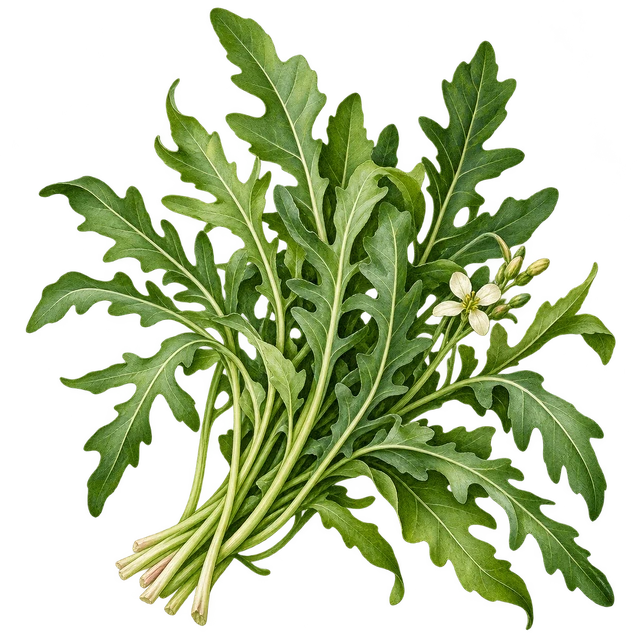
The edible leaves of cultivated salad rocket, Eruca sativa, also treated as Eruca vesicaria subsp. sativa. Wild rocket, Diplotaxis tenuifolia, is a different species sold under similar common names.
Ingredient details, preparation and research
Also known as: Rocket; Salad rocket; Garden rocket; Rucola; Roquette; Eruca vesicaria subsp. sativa
Source plant or material
Eruca sativa Mill.
Plant family / material: Brassicaceae
Forms and route
Fresh baby or mature leaves, salad mixes and lightly cooked greens. Seed oil and extracts are separate materials.
Vitamins and minerals
Arugula contributes vitamin K, vitamin C, vitamin A activity and potassium. A garnish and a full serving supply different amounts; this card makes no numerical USDA serving comparison.
Absorption and preparation
Some dietary fat eaten with vegetables improves absorption of their vitamin K. A little oil in a meal is one option; there is no need for a supplement or a prescribed oil dose.
Practical preparation
Rinse loose leaves under running water and dry gently; follow ready-to-eat package directions. Refrigerate greens and discard rotten material. Add to salads or briefly cook according to the recipe.
Combination context
No special herbal pairing is needed. Keep the overall pattern of leafy-green intake consistent if taking warfarin.
Combination notes
Milder greens can balance the peppery taste. Citrus and a little oil are ordinary flavor partners; oil also supplies fat that helps vitamin K absorption.
Traditional and reported uses
- Fresh salads and toppings
- Cooked green and seasoning
- Edible flower garnish
- Seed-use and cultural history
Contraindications and cautions
- If you take warfarin or another vitamin K antagonist, keep vitamin K intake reasonably consistent and discuss major dietary changes with your anticoagulation team. Arugula does not automatically need to be avoided.
- Handle raw leaves as perishable produce: refrigerate, keep separate from raw meat and use clean hands and utensils. Washing reduces contamination but does not sterilize greens.
- Common names are not an identification guide. Use known food-grade cultivated plants; the historical seed preparations below are not recommendations for medicinal use.
Similar items and how they compare
- Wild rocket (Diplotaxis tenuifolia)
Sold as rocket or wild arugula and used in similar dishes.
A separate perennial species, often with narrower, deeply cut leaves; it is not a synonym of Eruca sativa.
Which rocket is in the bag?
Eruca sativa is the accepted name in the Kew record consulted. Eruca vesicaria subsp. sativa is listed there as a synonym, while NC State also documents the broader Eruca vesicaria usage. Wild rocket is separately identified as Diplotaxis tenuifolia.
Vitamin K and anticoagulation
The relevant advice for warfarin is consistency, not a ban on leafy vegetables. A change from occasional leaves to large daily portions is worth discussing with the team managing anticoagulation.
Whole food does not imply a medical outcome
Nutrient content describes a contribution to the diet. The reviewed culinary and botanical sources do not establish arugula as a treatment for anemia, cancer, infertility or another condition.
Ready-to-eat greens
FDA says produce labeled pre-washed or ready-to-eat can be used without further washing. If it is washed again, keep it away from dirty utensils and surfaces.
Evidence limits
Names and taxonomic treatments vary. This card centers on cultivated Eruca leaves, not every product labeled rocket. Nutrients are qualitative; seed and historical remedy reports do not establish efficacy or safety of extracts.
Entry sources
- Kew POWO: Eruca sativa Mill., accepted name and synonyms
- University of Wisconsin–Madison Extension: Arugula, Eruca sativa
- NC State Extension: Eruca vesicaria, cultivated and wild rocket distinction
- University of Illinois Extension: Arugula is not your average leafy green
- FAO Ecocrop: Eruca sativa, leaf and seed uses
- NIH ODS: Vitamin K, absorption and warfarin guidance
- FDA: Selecting and Serving Produce Safely
Reference entry 248 · Recorded content review: 2026-10-09 · Review scope and dates