


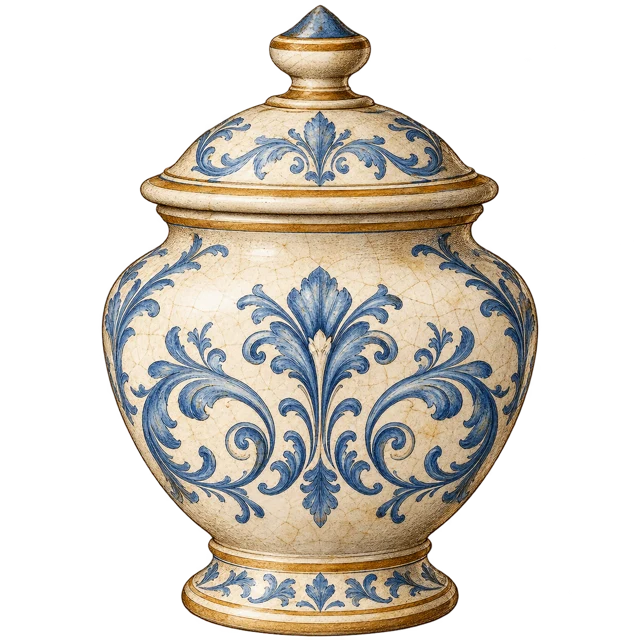
Key cautions
- Do not prepare or ingest a historical theriac formula; compositions varied and could contain dangerous drugs.
- Suspected poisoning or venomous bites require emergency medical care, not a historical antidote.
What’s inside
No fixed chemical composition can be assigned. Some preparations included opium and therefore opioid alkaloids, alongside many other ingredients; a museum label is not a modern analytical specification.
Uses in brief

- Historical antidote reputation for poisoning and animal bites.
- Later panacea and plague-treatment claims, recorded without endorsement.
- Pharmacy trade, authentication and material-culture history.
History, folklore and reported uses
History, folklore and traditional uses
Theriac began as an antidote tradition and grew into a medicine of exceptional breadth and prestige. The Science Museum’s Italian drug jar relates it to poisoning and animal bites, including Galen’s recommendation for snakebite. That history explains the name’s authority without showing that the mixture worked.
Venetian theriac also had a commercial identity. A surviving stamp and museum interpretation link it to authenticity claims and publicly supervised preparation in major cities. During the Black Death, Gentile da Foligno promoted theriac, according to Thomas Asbridge; possible pain relief from opium must remain separate from curing infection.
Traditional, historical and reported uses
- Poisoning and animal-bite antidote history
Historical recordWhy this label?
A dated museum drug-jar record documents theriac antidote reputation as historical interpretation, not modern antidote evidence.
Museum records trace theriac’s early reputation to poisoning and bites. These are historical indications, not present-day antidote advice.
- General remedy reputation
Historical recordWhy this label?
Museum collection records document a changing historical cure-all reputation, not a consistent tested drug.
Over time theriac acquired a cure-all reputation. Its many changing ingredients make it a family of preparations rather than one consistent drug.
- Black Death treatment claim
Historical recordWhy this label?
The claim names Gentile da Foligno and a secondary historical interpretation of a Black Death recommendation; it is not an efficacy finding.
Asbridge describes Gentile da Foligno recommending theriac during the Black Death. This is secondary historical interpretation; symptom relief and eradication of plague are different claims.
- Authentication and pharmacy display
Historical recordWhy this label?
A dated Venetian stamp is material historical evidence of pharmacy authentication and trade practice.
A Venetian stamp provides material evidence of the trade’s concern with authenticity. Museum interpretation connects public preparation and seals to discouraging counterfeit theriac.
This is a historical compound reference. Formulas varied and could contain hazardous ingredients; no reconstruction is recommended.
Historical-use additions reviewed 2026-10-08
Identity & detailed reference
Identity
A family of complex historical compound medicines, including Venetian theriac. Not a single herb, modern syrup, standardized formula or ordinary treacle sweetener.
Ingredient details, preparation and research
Also known as: Theriaca; Venice treacle; Venetian theriac; Andromachus’ theriac (historical form)
Source plant or material
Multiple botanical and sometimes animal-derived ingredients; composition changed by place, period and maker.
Plant family / material: Historical compound; multiple source families
Forms and route
Historical compound electuaries and related apothecary preparations, documented through texts, containers and trade objects. Reference only: no recipe, dose or reproduction instructions.
Absorption and preparation
Unknown and variable composition prevents a meaningful general bioavailability claim. The presence of an ingredient with analgesic effects would not demonstrate control of infection.
Traditional and reported uses
- Historical antidote reputation for poisoning and animal bites.
- Later panacea and plague-treatment claims, recorded without endorsement.
- Pharmacy trade, authentication and material-culture history.
Contraindications and cautions
- Do not prepare or ingest a historical theriac formula; compositions varied and could contain dangerous drugs.
- Suspected poisoning or venomous bites require emergency medical care, not a historical antidote.
- Ordinary treacle syrup and modern products borrowing the name are not equivalent to historical theriac.
A compound, not a plant
A source-plant species or family cannot identify theriac. Place, date and formula would be necessary to analyze any actual specimen; neither historical label nor modern name establishes its contents.
Evidence and risk
Some recorded versions contained opium. Historical prestige, official supervision and a purported antidote role are not modern demonstrations of safety or benefit. No formulation or preparation instructions are provided.
Historical plague claims and present care
No historical plant or material here is established to prevent or cure plague. Suspected plague requires urgent medical assessment and prompt antibiotics.
Entry sources
- Science Museum Group: Italian drug jar for theriac, 1701–1800
- Science Museum Group: Theriac stamp, Venice, 1601–1800
- Science Museum Group: Theriac collection record
- Thomas Asbridge: How Medieval Doctors, Christian and Muslim, Treated the Black Death
- CDC: Clinical Care of Plague
Reference entry 237 · Recorded content review: 2026-10-08 · Review scope and dates