


Key cautions
- Not an edible-mushroom recommendation.
- Do not apply raw fungal tissue or craft amadou to wounds; historical use is not sterile evidence-based care.
What’s inside
Structural studies identify chitin and beta-glucans in the fruiting body’s different layers. Their arrangement helps produce lightweight, mechanically distinct tissues.
Uses in brief

- Fire-lighting tinder
- Felt-like hats
- Bags and decorative craft
History, folklore and reported uses
History, folklore and traditional uses
Tinder fungus shows how useful fungi can be without becoming food. Its inner tissue can be worked into amadou, a soft felt-like material with a history in fire-lighting and craft. The material’s name does not always identify a single fungal species.
Research in Transylvania documents makers turning it into hats and other objects; the Slovene Ethnographic Museum preserves a work hat made from Fomes fomentarius. Modern structural research adds a new chapter, investigating the layered fruiting body as inspiration for lightweight materials.
A closer look at its history
A fungus worked like felt
Field research in Corund, Transylvania records Székely knowledge of working tinder fungus into handicrafts and other customary uses. The soft worked interior becomes amadou, showing fungi as craft materials as well as food or medicine. Local practice should remain attributed to the people and place documented by the researchers.
A portable fire material
Fomes has a long tinder history, including its association with the Tyrolean Iceman’s equipment. The useful material is processed fungal tissue; an archaeological association does not establish every later therapeutic story told about the same fungus.
Additional history reviewed 2026-10-09
Traditional, historical and reported uses
- Fire-lighting tinder
Food or household practiceWhy this label?
The claim documents fire-lighting tinder as a culinary, craft, gardening, or practical material use; it reports neither a treatment outcome nor measured nutrient content.
Prepared fungal material has served as tinder, giving the species one of its familiar names.
- Felt-like hats
Food or household practiceWhy this label?
The claim documents felt-like hats as a culinary, craft, gardening, or practical material use; it reports neither a treatment outcome nor measured nutrient content.
Transylvanian craft research and museum collections document hats fashioned from amadou.
- Bags and decorative craft
Food or household practiceWhy this label?
The claim documents bags and decorative craft as a culinary, craft, gardening, or practical material use; it reports neither a treatment outcome nor measured nutrient content.
Craftspeople have used the worked material for bags, scarves and decorative objects.
- Historical wound and bleeding applications
Traditional accountWhy this label?
The ethnomycological source records folk absorbent/styptic applications; no particular archival prescription or clinical outcome is identified.
Amadou had historical absorbent or styptic applications. These accounts do not make fungal material a sterile dressing or appropriate first aid.
- Lightweight-material research
Laboratory/animal researchWhy this label?
The exact claim is engineering investigation of mechanical structure and lightweight materials, a nonclinical laboratory research use.
Researchers study the fruiting body’s layers and mechanical properties as inspiration for new lightweight materials. This is an engineering research use.
Story sources
- Papp et al.: Fomes and birch-polypore uses in Transylvania
- Author-hosted text of Transylvania ethnomycology study
- Slovene Ethnographic Museum: work hat made from Fomes fomentarius
- Kew taxonomy: Fomes fomentarius, Polyporaceae
- Primary materials research: The complex structure of Fomes fomentarius represents an architectural design for high-performance ultralightweight materials
Features and lookalikes to study
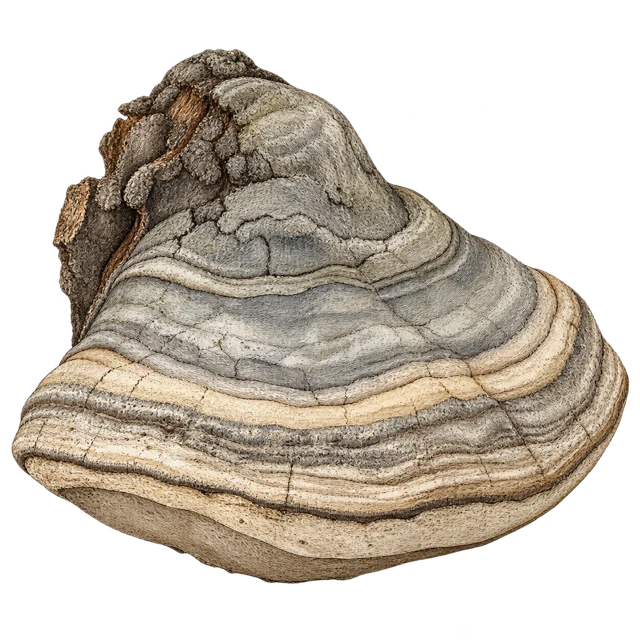
Fomes fomentarius. Amadou is a processed material, sometimes made from other fungi too.
Common names vary between regions and suppliers; the scientific scope above governs this card.
Morphology described in sources
- A mature Fomes conk is woody and often hoof-shaped, with a dull zoned upper crust, brown internal tissue and layered tubes. It persists for multiple years on hardwood.
- Habitat and substrate
- See the source-linked morphology and comparison notes below; a separate habitat summary has not been verified for this card.
- Geographic scope
- A complete regional range is not established here. Broad common names and commercial labels can span different species.
- Season in the cited region
- No region-specific fruiting season has been verified for this card. Do not infer a local season from trade availability.
Fomes inzengae and other cryptic Fomes lineages
F. inzengae can be almost indistinguishable in gross appearance. Studies assess host/ecology, pores, spores and multilocus sequences.
In a Central European study, pore and other measurements overlap; habitat tendencies are not a universal field key. DNA may be needed for confident separation.
Fomitopsis betulina
Birch polypore generally forms an annual pale-to-brown rounded bracket with white flesh and a smoothly rolled rim, rather than the perennial brown-fleshed hoof form.
Old fruiting bodies can darken, both can occur on birch, and neither host nor shape alone identifies the species.
Limits and regional differences
- Amadou is a processed material, not a species name or an edible preparation. Historical specimens called F. fomentarius may have been identified broadly before cryptic species were resolved.
- Educational comparison only. Neither this card, an illustration, a photograph, a spore-print colour nor a checklist establishes that a wild collection is safe to eat. A qualified local mycologist must assess uncertain material; do not taste an unknown fungus. Cooking does not reliably eliminate mushroom toxins.
Regional reading paths
These sourced notes describe cultivation, trade, food traditions or material history. A regional connection does not claim exclusive origin.
Europe
Craft tradition: field research documents tinder-fungus artisans in Corund, Transylvania, Romania; the Slovene Ethnographic Museum preserves a fungus-made work hat.
Processed fungal tissue for tinder and felt-like hats or other crafts. This is not a food or sterile wound-dressing recommendation.
Identity & detailed reference
Identity
Fomes fomentarius. Amadou is a processed material, sometimes made from other fungi too.
Ingredient details, preparation and research
Also known as: Tinder fungus; Hoof fungus; Amadou (processed material, also made from other fungi)
Source plant or material
Woody fruiting bodies; the inner tissue can be processed into amadou, a felt-like craft material.
Fungal family: Polyporaceae
Forms and route
Prepared tinder, worked amadou sheets and crafted objects; laboratory materials are separate engineered products.
Vitamins and minerals
A craft and historical-medicine material, not an edible mushroom or dietary nutrient source.
Absorption and preparation
The relevant processing is for fire-lighting or craft, not digestive absorption. Historical treatments and modern engineering processes do not create an approved home medicine.
Traditional and reported uses
- Prepared fungal material has served as tinder, giving the species one of its familiar names.
- Transylvanian craft research and museum collections document hats fashioned from amadou.
- Craftspeople have used the worked material for bags, scarves and decorative objects.
- Amadou had historical absorbent or styptic applications. These accounts do not make fungal material a sterile dressing or appropriate first aid.
- Researchers study the fruiting body’s layers and mechanical properties as inspiration for new lightweight materials. This is an engineering research use.
Contraindications and cautions
- Not an edible-mushroom recommendation.
- Do not apply raw fungal tissue or craft amadou to wounds; historical use is not sterile evidence-based care.
- Processed tinder and craft materials may contain additives and are not food.
Similar items and how they compare
- Birch polypore / razor-strop fungus
Both are bracket fungi with documented material-culture uses.
Tinder fungus supplies felt-like amadou; birch polypore has razor-strop and specifically documented Sámi ball-making histories.
Fungus, family and material
Fomes fomentarius. Polyporaceae. Woody fruiting bodies; the inner tissue can be processed into amadou, a felt-like craft material.
- Papp et al.: Fomes and birch-polypore uses in Transylvania
- Author-hosted text of Transylvania ethnomycology study
- Slovene Ethnographic Museum: work hat made from Fomes fomentarius
- Kew taxonomy: Fomes fomentarius, Polyporaceae
- Primary materials research: The complex structure of Fomes fomentarius represents an architectural design for high-performance ultralightweight materials
Preparation and evidence
The relevant processing is for fire-lighting or craft, not digestive absorption. Historical treatments and modern engineering processes do not create an approved home medicine.
- Papp et al.: Fomes and birch-polypore uses in Transylvania
- Author-hosted text of Transylvania ethnomycology study
- Slovene Ethnographic Museum: work hat made from Fomes fomentarius
- Kew taxonomy: Fomes fomentarius, Polyporaceae
- Primary materials research: The complex structure of Fomes fomentarius represents an architectural design for high-performance ultralightweight materials
Constituents and nutrition
Structural studies identify chitin and beta-glucans in the fruiting body’s different layers. Their arrangement helps produce lightweight, mechanically distinct tissues. A craft and historical-medicine material, not an edible mushroom or dietary nutrient source.
- Papp et al.: Fomes and birch-polypore uses in Transylvania
- Author-hosted text of Transylvania ethnomycology study
- Slovene Ethnographic Museum: work hat made from Fomes fomentarius
- Kew taxonomy: Fomes fomentarius, Polyporaceae
- Primary materials research: The complex structure of Fomes fomentarius represents an architectural design for high-performance ultralightweight materials
History and documented uses
Tinder fungus shows how useful fungi can be without becoming food. Its inner tissue can be worked into amadou, a soft felt-like material with a history in fire-lighting and craft. The material’s name does not always identify a single fungal species. Research in Transylvania documents makers turning it into hats and other objects; the Slovene Ethnographic Museum preserves a work hat made from Fomes fomentarius. Modern structural research adds a new chapter, investigating the layered fruiting body as inspiration for lightweight materials.
- Papp et al.: Fomes and birch-polypore uses in Transylvania
- Author-hosted text of Transylvania ethnomycology study
- Slovene Ethnographic Museum: work hat made from Fomes fomentarius
- Kew taxonomy: Fomes fomentarius, Polyporaceae
- Primary materials research: The complex structure of Fomes fomentarius represents an architectural design for high-performance ultralightweight materials
Safety and interpretation
Not an edible-mushroom recommendation. Do not apply raw fungal tissue or craft amadou to wounds; historical use is not sterile evidence-based care. Processed tinder and craft materials may contain additives and are not food.
- Papp et al.: Fomes and birch-polypore uses in Transylvania
- Author-hosted text of Transylvania ethnomycology study
- Slovene Ethnographic Museum: work hat made from Fomes fomentarius
- Kew taxonomy: Fomes fomentarius, Polyporaceae
- Primary materials research: The complex structure of Fomes fomentarius represents an architectural design for high-performance ultralightweight materials
Entry sources
- Papp et al.: Fomes and birch-polypore uses in Transylvania
- Author-hosted text of Transylvania ethnomycology study
- Slovene Ethnographic Museum: work hat made from Fomes fomentarius
- Kew taxonomy: Fomes fomentarius, Polyporaceae
- Primary materials research: The complex structure of Fomes fomentarius represents an architectural design for high-performance ultralightweight materials
Reference entry 226 · Recorded content review: 2026-10-08 · Review scope and dates