


Key cautions
- Use only a finished product labeled for its intended site and age; concentrated oil and experimental study preparations are not home-use instructions.
What’s inside
Patchouli alcohol and sesquiterpenes such as patchoulenes, guaiene and bulnesene occur in the oil; proportions vary.
Uses in brief

- Mosquito-repellent research: patchouli oil was among the more active oils in a human laboratory bite-screening study.
- Perfume, soap and cosmetic fragrance
- Historical leaf-based textile scenting and insect deterrence
- Aromatherapy practice; formulation-specific repellent research
History, folklore and reported uses
History, folklore and traditional uses
Patchouli’s trade history extends well beyond mosquitoes. PROSEA describes dried aromatic leaves packed with clothing to scent it and deter insects; Indian shawls helped introduce the smell to Europe. Those textile practices concern leaves from Pogostemon species, not a demonstrated use of every bottled patchouli oil.
The distilled oil became a major perfumery material, valued for its persistent character and ability to support other scents. FAO also records its association with 1960s counterculture and aromatherapy. Fragrance oil, dried leaves and experimental repellent formulations have different uses and precautions.
Traditional, historical and reported uses
- Mosquito repellency in the documented preparation
Mixed/contextual sourcesWhy this label?
The claim combines human bite-screening research and separate nonhuman pupicidal experiments; it explicitly distinguishes repelling adults from killing pupae.
Mosquito-repellent research: patchouli oil was among the more active oils in a human laboratory bite-screening study. Later experimental work has studied leaf-oil or lotion preparations against adult mosquitoes. This supports a research-use description, not a recommendation to make a skin repellent. Its separate pupicidal research concerns killing mosquito pupae, not warding off adult mosquitoes. No universal duration, disease-prevention claim, or claim that living patchouli plants protect an area. Abstract-level review of the newer lotion paper; no formulation recommendation.
- Trongtokit et al. (2005): Comparative repellency of 38 essential oils against mosquito bites
- Gokulakrishnan et al. (2013): Pupicidal and repellent activities of Pogostemon cablin essential oil
- Yunus et al. (2024): Effectiveness of a patchouli repellent lotion against Aedes aegypti
- ITIS: Pogostemon cablin
- Perfume, soap and cosmetic fragrance
Food or household practiceWhy this label?
The claim documents perfume, soap and cosmetic fragrance as a culinary, craft, gardening, or practical material use; it reports neither a treatment outcome nor measured nutrient content.
The oil supplies a distinctive, lasting perfume note and acts as a fixative in fragrance blends. It is also used to scent soaps and cosmetics. These are established fragrance applications, grouped together rather than counted as a separate use for each product.
- Commercial flavoring
Food or household practiceWhy this label?
The claim documents commercial flavoring as a culinary, craft, gardening, or practical material use; it reports neither a treatment outcome nor measured nutrient content.
Technical industry references document patchouli oil in food, drink and confectionery flavoring. Industrial flavor use does not make an aromatherapy bottle edible and is not a recommendation to swallow the oil.
- Aromatherapy practice
Mixed/contextual sourcesWhy this label?
FAO documents contemporary aromatherapy practice without identifying a historical tradition or a clinical outcome; the support is contextual use documentation.
FAO records use by aromatherapists. This is a scent-based practice; the documentation alone does not show that patchouli treats anxiety, depression or other conditions.
Four oil-purpose sections cover repellency, fragrance, commercial flavoring and aromatherapy practice. Leaf-based textile and incense traditions are presented separately.
Historical-use additions reviewed 2026-10-08
Story sources
- Trongtokit et al. (2005): Comparative repellency of 38 essential oils against mosquito bites
- Gokulakrishnan et al. (2013): Pupicidal and repellent activities of Pogostemon cablin essential oil
- Yunus et al. (2024): Effectiveness of a patchouli repellent lotion against Aedes aegypti
- ITIS: Pogostemon cablin
- PROSEA, Essential-oil plants: Pogostemon (1999)
- FAO: Minor oil crops, Patchouli
- Singapore NParks: Pogostemon cablin
- Indonesian agricultural research archive: Patchouli oil product as insects repellent (1995)
- UNIDO: A manual on the essential oil industry, Patchouli
Regional reading paths
These sourced notes describe cultivation, trade, food traditions or material history. A regional connection does not claim exclusive origin.
Asia
Cultivated/processed: Southeast Asia, including Malaysia and Indonesia.
Leaf-derived volatile oil used in perfumery.
Identity & detailed reference
Identity
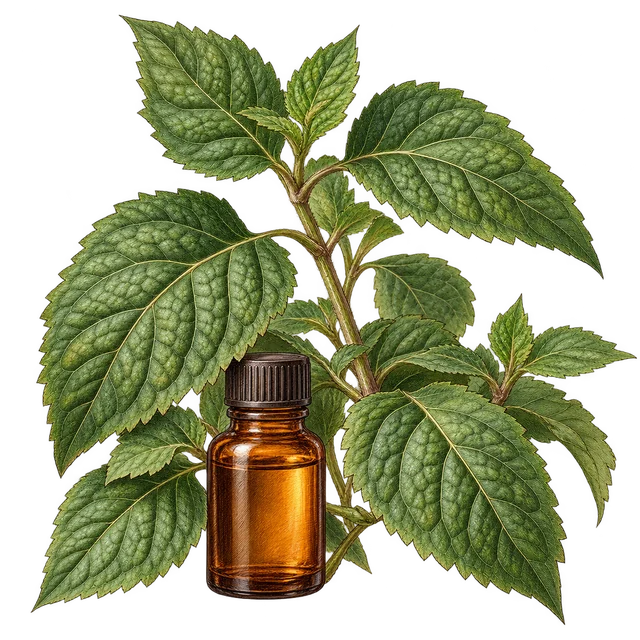
Patchouli is Pogostemon cablin. This card concerns identified leaf-derived essential oil and researched repellent formulations, rather than unstandardized leaf rubs or perfume oils of unknown composition.
Ingredient details, preparation and research
Source plant or material
Essential oil distilled from aromatic leaves; leaf extracts and finished lotions are separate preparations.
Plant family / material: Lamiaceae (mint family)
Forms and route
Leaf essential oil; fragrance products; experimental mosquito-repellent oils and lotions.
Absorption and preparation
Repellency concerns exposure at the skin surface or an explicitly tested spatial formulation. It is not an oral absorption goal; food pairing, teas and supplements are not established substitutes.
Traditional and reported uses
- Mosquito-repellent research: patchouli oil was among the more active oils in a human laboratory bite-screening study.
- Later experimental work has studied leaf-oil or lotion preparations against adult mosquitoes. This supports a research-use description, not a recommendation to make a skin repellent.
- Its separate pupicidal research concerns killing mosquito pupae, not warding off adult mosquitoes.
- Perfume, soap and cosmetic fragrance: The oil supplies a distinctive, lasting perfume note and acts as a fixative in fragrance blends. It is also used to scent soaps and cosmetics. These are established fragrance applications, grouped together rather than counted as a separate use for each product.
- Commercial flavoring: Technical industry references document patchouli oil in food, drink and confectionery flavoring. Industrial flavor use does not make an aromatherapy bottle edible and is not a recommendation to swallow the oil.
- Aromatherapy practice: FAO records use by aromatherapists. This is a scent-based practice; the documentation alone does not show that patchouli treats anxiety, depression or other conditions.
Contraindications and cautions
- Use only a finished product labeled for its intended site and age; concentrated oil and experimental study preparations are not home-use instructions.
- Experimental concentrations do not establish a safe household dilution, and a fragrance product is not automatically an effective repellent.
- Do not swallow the oil or substitute it for proven bite-prevention measures when disease exposure matters.
- Traditional leaf preparations, commercial food flavoring and an aromatherapy oil are not interchangeable. Do not infer clinical benefits from fragrance use or laboratory antimicrobial findings.
Similar items and how they compare
- Clove essential oil
Also screened for adult mosquito repellency
Clove is eugenol-rich and has its own sensitization and tissue-injury concerns.
Mosquito repellency and evidence
Human laboratory bite screening; additional formulation and pupicidal studies kept separate. The studies support experimental adult-repellency activity, not a consumer protection claim. No universal duration, disease-prevention claim, or claim that living patchouli plants protect an area. Abstract-level review of the newer lotion paper; no formulation recommendation.
- Trongtokit et al. (2005): Comparative repellency of 38 essential oils against mosquito bites
- Gokulakrishnan et al. (2013): Pupicidal and repellent activities of Pogostemon cablin essential oil
- Yunus et al. (2024): Effectiveness of a patchouli repellent lotion against Aedes aegypti
- ITIS: Pogostemon cablin
Evidence limits
No universal duration, disease-prevention claim, or claim that living patchouli plants protect an area. Abstract-level review of the newer lotion paper; no formulation recommendation.
Entry sources
- Trongtokit et al. (2005): Comparative repellency of 38 essential oils against mosquito bites
- Gokulakrishnan et al. (2013): Pupicidal and repellent activities of Pogostemon cablin essential oil
- Yunus et al. (2024): Effectiveness of a patchouli repellent lotion against Aedes aegypti
- ITIS: Pogostemon cablin
- PROSEA, Essential-oil plants: Pogostemon (1999)
- FAO: Minor oil crops, Patchouli
- Singapore NParks: Pogostemon cablin
- Indonesian agricultural research archive: Patchouli oil product as insects repellent (1995)
- UNIDO: A manual on the essential oil industry, Patchouli
Reference entry 206 · Recorded content review: 2026-10-08 · Review scope and dates