


Key cautions
- Avoid in pregnancy, breastfeeding, children under 12, bowel obstruction/inflammation, unexplained abdominal pain or severe dehydration.
- Cascara medicines are limited to no more than one week; this is not a home-dosing recommendation. Overuse can cause cramps, diarrhea, electrolyte loss and laxative dependence; do not use for detox or weight loss.
What’s inside
Hydroxyanthracene derivatives, including cascarosides, act as stimulant-laxative constituents.
Uses in brief

- Specified medicines have an EMA-recognized role in short-term occasional constipation.
History, folklore and reported uses
History, folklore and traditional uses
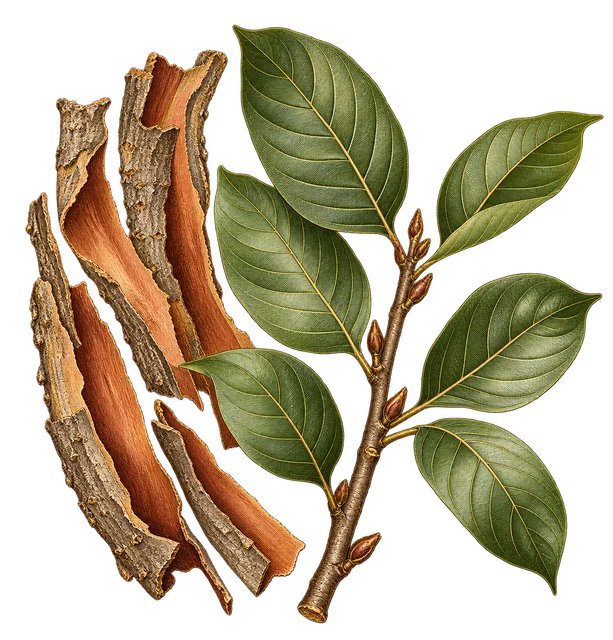
Cascara bark became an established herbal laxative from a western North American tree. Its current European monograph rests on long clinical experience and related anthranoid-laxative evidence, rather than robust modern trials of cascara alone. The same Spanish word is also used for coffee-fruit husks, creating a consequential name collision.
Traditional, historical and reported uses
- Occasional-constipation medicine
Traditional accountWhy this label?
The claim documents processed-bark laxative use and its preparation boundary; it does not report a clinical study result.
Processed bark preparations have a documented laxative history. This is not a recommendation for fresh bark, chronic use or homemade dosing.
- Bark and berry dyes
Food or household practiceWhy this label?
The claim documents bark and berry dyes as a culinary, craft, gardening, or practical material use; it reports neither a treatment outcome nor measured nutrient content.
The U.S. Forest Service records Frangula purshiana bark and dried berries as sources of yellow or saffron-colored dyes, and berry juice in artists’ green dye. These nonfood colorants are distinct from processed-bark laxatives and coffee-fruit cascara.
Only specifically supported historical or culinary uses are included; tradition is not evidence of effectiveness.
Historical-use additions reviewed 2026-10-08
Identity & detailed reference
Identity
Cascara sagrada is the processed dried bark of Frangula purshiana. Coffee-fruit cascara is an unrelated food material from Coffea.
Ingredient details, preparation and research
Also known as: Cascara sagrada; Rhamni purshianae cortex
Source plant or material
Cascara sagrada is the processed dried bark of Frangula purshiana. Coffee-fruit cascara is an unrelated food material from Coffea.
Plant family / material: Rhamnaceae
Forms and route
Standardized dried-bark medicines, teas or extracts; raw/fresh bark and homemade preparations are not substitutes.
Vitamins and minerals
No nutrient serving is assigned. Laxative-related weight change does not represent fat loss or nutritional benefit.
Absorption and preparation
The relevant action is in the bowel, not nutritional uptake. Laxative-induced diarrhea can disturb fluid and electrolyte balance; no absorption booster is appropriate.
Traditional and reported uses
- Specified medicines have an EMA-recognized role in short-term occasional constipation.
Contraindications and cautions
- Avoid in pregnancy, breastfeeding, children under 12, bowel obstruction/inflammation, unexplained abdominal pain or severe dehydration.
- Cascara medicines are limited to no more than one week; this is not a home-dosing recommendation. Overuse can cause cramps, diarrhea, electrolyte loss and laxative dependence; do not use for detox or weight loss.
- Check medicines that affect potassium or heart rhythm, including cardiac glycosides and diuretics.
Similar items and how they compare
- Senna
Another stimulant laxative containing hydroxyanthracene derivatives.
Different plant and preparations; neither is a daily detox or interchangeable home dose.
- Coffee-fruit cascara
Shares the word cascara.
Coffee fruit is a different botanical material; identify the label before use.
Identity and evidence
Kew accepts Frangula purshiana with Rhamnus purshiana as a synonym. EMA recognizes specified bark preparations for occasional constipation; its assessment notes an absence of representative modern cascara-only trials.
Duration and hazards
EMA limits use to no more than one week. Longer use can upset water/salt balance and bowel function. Persistent constipation, pain or vomiting needs assessment rather than escalation of laxatives.
The other cascara
Coffee-fruit extracts and husk beverages belong to Coffea, not this laxative tree. A coffee-fruit regulatory submission documents that separate food usage; it is not evidence of safety for cascara sagrada bark.
Evidence limits
- No household medicinal dose is supplied.
- This card assumes the requested cascara means laxative bark; verify if coffee-fruit tea was intended.
Entry sources
- EMA: Cascara public summary
- EMA: Cascara final assessment report revision 1
- Kew: Frangula purshiana
- FDA-hosted GRAS notice 868: Coffee fruit extract
- U.S. Forest Service: Frangula purshiana species review
Reference entry 198 · Recorded content review: 2026-10-07 · Review scope and dates