


Key cautions
- Use cultivated food carrots; this card does not authorize foraging look-alike members of the carrot family.
- Hard raw pieces can be a choking hazard; adjust texture for young children and anyone with swallowing difficulty.
What’s inside
Carbohydrate, fiber and natural sugars; orange carrots contain beta-carotene, while other colors have different pigment profiles.
Uses in brief

- Raw sticks and shreds
- Roasted side dish
- Stir-fry vegetable
History, folklore and reported uses
History, folklore and traditional uses
Illinois Extension traces cultivated carrots to Central Asia and describes early domesticated roots as purple and yellow. Orange is therefore one selected crop form, rather than the only authentic carrot color.
The kitchen history continues in practical forms: crisp raw shreds, soup vegetables and preserved roots. These uses depend on a known cultivated food crop; the family resemblance to wild plants is not an identification guide.
Traditional, historical and reported uses
- Raw sticks and shreds
Food or household practiceWhy this label?
The claim documents raw sticks and shreds as a culinary, craft, gardening, or practical material use; it reports neither a treatment outcome nor measured nutrient content.
Purdue describes carrot sticks and shreds for salads, wraps or sandwiches.
- Roasted side dish
Food or household practiceWhy this label?
The claim documents roasted side dish as a culinary, craft, gardening, or practical material use; it reports neither a treatment outcome nor measured nutrient content.
Roasting cut roots is a documented preparation.
- Stir-fry vegetable
Food or household practiceWhy this label?
The claim documents stir-fry vegetable as a culinary, craft, gardening, or practical material use; it reports neither a treatment outcome nor measured nutrient content.
Purdue notes that carrots take longer than softer vegetables and enter the pan earlier.
- Soup ingredient
Food or household practiceWhy this label?
The claim documents soup ingredient as a culinary, craft, gardening, or practical material use; it reports neither a treatment outcome nor measured nutrient content.
Purdue’s recipes include carrot-containing vegetable and bean soups.
- Pickled or fermented roots
Food or household practiceWhy this label?
The claim documents pickled or fermented roots as a culinary, craft, gardening, or practical material use; it reports neither a treatment outcome nor measured nutrient content.
Purdue documents preservation through pickling and fermentation; use a tested method.
Five distinct culinary applications are documented; these are food practices, not five medicinal indications.
Identity & detailed reference
Identity
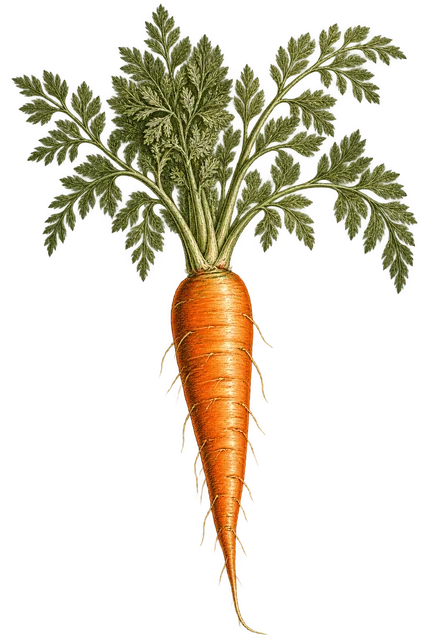
Cultivated carrot storage roots, including orange, purple, yellow, red and white forms.
Ingredient details, preparation and research
Also known as: carrot root
Source plant or material
Daucus carota L. subsp. sativus; Cultivated carrot storage roots, including orange, purple, yellow, red and white forms.
Plant family / material: Apiaceae
Forms and route
Fresh raw or cooked roots; grated carrot, soup ingredients and tested preserved products. Carrot-seed oil is a different material.
Vitamins and minerals
Orange carrots contribute provitamin-A carotenoids and fiber. A white or purple variety should not automatically receive the nutrient profile of an orange one.
Absorption and preparation
The body converts beta-carotene to vitamin A; conversion and food-matrix effects vary. Cooking and a mixed meal can affect availability, but no precise uptake percentage is promised.
Practical preparation
Scrub or peel cultivated roots, then cut to suit the dish. Refrigerate and discard soft, slimy or rotten roots.
Combination context
Serve with a normal mixed meal that includes some fat if desired for carotenoid availability. Carrots do not require a special supplement pairing.
Traditional and reported uses
- Purdue describes carrot sticks and shreds for salads, wraps or sandwiches.
- Roasting cut roots is a documented preparation.
- Purdue notes that carrots take longer than softer vegetables and enter the pan earlier.
- Purdue’s recipes include carrot-containing vegetable and bean soups.
- Purdue documents preservation through pickling and fermentation; use a tested method.
Contraindications and cautions
- Use cultivated food carrots; this card does not authorize foraging look-alike members of the carrot family.
- Hard raw pieces can be a choking hazard; adjust texture for young children and anyone with swallowing difficulty.
Similar items and how they compare
- Parsnip
Both are cultivated Apiaceae roots.
They are different species with different flavor and carotenoid profiles.
- Carrot-seed oil
Comes from the same broader source plant.
Seed essential oil is not equivalent to edible carrot root or its vitamin-A contribution.
Food identity and preparation
Fresh raw or cooked roots; grated carrot, soup ingredients and tested preserved products. Carrot-seed oil is a different material. Scrub or peel cultivated roots, then cut to suit the dish. Refrigerate and discard soft, slimy or rotten roots.
Nutrition and evidence limits
Orange carrots contribute provitamin-A carotenoids and fiber. A white or purple variety should not automatically receive the nutrient profile of an orange one. The body converts beta-carotene to vitamin A; conversion and food-matrix effects vary. Cooking and a mixed meal can affect availability, but no precise uptake percentage is promised.
Evidence limits
- Nutrient information is qualitative; no unverified USDA food code, portion or numerical analysis is supplied.
- Culinary history does not establish a treatment effect. No medicinal dose is proposed.
Entry sources
- Purdue Extension FoodLink: carrot
- Illinois Extension: How to Grow Carrots, 2020
- Illinois Extension: Where Carrots Get Their Color
- NIH ODS: Vitamin A and Carotenoids
- FDA: Selecting and Serving Produce Safely
- CDC: Choking Hazards in Infant and Toddler Nutrition
Reference entry 174 · Recorded content review: 2026-10-07 · Review scope and dates