


Key cautions
- Contains oxalates and can accumulate nitrate; avoid large concentrated portions.
- Use a known food-growing site. Seek dietary advice for kidney disease, recurrent oxalate stones or nitrate-sensitive situations.
What’s inside
Carotenoids and vitamin C occur in foliage; oxalic acid, nitrate and saponins are relevant preparation and safety constituents.
Uses in brief

- Cooked young greens in dishes otherwise using spinach.
History, folklore and reported uses
History, folklore and traditional uses
Cornell’s weed profile records an agricultural contradiction: lamb’s quarters is a troublesome competitor and an appreciated potherb. It describes young foliage in salads and cooking, and cleaned seed used as grain or flour. The notebook favors the cooked-green role while keeping the seed story separate; a weed’s abundance does not tell us what accumulated in the soil or how much belongs on the plate.
Traditional, historical and reported uses
- Potherb
Food or household practiceWhy this label?
The claim documents potherb as a culinary, craft, gardening, or practical material use; it reports neither a treatment outcome nor measured nutrient content.
Cornell records young plants used as cooked greens.
- Seed foods
Food or household practiceWhy this label?
The claim documents seed foods as a culinary, craft, gardening, or practical material use; it reports neither a treatment outcome nor measured nutrient content.
Cornell records cleaned seeds cooked as grain or ground for flour; this is not a recipe for uncleaned seed heads.
Only specifically supported uses are included; historical or culinary use is not clinical proof.
Identity & detailed reference
Identity
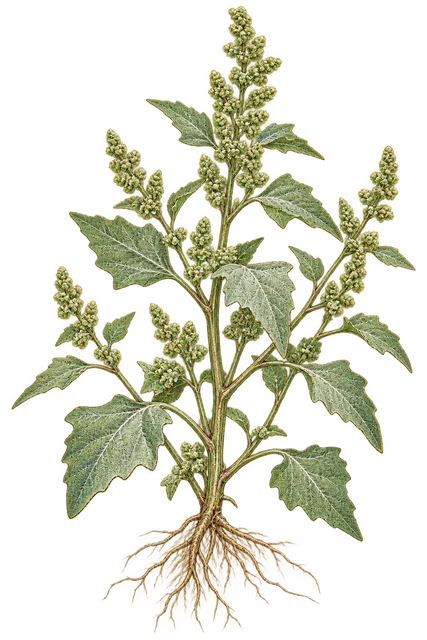
Common lamb’s quarters, Chenopodium album; tender leaves and shoots are the main food focus. It is not a blanket entry for plants called pigweed.
Ingredient details, preparation and research
Source plant or material
Chenopodium album L.; Common lamb’s quarters, Chenopodium album; tender leaves and shoots are the main food focus. It is not a blanket entry for plants called pigweed.
Plant family / material: Amaranthaceae
Forms and route
Cooked young greens; separately cleaned and prepared seed foods in historical accounts.
Vitamins and minerals
Cornell describes nutrient-containing foliage, but this review does not assign a universal raw or cooked serving value. Species, growing conditions and preparation matter.
Absorption and preparation
No special absorption regimen is supported here. Do not claim that steaming or freezing completely removes oxalates, nitrate or contaminants.
Practical preparation
Prefer washed, cooked tender leaves from verified food-grown C. album. Do not collect from manure heaps, treated roadsides or heavily fertilized waste ground.
Traditional and reported uses
- Cooked young greens in dishes otherwise using spinach.
Contraindications and cautions
- Contains oxalates and can accumulate nitrate; avoid large concentrated portions.
- Use a known food-growing site. Seek dietary advice for kidney disease, recurrent oxalate stones or nitrate-sensitive situations.
Similar items and how they compare
- Spinach
A useful kitchen comparison for cooked leaves.
Shared culinary role does not establish identical oxalate content or nutrient delivery.
- Quinoa
Related amaranth-family seed food.
C. quinoa is a distinct crop; quinoa preparation and nutrient figures cannot simply be copied.
Constituents do not prove treatment
NC State flags oxalic acid and saponins. Cornell also records nitrate and distinguishes food use from livestock toxicity. These references do not establish disease treatment or a guaranteed safe processing method.
Individual oxalate advice
Stone-prevention diets depend on stone type and individual findings. Do not restrict dietary calcium on your own or treat this plant card as an individualized kidney diet.
Entry sources
- Cornell CALS Weed Science: Common lambsquarters
- NC State Extension: Chenopodium album
- National Kidney Foundation: Kidney stone diet plan and prevention
Reference entry 180 · Recorded content review: 2026-10-07 · Review scope and dates