


Key cautions
- Avoid celery if you have a diagnosed celery allergy.
- Do not substitute seed extracts or concentrated juice for treatment or assume that an unfamiliar wild umbel is celery.
What’s inside
Water-rich plant tissue with fiber and carbohydrate; aromatic compounds provide flavor.
Uses in brief

- Filled raw stalk snack
- Salad crunch
- Soup aromatic
History, folklore and reported uses
History, folklore and traditional uses
The Midwest Vegetable Production Guide places the start of United States commercial celery production in nineteenth-century Michigan. Growers selected for stalk characteristics, including green forms and blanched paler stalks.
Illinois Extension’s kitchen account treats celery as both a crisp raw ingredient and an aromatic cooked one. Celeriac belongs alongside it botanically, but is grown for a different edible structure and should not be treated as the same supermarket vegetable.
Traditional, historical and reported uses
- Filled raw stalk snack
Food or household practiceWhy this label?
The claim documents filled raw stalk snack as a culinary, craft, gardening, or practical material use; it reports neither a treatment outcome nor measured nutrient content.
Illinois Extension describes celery filled with peanut butter and raisins; allergy suitability depends on the filling.
- Salad crunch
Food or household practiceWhy this label?
The claim documents salad crunch as a culinary, craft, gardening, or practical material use; it reports neither a treatment outcome nor measured nutrient content.
Chopped celery adds crisp texture to salads.
- Soup aromatic
Food or household practiceWhy this label?
The claim documents soup aromatic as a culinary, craft, gardening, or practical material use; it reports neither a treatment outcome nor measured nutrient content.
Celery flavors soups, including the Extension guide’s bean soup.
- Pot-roast vegetable
Food or household practiceWhy this label?
The claim documents pot-roast vegetable as a culinary, craft, gardening, or practical material use; it reports neither a treatment outcome nor measured nutrient content.
The same guide records celery in pot roasts.
- Stir-fry ingredient
Food or household practiceWhy this label?
The claim documents stir-fry ingredient as a culinary, craft, gardening, or practical material use; it reports neither a treatment outcome nor measured nutrient content.
Celery is also used in stir-fries.
Five distinct culinary applications are documented; these are food practices, not five medicinal indications.
Identity & detailed reference
Identity
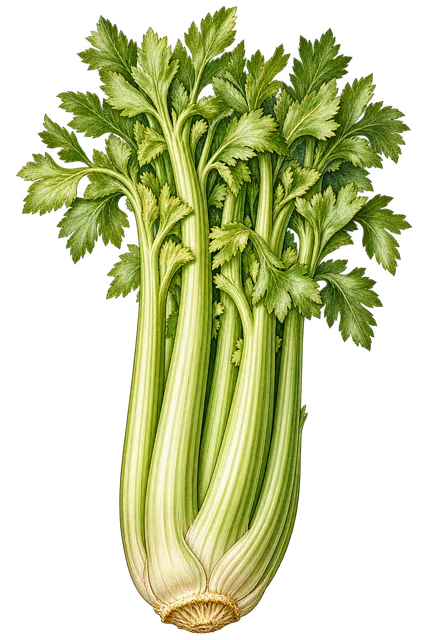
Edible celery leaf stalks and leaves; celeriac and celery seed are distinct crop parts or preparations.
Ingredient details, preparation and research
Also known as: celery stalks
Source plant or material
Apium graveolens L., stalk-celery cultivars; Edible celery leaf stalks and leaves; celeriac and celery seed are distinct crop parts or preparations.
Plant family / material: Apiaceae
Forms and route
Fresh stalks and leaves, raw or cooked; dried or frozen culinary celery. Celery juice and seed extracts are separate products.
Vitamins and minerals
Celery contributes modest amounts of fiber and minerals in ordinary food portions. Juice is not equivalent to the whole stalk and no detoxifying effect is established here.
Absorption and preparation
The cited food sources do not establish a special absorption benefit from celery juice or eating celery on an empty stomach.
Practical preparation
Trim the base and wash between stalks under running water. Keep refrigerated; use sound leaves as well as stalks.
Combination context
Celery supplies aroma and crunch beside onion, carrot, beans or grains. No clinical synergy is claimed.
Traditional and reported uses
- Illinois Extension describes celery filled with peanut butter and raisins; allergy suitability depends on the filling.
- Chopped celery adds crisp texture to salads.
- Celery flavors soups, including the Extension guide’s bean soup.
- The same guide records celery in pot roasts.
- Celery is also used in stir-fries.
Contraindications and cautions
- Avoid celery if you have a diagnosed celery allergy.
- Do not substitute seed extracts or concentrated juice for treatment or assume that an unfamiliar wild umbel is celery.
Similar items and how they compare
- Celeriac
Cultivated forms of the same species.
Celeriac is selected for its swollen underground base, with a different texture.
- Celery seed
Same plant species provides an aromatic spice.
The concentrated spice and seed extracts are not nutritionally equivalent to a stalk.
Food identity and preparation
Fresh stalks and leaves, raw or cooked; dried or frozen culinary celery. Celery juice and seed extracts are separate products. Trim the base and wash between stalks under running water. Keep refrigerated; use sound leaves as well as stalks.
Nutrition and evidence limits
Celery contributes modest amounts of fiber and minerals in ordinary food portions. Juice is not equivalent to the whole stalk and no detoxifying effect is established here. The cited food sources do not establish a special absorption benefit from celery juice or eating celery on an empty stomach.
Evidence limits
- Nutrient information is qualitative; no unverified USDA food code, portion or numerical analysis is supplied.
- Culinary history does not establish a treatment effect. No medicinal dose is proposed.
Entry sources
- Purdue Extension FoodLink: celery
- Illinois Extension: Celery and Celery Root
- Midwest Vegetable Production Guide: Celery horticulture, reviewed 2022
- NC State Extension Plant Toolbox: Apium graveolens
- FDA: Selecting and Serving Produce Safely
- Allergy UK: Celery Allergy
Reference entry 173 · Recorded content review: 2026-10-07 · Review scope and dates