


Key cautions
- Raspberries spoil quickly; refrigerate and use promptly, discarding moldy or mushy fruit.
- Food information about berries does not establish the safety or benefit of raspberry leaf during pregnancy or for any medical use.
What’s inside
Water, naturally occurring sugars, dietary fiber, vitamin C and anthocyanins in pigmented fruit. Variety and processing affect composition.
Uses in brief

- Eat fresh fruit or use it in breakfast dishes.
- Cook into sauces, pies or preserves.
History, folklore and reported uses
History, folklore and traditional uses
Red raspberries have both Eurasian and North American botanical histories. NC State’s account describes European and American red-raspberry forms, while Purdue also includes black raspberries among familiar garden fruits. Their fragile structure helps explain the longstanding mix of fresh eating and cooked preserves.
Pies, preserves and fruit wine are recorded food uses. Leaf tea appears in some accounts too, but it uses another plant part; it is not a nutritional substitute for the fruit and is not recommended by this card. Modern sauces and breakfast dishes continue the fruit-centered kitchen tradition.
Traditional, historical and reported uses
- Fresh fruit
Food or household practiceWhy this label?
The claim documents fresh fruit as a culinary, craft, gardening, or practical material use; it reports neither a treatment outcome nor measured nutrient content.
Ripe raspberries are eaten directly, without requiring a medicinal preparation.
- Pie and baked fruit
Food or household practiceWhy this label?
The claim documents pie and baked fruit as a culinary, craft, gardening, or practical material use; it reports neither a treatment outcome nor measured nutrient content.
Raspberries supply fruit filling in pies and other baking.
- Fruit sauces
Food or household practiceWhy this label?
The claim documents fruit sauces as a culinary, craft, gardening, or practical material use; it reports neither a treatment outcome nor measured nutrient content.
Purdue documents raspberry sauce as a cooked culinary use.
- Preserves and jam
Food or household practiceWhy this label?
The claim documents preserves and jam as a culinary, craft, gardening, or practical material use; it reports neither a treatment outcome nor measured nutrient content.
Preserves retain the harvest beyond fresh-fruit storage; use tested canning guidance.
- Fruit wine
Food or household practiceWhy this label?
The claim documents fruit wine as a culinary, craft, gardening, or practical material use; it reports neither a treatment outcome nor measured nutrient content.
NC State records raspberry fruit used in wine. This is a historical food application, not a health recommendation or fermentation recipe.
Five fruit uses are documented. Leaf-tea heritage is acknowledged only to keep fruit and leaf evidence separate.
Identity & detailed reference
Identity
Edible raspberry fruit, chiefly red-raspberry cultivars in the Rubus idaeus group. Black raspberries include R. occidentalis. Raspberry leaf tea is not the fruit described here.
Ingredient details, preparation and research
Also known as: Red raspberry fruit; Black raspberry fruit
Source plant or material
Fruit-bearing Rubus raspberry canes, especially Rubus idaeus and Rubus occidentalis.
Plant family / material: Rosaceae (rose family)
Forms and route
Fresh and frozen whole fruit; puree, sauce, baked fruit and preserves. Strained sauces remove seeds and some solids.
Vitamins and minerals
Whole raspberries contribute fiber, vitamin C and carbohydrate, with little fat. Seedless juice, preserves and desserts have different solid, sugar and serving profiles.
Absorption and preparation
No special extraction or food pairing is specified by the cited culinary guidance. Analyses of raspberry pigments do not establish a therapeutic amount or show that every processed raspberry product behaves identically in the body.
Practical preparation
Keep in a shallow refrigerated layer, handle gently and rinse just before use. For jam, follow a tested full recipe; optional straining produces a different texture from whole-seed preserves.
Food notes
Ripe aggregate fruit with its edible seeds; leaves and seed oil are outside this profile.
Combination context
Lemon, other berries, vanilla and ginger are documented flavor partners. Pairing with yogurt or oats is a meal choice, without a claimed medicinal synergy.
Traditional and reported uses
- Eat fresh fruit or use it in breakfast dishes.
- Cook into sauces, pies or preserves.
- Use a tested jam method if preserving fruit for room-temperature storage.
Contraindications and cautions
- Raspberries spoil quickly; refrigerate and use promptly, discarding moldy or mushy fruit.
- Food information about berries does not establish the safety or benefit of raspberry leaf during pregnancy or for any medical use.
Similar items and how they compare
- Blackberries
Another edible Rubus aggregate fruit.
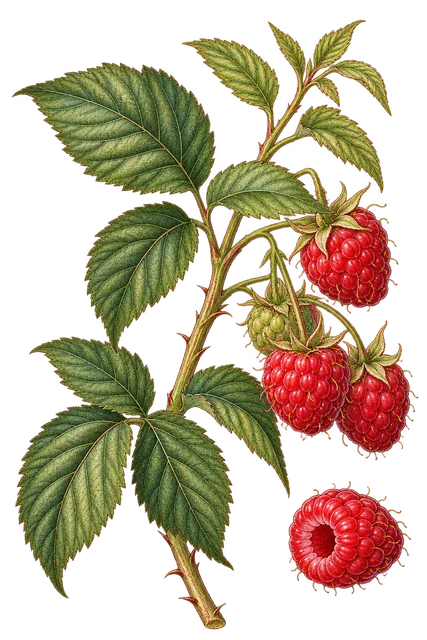
Raspberries commonly separate from the central receptacle and are hollow; blackberries are a different food identity.
- Raspberry leaf
Comes from the same plant group.
Leaf infusions have separate composition and safety questions and are not a serving of fruit.
- Raspberry seed oil
A product of the fruit’s seeds.
An extracted fat that does not retain the whole berry’s fiber or vitamin profile.
An aggregate fruit
NC State describes raspberry as many small drupes held in a hollow cone. The everyday name berry does not describe its botanical fruit type.
Processing and pigments
USDA researchers analyzed frozen red raspberries, puree and juice concentrate and found variation in anthocyanin profiles and amounts. This analytical study supports distinguishing products, not a claim that they treat disease.
Gentle handling matters
Purdue recommends refrigeration and washing just before use because raspberries are delicate. The short storage window makes buying usable amounts and preserving surplus practical.
Evidence limits
- Nutrition is qualitative; no USDA serving calculation or quantitative nutrient profile is asserted.
Entry sources
- NC State Extension Plant Toolbox: Raspberries, Rubus idaeus
- Purdue Extension FoodLink: Raspberry
- USDA Agricultural Research Service: Anthocyanin profiles and contents in processed red raspberries
- National Center for Home Food Preservation: Berry Jams without Pectin
Reference entry 170 · Recorded content review: 2026-10-07 · Review scope and dates