


Key cautions
- Do not use cranberry foods or supplements to delay diagnosis or treatment of a suspected urinary tract infection.
- Warfarin interaction evidence is conflicting; ask your prescriber before starting regular cranberry supplements or a therapeutic juice regimen.
What’s inside
Naturally occurring carbohydrate, fiber in whole fruit, red anthocyanin pigments and proanthocyanidins (PACs). Processing changes the resulting product.
Uses in brief

- Cook into a tart sauce or add to savory foods and baked goods.
- Use dried cranberries in mixed snacks, checking the label for added sugar.
History, folklore and reported uses
History, folklore and traditional uses
NCCIH records cranberry use as food, dye and medicine among Native Americans and later European settlers. This broad summary does not identify every community or supply a safe remedy recipe, so those medicinal records are retained as historical context only.
Massachusetts cranberry farming and its research station helped build a regional crop industry. Sauces, breads, pies and juice became familiar ways to use the harvest. Modern extension guidance also documents dried-berry snacks and savory preparations, extending the fruit’s role beyond a holiday condiment.
Traditional, historical and reported uses
- Cooked cranberry sauce
Food or household practiceWhy this label?
The claim documents cooked cranberry sauce as a culinary, craft, gardening, or practical material use; it reports neither a treatment outcome nor measured nutrient content.
The tart fruit is cooked into a condiment served with meals.
- Breads and pies
Food or household practiceWhy this label?
The claim documents breads and pies as a culinary, craft, gardening, or practical material use; it reports neither a treatment outcome nor measured nutrient content.
Cranberries add tart fruit pieces to baked foods.
- Dried fruit in mixed snacks
Food or household practiceWhy this label?
The claim documents dried fruit in mixed snacks as a culinary, craft, gardening, or practical material use; it reports neither a treatment outcome nor measured nutrient content.
Dried cranberries appear in trail mix; many commercial versions contain added sugar.
- Juice beverages
Food or household practiceWhy this label?
The claim documents juice beverages as a culinary, craft, gardening, or practical material use; it reports neither a treatment outcome nor measured nutrient content.
Utah State’s collection documents cranberry juice as a separate strained preparation.
- Savory meat and stew dishes
Food or household practiceWhy this label?
The claim documents savory meat and stew dishes as a culinary, craft, gardening, or practical material use; it reports neither a treatment outcome nor measured nutrient content.
Illinois Extension describes fresh cranberries alongside meats and in stews.
Five culinary applications are documented. Broad historical medicinal and dye uses are attributed without inventing a community-specific recipe or treatment claim.
Regional reading paths
These sourced notes describe cultivation, trade, food traditions or material history. A regional connection does not claim exclusive origin.
North America
Native/cultivated: North America, including United States.
Tart fruit used in sauces, preserves and drinks.
Identity & detailed reference
Identity
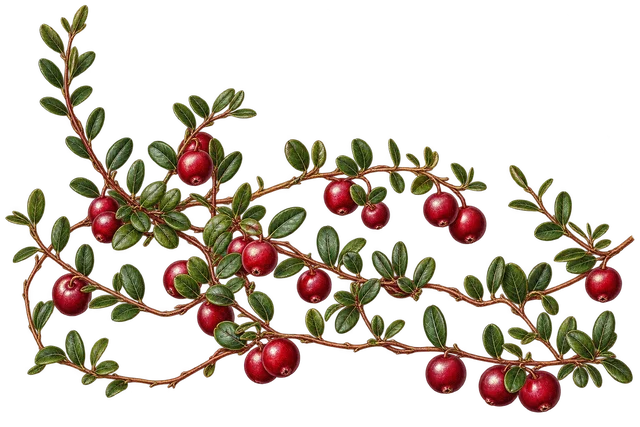
The tart American cranberry fruit, Vaccinium macrocarpon, commonly sold fresh, dried, as sauce or in juice products. Other species also bear the name cranberry; product identity matters.
Ingredient details, preparation and research
Also known as: American cranberry; Large cranberry
Source plant or material
Vaccinium macrocarpon, a low-growing North American cranberry plant.
Plant family / material: Ericaceae (heath family)
Forms and route
Fresh or frozen berries, cooked sauce, dried fruit and juice. Dried cranberries are often sweetened; juice drinks may be blends or contain added sugar.
Vitamins and minerals
Whole fruit contains fiber and carbohydrate. Juice, jellied sauce and sweetened dried fruit differ substantially from fresh berries; added vitamin C or sugar should be checked on the product label.
Absorption and preparation
PAC concentrations vary among processed products. A cranberry food serving cannot be converted into an extract dose from the fruit’s name alone, and this card supplies no absorption or urinary-prevention dose.
Practical preparation
Refrigerate fresh berries and wash before cooking or eating. Select firm fruit and discard shriveled or spoiled berries. Follow the complete tested process for any shelf-stable preserve.
Food notes
Ripe fruit. Leaves and standardized cranberry extracts are different materials.
Combination context
Tart cranberry works in sweet baking and savory meat or stew preparations. Sweeteners change the finished dish’s composition; they are a taste choice rather than an absorption requirement.
Traditional and reported uses
- Cook into a tart sauce or add to savory foods and baked goods.
- Use dried cranberries in mixed snacks, checking the label for added sugar.
- Juice and mixed-fruit preserves offer other culinary forms.
Contraindications and cautions
- Do not use cranberry foods or supplements to delay diagnosis or treatment of a suspected urinary tract infection.
- Warfarin interaction evidence is conflicting; ask your prescriber before starting regular cranberry supplements or a therapeutic juice regimen.
- Very large amounts may cause stomach upset or diarrhea.
Similar items and how they compare
- Blueberries
Related Vaccinium food fruits.
Different flavor and composition; cranberry-specific evidence is not transferable.
- Cranberry extract
Prepared from the same fruit.
A concentrated product with variable PAC content and separate dosing and interaction questions.
- Cranberry juice cocktail
A familiar cranberry beverage.
May contain other juices and added sugar and is not nutritionally interchangeable with whole berries.
Fruit identity
Kew accepts V. macrocarpon in Ericaceae and places its native range in eastern North America. The card concerns that fruit rather than all products sold under the broad cranberry name.
Prevention is a separate question from treatment
NCCIH reports possible benefit against recurrent symptomatic UTIs in some women, with inconsistent findings across products and populations. It does not recommend cranberry to treat an existing UTI.
Read the form and label
Illinois Extension distinguishes fresh berries, sweetened dried fruit, juice and sauce. Whole-fruit fiber and a beverage’s added ingredients must be evaluated separately.
Evidence limits
- Nutrition is qualitative; no USDA serving calculation or quantitative nutrient profile is asserted.
Entry sources
- Kew Plants of the World Online: Vaccinium macrocarpon Aiton
- NCCIH: Cranberry, usefulness and safety
- Illinois Extension: Bounceberry, Cranberry
- UMass Amherst: From Cranberry Bog to Table
- UMass Amherst: Chasing Color
- Utah State University Extension: Everything Cranberry
Reference entry 169 · Recorded content review: 2026-10-07 · Review scope and dates