


Key cautions
- Capsaicin can irritate skin, eyes, the digestive tract and airways. Wear gloves, ventilate and avoid touching the face.
- Do not use concentrated extracts, homemade skin applications or extreme-heat challenges as substitutes for culinary use.
What’s inside
Capsaicinoids, including capsaicin, produce the heat sensation; fruit also contains water, carbohydrate and plant pigments.
Uses in brief

- Salsa seasoning
- Sauces
- Soup or stew
History, folklore and reported uses
History, folklore and traditional uses
NC State describes Capsicum chinense as a South American pepper species whose fruit now travels widely as a spice. The species name does not establish a Chinese origin, and its many cultivars are not one uniform heat level.
Oregon State Extension places habanero among garden peppers and describes multiple kitchen uses for chile fruit. These practical applications explain its place in a food notebook without borrowing therapeutic claims from manufactured capsaicin medicines.
Traditional, historical and reported uses
- Salsa seasoning
Food or household practiceWhy this label?
The claim documents salsa seasoning as a culinary, craft, gardening, or practical material use; it reports neither a treatment outcome nor measured nutrient content.
Oregon State identifies salsa as a pepper use; habanero should be added with particular attention to heat.
- Sauces
Food or household practiceWhy this label?
The claim documents sauces as a culinary, craft, gardening, or practical material use; it reports neither a treatment outcome nor measured nutrient content.
Chile fruit seasons sauces; commercial products have their own salt and sugar profile.
- Soup or stew
Food or household practiceWhy this label?
The claim documents soup or stew as a culinary, craft, gardening, or practical material use; it reports neither a treatment outcome nor measured nutrient content.
The Extension guide includes peppers in soups and stews.
- Stir-fry flavoring
Food or household practiceWhy this label?
The claim documents stir-fry flavoring as a culinary, craft, gardening, or practical material use; it reports neither a treatment outcome nor measured nutrient content.
Small amounts can season a stir-fry, with good ventilation during cooking.
- Dried spice
Food or household practiceWhy this label?
The claim documents dried spice as a culinary, craft, gardening, or practical material use; it reports neither a treatment outcome nor measured nutrient content.
NC State identifies the fruit as suitable for drying; dried chile remains strongly irritating.
Five distinct culinary applications are documented; these are food practices, not five medicinal indications.
Identity & detailed reference
Identity
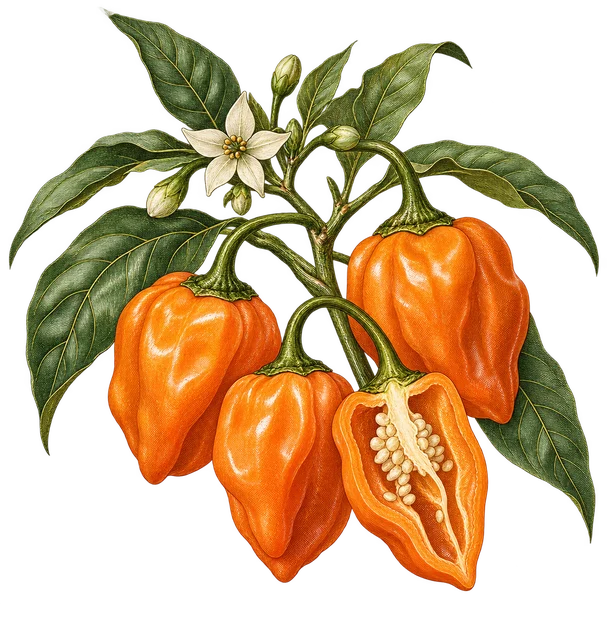
A highly pungent culinary chile fruit of Capsicum chinense; other cultivars in that species can differ greatly in heat.
Ingredient details, preparation and research
Also known as: habanero chile
Source plant or material
Capsicum chinense Jacq., habanero cultivars; A highly pungent culinary chile fruit of Capsicum chinense; other cultivars in that species can differ greatly in heat.
Plant family / material: Solanaceae
Forms and route
Fresh ripe or unripe fruit, dried chile and food sauces; concentrated capsaicin extracts are separate products.
Vitamins and minerals
The small amount used for seasoning should not be treated as a vitamin supplement. Finished sauces may contain substantial salt or sugar; use the product label.
Absorption and preparation
Capsaicin’s burning sensation reflects sensory nerve stimulation, not proof that food is cleansing the body or increasing nutrient absorption.
Practical preparation
Wear gloves while cutting, avoid the face and eyes, and ventilate cooking areas. Add cautiously to a dish rather than treating heat tolerance as a challenge.
Combination context
Combine small amounts with other foods for the desired flavor. Dilution within a dish is a cooking choice, not a medical neutralization protocol.
Traditional and reported uses
- Oregon State identifies salsa as a pepper use; habanero should be added with particular attention to heat.
- Chile fruit seasons sauces; commercial products have their own salt and sugar profile.
- The Extension guide includes peppers in soups and stews.
- Small amounts can season a stir-fry, with good ventilation during cooking.
- NC State identifies the fruit as suitable for drying; dried chile remains strongly irritating.
Contraindications and cautions
- Capsaicin can irritate skin, eyes, the digestive tract and airways. Wear gloves, ventilate and avoid touching the face.
- Do not use concentrated extracts, homemade skin applications or extreme-heat challenges as substitutes for culinary use.
- For shelf-stable salsa, follow a tested recipe and its required acidity; do not improvise preservation from this card.
Similar items and how they compare
- Scotch bonnet
Often another Capsicum chinense cultivar group.
Shape and flavor vary; do not assume identical heat.
- Horseradish
Both add pungency.
Horseradish is a root with isothiocyanate-driven pungency, not chile capsaicin.
Food identity and preparation
Fresh ripe or unripe fruit, dried chile and food sauces; concentrated capsaicin extracts are separate products. Wear gloves while cutting, avoid the face and eyes, and ventilate cooking areas. Add cautiously to a dish rather than treating heat tolerance as a challenge.
Nutrition and evidence limits
The small amount used for seasoning should not be treated as a vitamin supplement. Finished sauces may contain substantial salt or sugar; use the product label. Capsaicin’s burning sensation reflects sensory nerve stimulation, not proof that food is cleansing the body or increasing nutrient absorption.
Evidence limits
- Nutrient information is qualitative; no unverified USDA food code, portion or numerical analysis is supplied.
- Culinary history does not establish a treatment effect. No medicinal dose is proposed.
Entry sources
- NC State Extension Plant Toolbox: Capsicum chinense
- Oregon State University Extension: Peppers
- National Capital Poison Center: Capsaicin, when the chili is too hot
- Penn State Extension: Ingredients Used in Home Food Preservation
Reference entry 165 · Recorded content review: 2026-10-07 · Review scope and dates