


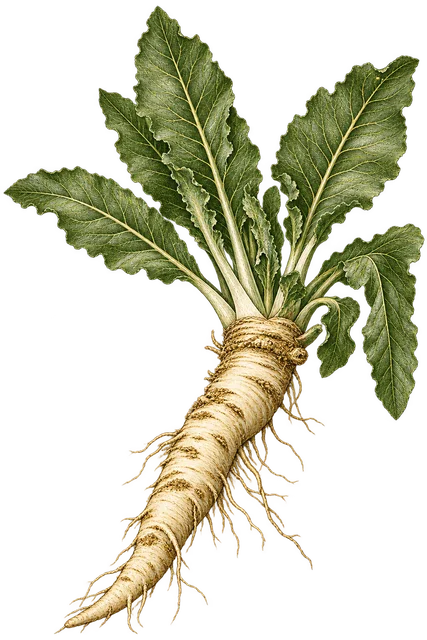
Key cautions
- Grating can irritate eyes and airways; ventilate and avoid touching your eyes.
- Prepared horseradish is refrigerated food, not an improvised room-temperature preserve or a home sinus treatment.
What’s inside
Glucosinolates including sinigrin; cutting releases enzymes that form pungent isothiocyanates.
Uses in brief

- Grated table condiment
- Creamy sandwich spread
- Seafood cocktail sauce
History, folklore and reported uses
History, folklore and traditional uses
University of Missouri’s historical account follows horseradish from European condiment use to colonial North America and later commercial Midwestern farms. It describes a root especially valued beside beef and oysters.
Minnesota Extension distinguishes refrigerated grated root from dried powder, while Illinois Extension’s food discussion includes sandwich sauce and seafood cocktail sauce. The culinary record is ample without turning the sharp nasal sensation into a promise of medical benefit.
Traditional, historical and reported uses
- Grated table condiment
Food or household practiceWhy this label?
Grated root used as a table condiment.
Prepared root accompanies foods such as beef in the Missouri account.
- Creamy sandwich spread
Food or household practiceWhy this label?
Root combined with mayonnaise as a sandwich spread.
Illinois Extension describes combining horseradish with mayonnaise on sandwiches.
- Seafood cocktail sauce
Food or household practiceWhy this label?
Root used in seafood cocktail sauce.
The Extension discussion identifies cocktail sauce as another culinary use.
- Dried seasoning
Food or household practiceWhy this label?
Dried ground root used as a seasoning.
Minnesota Extension describes dried, ground root as a longer-keeping seasoning form.
- Edible leafy greens
Food or household practiceWhy this label?
Leaves used as edible greens.
The Missouri account notes that leaves are edible, although root production is the principal crop use.
Five distinct culinary applications are documented; these are food practices, not five medicinal indications.
Regional reading paths
These sourced notes describe cultivation, trade, food traditions or material history. A regional connection does not claim exclusive origin.
Europe
Cultivated and traditional processing: Polish cucumber ferments and central-European condiments.
Grated root supplies pungency; root also seasons traditional cucumber brines.
Identity & detailed reference
Identity
The pungent edible root of horseradish, usually grated into a condiment.
Ingredient details, preparation and research
Also known as: horseradish root
Source plant or material
Armoracia rusticana P.Gaertn., B.Mey. & Scherb.; The pungent edible root of horseradish, usually grated into a condiment.
Plant family / material: Brassicaceae
Forms and route
Fresh root; prepared grated root with vinegar; cream-style sauces and dried powder. The plant is separate from wasabi.
Vitamins and minerals
Horseradish is generally eaten as a small flavoring portion. Cream, mayonnaise, salt or sugar in a prepared sauce can matter more nutritionally than the root itself.
Absorption and preparation
Grating initiates the chemical reaction responsible for pungency; that is not evidence of enhanced nutrient absorption or treatment of infection.
Practical preparation
Peel and grate in a well-ventilated space, avoiding eyes and direct inhalation. Follow a reliable preparation recipe and keep prepared root refrigerated.
Combination context
Vinegar affects development of the pungent flavor. Mixing prepared root with a creamy food moderates the overall intensity; this is a flavor choice.
Traditional and reported uses
- Prepared root accompanies foods such as beef in the Missouri account.
- Illinois Extension describes combining horseradish with mayonnaise on sandwiches.
- The Extension discussion identifies cocktail sauce as another culinary use.
- Minnesota Extension describes dried, ground root as a longer-keeping seasoning form.
- The Missouri account notes that leaves are edible, although root production is the principal crop use.
Contraindications and cautions
- Grating can irritate eyes and airways; ventilate and avoid touching your eyes.
- Prepared horseradish is refrigerated food, not an improvised room-temperature preserve or a home sinus treatment.
Similar items and how they compare
- Wasabi
Both can deliver mustard-like pungency.
True wasabi is Eutrema japonicum, a different species.
- Habanero
Both produce a hot sensation in food.
Chile heat comes mainly from capsaicinoids rather than horseradish isothiocyanates.
Food identity and preparation
Fresh root; prepared grated root with vinegar; cream-style sauces and dried powder. The plant is separate from wasabi. Peel and grate in a well-ventilated space, avoiding eyes and direct inhalation. Follow a reliable preparation recipe and keep prepared root refrigerated.
Nutrition and evidence limits
Horseradish is generally eaten as a small flavoring portion. Cream, mayonnaise, salt or sugar in a prepared sauce can matter more nutritionally than the root itself. Grating initiates the chemical reaction responsible for pungency; that is not evidence of enhanced nutrient absorption or treatment of infection.
Evidence limits
- Nutrient information is qualitative; no unverified USDA food code, portion or numerical analysis is supplied.
- Culinary history does not establish a treatment effect. No medicinal dose is proposed.
Entry sources
- University of Minnesota Extension: Growing horseradish
- University of Missouri: Horseradish, July 2011, pages 54–55
- Illinois Extension Good Growing episode 169: Horseradish culinary discussion
Reference entry 164 · Recorded content review: 2026-10-07 · Review scope and dates