


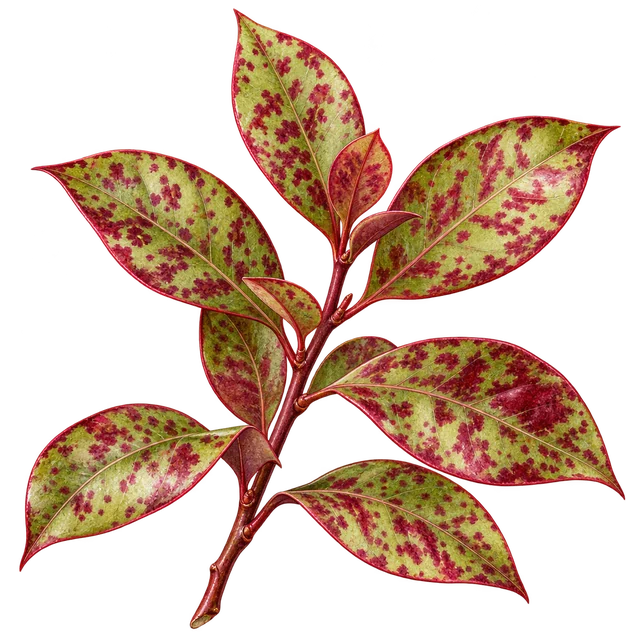
Key cautions
- The leaf is pungent and can irritate; do not apply to eyes, mucosa or wounds.
- Food seasoning is not a substitute for diagnosing or treating fungal infection.
What’s inside
Polygodial contributes the burning, pungent flavour. Finding an antifungal compound in a leaf is not evidence that an ordinary food portion treats infection.
Uses in brief

- Peppery leaf seasoning
- Flavoured culinary preparations
History, folklore and reported uses
History, folklore and traditional uses
Te Ara distinguishes horopito from kawakawa and describes its peppery character. Contemporary Māori food accounts show ongoing culinary adaptation, which can be acknowledged without claiming that every modern recipe is ancient.
Traditional, historical and reported uses
- Peppery leaf seasoning
Food or household practiceWhy this label?
Sources document this named food or material use; no therapeutic outcome is claimed.
Horopito supplies pungent flavour in modern Māori cuisine. The identity is the leaf ingredient, not an equivalent replacement dose for black pepper or kava.
- Flavoured culinary preparations
Food or household practiceWhy this label?
Sources document this named food or material use; no therapeutic outcome is claimed.
The modern-cuisine account records native-leaf flavouring in prepared foods. Professional food infusions remain different from essential oils or medicinal extracts.
2 narrowly supported uses; no clinical efficacy or universal preparation is inferred.
Historical-use additions reviewed 2026-10-09
Regional reading paths
These sourced notes describe cultivation, trade, food traditions or material history. A regional connection does not claim exclusive origin.
Australia & Oceania
native; New Zealand
Peppery aromatic leaf.
Identity & detailed reference
Identity
Pseudowintera colorata; horopito culinary leaf, not lowland P. axillaris, kawakawa or a standardized antifungal extract.
Ingredient details, preparation and research
Source plant or material
Pseudowintera colorata; horopito culinary leaf, not lowland P. axillaris, kawakawa or a standardized antifungal extract.
Plant family / material: Winteraceae
Forms and route
Identified fresh/dried food leaves, seasoning and professionally prepared infused food products.
Vitamins and minerals
No medicinal or micronutrient dose is assigned to a small seasoning quantity. Oil infusions have the carrier oil’s food profile as well as extracted flavour.
Absorption and preparation
Culinary infusion and laboratory extraction recover different mixtures; a flavourful dish does not establish delivery of a tested therapeutic exposure.
Practical preparation
Use a food-labeled ingredient in an established recipe. Do not place raw leaves on sensitive tissue or make a medicinal infusion from an unidentified pepper tree.
Traditional and reported uses
- Horopito supplies pungent flavour in modern Māori cuisine. The identity is the leaf ingredient, not an equivalent replacement dose for black pepper or kava.
- The modern-cuisine account records native-leaf flavouring in prepared foods. Professional food infusions remain different from essential oils or medicinal extracts.
Contraindications and cautions
- The leaf is pungent and can irritate; do not apply to eyes, mucosa or wounds.
- Food seasoning is not a substitute for diagnosing or treating fungal infection.
Pungency and pharmacology differ
Te Ara identifies polygodial as a taste-associated compound with laboratory biological properties. A constituent’s activity does not establish a treatment benefit from eating the leaf; no antifungal regimen is proposed.
Sensory study boundaries
Primary sensory research tested defined preparations sourced for the study. It can inform flavour description, but does not certify arbitrary wild material, concentrations or home extraction methods.
Evidence limits
This is a food/material reference, not evidence of disease treatment. Geographic and customary-use records do not establish a medicinal dose. Nutrient quantities are omitted unless a matching food form and serving have been verified.
Entry sources
- Te Ara: Pepper trees, horopito and kawakawa
- Te Ara: Horopito and polygodial
- Charles Royal and Jenny Kaka-Scott, Te Ara: Modern Māori cuisine
- Primary sensory study: Characterizing the Flavor of New Zealand Native Plants
Reference entry 501 · Recorded content review: 2026-10-09 · Review scope and dates