


Key cautions
- Do not identify a commercial guggul product as the biblical material simply because it is also called bdellium.
- Manna’s comparison with bdellium is about appearance; it does not make bdellium a food or establish medicinal use.
- Oral guggul products can cause gastrointestinal symptoms and rash; contact dermatitis has also been reported with guggul-containing skin creams. Stop use and seek medical advice if a reaction develops. These warnings concern identified modern products, not a tested ancient substance.
- Ask a pharmacist or clinician before taking guggul with medicines. Laboratory evidence suggests effects on CYP3A4, an enzyme that processes many drugs, which could change drug exposure; this is a potential interaction, not a proven effect for every medicine or product.
What’s inside
No verified chemical profile for biblical bdellium. Guggulsterones or other compounds from modern Commiphora preparations must not be attributed to the biblical material by name alone.
Brown–Driver–Briggs: bedolach (Bible Hub transcription) · Sarup et al. (2015): Pharmacology and Phytochemistry of Oleo-Gum Resin of Commiphora wightii
A modern resin’s constituents
Guggulu is the bark exudate of Commiphora wightii, also published as C. mukul. Its oleo-gum resin contains an aromatic oil fraction as well as other resin and gum constituents. A phytochemical review reports isolated E- and Z-guggulsterones and guggulsterols, alongside terpenoids and carbohydrates. These are findings about a named modern resin, not a chemical reconstruction of biblical bdellium.
Sarup et al. (2015): Pharmacology and Phytochemistry of Oleo-Gum Resin of Commiphora wightii
Resin, extract and isolated compound
Raw resin, processed Ayurvedic preparations, solvent extracts and isolated guggulsterones are different materials. A standardized extract’s stated composition applies to that product. The presence of plant compounds with a steroid chemical structure alone establishes neither a human hormonal benefit nor a safe dose.
Sarup et al. (2015): Pharmacology and Phytochemistry of Oleo-Gum Resin of Commiphora wightii · Szapary et al. (2003): Guggulipid for the Treatment of Hypercholesterolemia
Uses in brief

- A valued material in the description of Havilah and a visual comparison for manna.
- Classical bdellium had an aromatic-resin trade history, which may or may not refer to the same substance.
In the King James Bible
In the King James Bible
Uncertain botanical connection
Genesis lists bdellium as a product of Havilah; Numbers compares manna’s appearance with it. The passages leave the material’s nature unresolved; resin is one longstanding interpretation.
And the gold of that land is good: there is bdellium and the onyx stone.
Genesis 2:12 (KJV)
And the manna was as coriander seed, and the colour thereof as the colour of bdellium.
Numbers 11:7 (KJV)
Scripture and identification sources
- King James Bible: Genesis 2:12
- King James Bible: Numbers 11:7
- Project Gutenberg: The King James Version of the Bible, ebook 10
- Jastrow and Benzinger: Bdellium, Jewish Encyclopedia (1901–1906)
- Kew Medicinal Plant Names Services: bdellium
- Pliny, Natural History, Book XII, chapters 19 and 35, Bostock and Riley translation; Perseus Digital Library
Words & their stories
WORDS & THEIR STORIES
The name behind the KJV
Biblical Hebrew · Genesis 2:12; Numbers 11:7 (KJV)
הַבְּדֹלַחhabbədōlaḥ
The material called bdellium, named in Havilah and used to describe manna’s appearance.
Dictionary form: בְּדֹלַח · bədōlaḥ
Ha- is the definite article. Both verses use the same form.
What the language reveals
A visual comparison
Numbers compares manna’s appearance with bdellium; it does not say manna contains it. Genesis names the material beside gold and onyx.
An old uncertainty
Brown–Driver–Briggs records resin, pearl and crystal-related interpretations in the translation history. The Hebrew name alone cannot settle which substance was intended.
A fragrant gum is a traditional interpretation, not a secure identification of Commiphora wightii, guggul extract or one mineral.
Language and identification bibliography
History, folklore and reported uses
A material remembered through comparison
Bdellium appears first in the geography surrounding Eden, beside the good gold of Havilah and the onyx stone. It reappears when the wilderness food manna is described. A writer could use it as a comparison because its appearance was presumably intelligible to the intended audience; that familiarity has not survived intact for later readers. The two passages give a precious-material setting and a visual clue, but neither says that bdellium was eaten, burned or used to heal.
King James Bible: Genesis 2:12 · King James Bible: Numbers 11:7 · Pliny, Natural History, Book XII, chapters 19 and 35, Bostock and Riley translation; Perseus Digital Library · Jastrow and Benzinger: Bdellium, Jewish Encyclopedia (1901–1906) · Kew Medicinal Plant Names Services: bdellium · Genesis 2:11–12, Hebrew and English (Mechon-Mamre) · Numbers 11:7–9, Hebrew and English (Mechon-Mamre) · Pliny, Natural History XII.19, sections 35–36 (Rackham translation)
Resin, stone and the history of a name
Ancient and later interpreters took different paths through the puzzle. Some associated the name with a stone or pearl, while Greek and Roman writers described a fragrant resin called bdellium. Pliny discussed its quality, trade and adulteration in his account of aromatic trees. Modern botanical naming adds another layer: Kew records “bdellium” against several Commiphora species. Those histories help explain why a resin is plausible, but a familiar trade name is not enough to turn the biblical object into today’s Indian guggul.
King James Bible: Genesis 2:12 · King James Bible: Numbers 11:7 · Pliny, Natural History, Book XII, chapters 19 and 35, Bostock and Riley translation; Perseus Digital Library · Jastrow and Benzinger: Bdellium, Jewish Encyclopedia (1901–1906) · Kew Medicinal Plant Names Services: bdellium · Genesis 2:11–12, Hebrew and English (Mechon-Mamre) · Numbers 11:7–9, Hebrew and English (Mechon-Mamre) · Pliny, Natural History XII.19, sections 35–36 (Rackham translation)
A valued product of Havilah
Genesis 2:12 places bdellium among the notable products of Havilah, beside good gold and onyx. Its role is to help describe the richness of the land.
A comparison for manna
Numbers 11:7 uses bdellium to describe manna’s appearance. The literary comparison does not imply that the two were the same substance or both edible.
Classical aromatic commerce, separately identified
Pliny’s bdellium was a traded aromatic resin whose qualities and adulteration mattered to buyers. This is evidence for the classical name’s use, not proof of the biblical identification.
Pliny, Natural History, Book XII, chapters 19 and 35, Bostock and Riley translation; Perseus Digital Library · Pliny, Natural History XII.19, sections 35–36 (Rackham translation)
Why translations differ
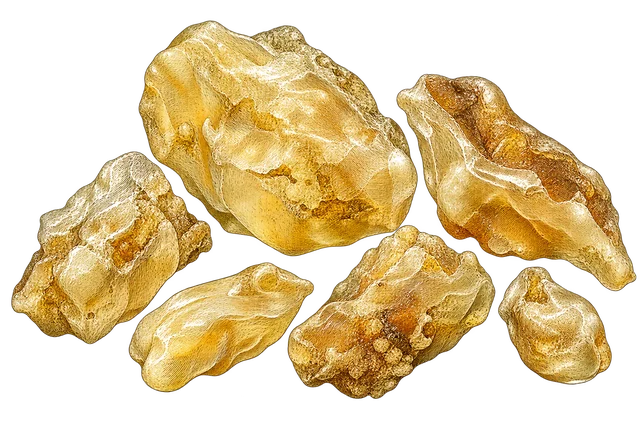
Brown–Driver–Briggs treats the Hebrew bedolach as uncertain. Its translation history includes a crystal reading in the Greek version of Numbers, pearl interpretations and a fragrant, translucent gum. These alternatives are historical interpretations, not laboratory identifications. A drawing of resin tears illustrates one possibility only.
Brown–Driver–Briggs: bedolach (Bible Hub transcription) · Jastrow and Benzinger: Bdellium, Jewish Encyclopedia (1901–1906)
A separate Ayurvedic tradition
The modern C. wightii resin has an Ayurvedic history of use for joint and inflammatory complaints and disorders described as obesity or disturbed lipid metabolism. Processing practices and combination formulas belong to that tradition; they do not establish what the biblical writers meant or prove a clinical benefit.
Sarup et al. (2015): Pharmacology and Phytochemistry of Oleo-Gum Resin of Commiphora wightii
What one modern extract trial found
In an eight-week randomized, double-blind trial, 103 US adults with high cholesterol received oral guggulipid or placebo. The extract was labelled as standardized to 2.5% guggulsterones. Average LDL cholesterol rose by about 4–5% in the extract groups while falling about 5% with placebo; six extract recipients developed hypersensitivity rash. This short trial concerns its particular product and population, not every resin or preparation. Clinical evidence overall is mixed, so traditional use and laboratory mechanisms should not be presented as reliable cholesterol treatment.
Szapary et al. (2003): Guggulipid for the Treatment of Hypercholesterolemia · Memorial Sloan Kettering: Guggul
What the two verses establish
The name occurs in a resource list and a comparison. Neither verse provides botanical features, a medicinal indication or a manufacturing method.
King James Bible: Genesis 2:12 · King James Bible: Numbers 11:7
Why the resin identification remains qualified
Historical interpretations include precious stones and pearls as well as resin. The Jewish Encyclopedia records this disagreement, alongside the resin descriptions of classical authors.
Jastrow and Benzinger: Bdellium, Jewish Encyclopedia (1901–1906)
Modern bdellium is not a single specification
Kew’s medicinal-name records associate bdellium with Commiphora africana, C. kataf and C. wightii. A modern label therefore requires its own species and plant-part identification even before considering biblical connections.
Identity & detailed reference
Identity
An uncertain material named in Genesis and used to describe manna in Numbers. Aromatic resin is a longstanding interpretation, but pearl, crystal and other precious-material readings also occur in historical scholarship.
Ingredient details, preparation and research
Also known as: Bedolach (transliteration); Bdellion (classical related name)
Source plant or material
Possibly a gum-resin; the Bible does not identify its tree, and even its botanical nature is debated.
Plant family / material: Unresolved for the biblical material; the modern Commiphora resin candidates belong to Burseraceae.
Forms and route
Biblical material of uncertain form; later classical and modern “bdellium” may refer to fragrant gum-resins. Modern resin tears or guggul supplements are not authenticated biblical bdellium.
Vitamins and minerals
This is a historical-material entry, not a dietary recommendation. The biblical name supplies no dependable modern food identity, serving size or vitamin/mineral values.
Absorption and preparation
No absorption guidance or medicinal dose is assigned to this uncertain ancient material. A modern product would require its own verified identity, preparation and safety assessment.
Traditional and reported uses
- A valued material in the description of Havilah and a visual comparison for manna.
- Classical bdellium had an aromatic-resin trade history, which may or may not refer to the same substance.
Contraindications and cautions
- Do not identify a commercial guggul product as the biblical material simply because it is also called bdellium.
- Manna’s comparison with bdellium is about appearance; it does not make bdellium a food or establish medicinal use.
- Oral guggul products can cause gastrointestinal symptoms and rash; contact dermatitis has also been reported with guggul-containing skin creams. Stop use and seek medical advice if a reaction develops. These warnings concern identified modern products, not a tested ancient substance.
- Ask a pharmacist or clinician before taking guggul with medicines. Laboratory evidence suggests effects on CYP3A4, an enzyme that processes many drugs, which could change drug exposure; this is a potential interaction, not a proven effect for every medicine or product.
Similar items and how they compare
- Guggul
Indian bdellium is a modern common name associated with guggul.
A modern Commiphora wightii preparation is not a secure identification of biblical bedolach.
- Myrrh
Classical bdellium was discussed among fragrant resins.
Similar trade descriptions do not establish an identical source or composition.
Evidence limits
- Ancient names do not provide a verified modern species or product specification.
- Historical practice is recorded as history and does not establish present-day medical benefit or safety.
Entry sources
- Jastrow and Benzinger: Bdellium, Jewish Encyclopedia (1901–1906)
- Kew Medicinal Plant Names Services: bdellium
- Pliny, Natural History, Book XII, chapters 19 and 35, Bostock and Riley translation; Perseus Digital Library
- King James Bible: Genesis 2:12
- King James Bible: Numbers 11:7
- Project Gutenberg: The King James Version of the Bible, ebook 10
Reference entry 116 · Recorded content review: 2026-10-06 · Review scope and dates