


Key cautions
- Use identified food-grade flowers for tea; medicinal use is not recommended in pregnancy/breastfeeding or below age 12.
- Avoid lavender allergy and damaged skin; homemade water preparations are not shelf-stable cosmetics.
- If stress or sleep symptoms persist or worsen while using a medicinal flower preparation, consult a qualified healthcare professional rather than continuing self-treatment indefinitely.
- Flower tinctures can contain ethanol. Check the finished product’s alcohol labeling and suitability; a tincture is not an alcohol-free substitute for tea.
- The German lavender-flower bath record reviewed by EMA lists major skin injuries, acute skin disease, severe fever or infection, heart failure and high blood pressure as contraindications to medicinal baths. These precautions concern full-bath use, not culinary seasoning.
What’s inside
The flower carries both an aromatic volatile fraction and nonvolatile plant compounds. A cup of water extracts a different mixture from alcohol or steam distillation.
EMA: Final assessment of lavender flowers and oil, 2012
Aroma and nonvolatile compounds
Linalool and linalyl acetate are prominent in lavender’s aromatic oil. The flowers also contain flavonoids, tannins, phenolic acids including rosmarinic acid, and the coumarin derivatives umbelliferone and herniarin. These are constituent identifications, not a measured dose in a household cup.
Constituents and laboratory evidence
Whole flowers contain both volatile aroma compounds and nonvolatile phenolics. A laboratory study of flower decoctions found that drying method altered the extracted phenolic profile. Antioxidant measurements in a test tube do not establish anti-aging, eczema, infection or scalp-treatment benefits in people.
EMA: Final assessment of lavender flowers and oil, 2012 · Falla et al., 2022: Drying and phenolic composition of lavender flower decoctions
Absorption and nutrients
There is no established cup-for-capsule conversion or optimal food pairing. No dependable nutrient calculation for a culinary pinch or a strained flower infusion was verified; essential-oil percentages are not vitamin or mineral values. A skin wash makes no contribution to dietary nutrient intake.
Falla et al., 2022: Drying and phenolic composition of lavender flower decoctions · NCCIH: Lavender, updated February 2025
Uses in brief

- Traditional flower tea for mild stress and sleep support.
- Floral food seasoning, fragrant sachets and scented bath/body-care traditions.
History, folklore and reported uses
Plant, family and identity
Lavandula angustifolia belongs to Lamiaceae, the mint family. The flower drug and distilled oil have separate identities. Check the botanical name: common names such as French or English lavender can be used inconsistently, and lavandin or spike lavender should not be silently substituted.
Kew: English lavender, Lavandula angustifolia, family and uses · EMA: Final assessment of lavender flowers and oil, 2012
Traditional uses and preparation
The EMA flower monograph recognizes oral tea and a specified tincture for mild stress/exhaustion and sleep support on the basis of long-standing use. Use a labeled tea preparation and strain it; food-grade flowers can also season foods. This is a traditional-use classification, not proof of treating an anxiety disorder.
Culinary flowers and exact edible part
For culinary use, specify food-grade Lavandula angustifolia flowers and use sparingly because the perfume can become bitter or overwhelming. Culinary sugar or baked-good flavoring is separate from medicinal tea and essential oil. Do not substitute craft lavender, fragrance oil, lavandin or another lavender species without its own food specification. Tiny flavoring portions are not a meaningful vitamin serving.
Royal Horticultural Society: Edible flowers · University of Minnesota Extension: Edible flowers
Working with flavor
For even distribution in baking, culinary buds can be ground with a little sugar. Paola Legarre describes floral cultivars in tea blends, spice-toned cultivars with chili, and minty Folgate with cocoa. These are flavor pairings, not combinations shown to improve medicinal absorption.
Paola Legarre, Herb Society of America (2025): Lavender in the Kitchen
Mediterranean origins and scented households
English lavender is Mediterranean in origin, a fragrant shrub of sunlit, rocky places that became thoroughly at home in gardens farther north. Its name and scent have long linked it with washing and cleanliness. Kew records Louis XIV’s fondness for lavender-scented baths and describes its passage into foods, perfumes and household fragrance. Dried flowers carry that history in a particularly simple form: the plant’s scent survives after the flowering season has passed.
Kew: English lavender, Lavandula angustifolia, family and uses · EMA: Final assessment of lavender flowers and oil, 2012
The European flower-medicine tradition
Alongside the fragrant household plant grew a medicinal tradition of easing restlessness, mental strain and sleeplessness. The EMA’s historical assessment recognizes a longstanding European use of the flowers for those purposes, as well as a separate history for distilled oil. A flower infusion, a scented bath and a manufactured oil preparation each express a different way of using lavender. The story becomes clearer when those forms stay distinct, and when the label names Lavandula angustifolia rather than assuming every lavender species has inherited exactly the same uses.
EMA: Final assessment of lavender flowers and oil, 2012 · EMA: Final lavender flower monograph, 2012
Restlessness and sleep
European herbal practice used lavender-flower infusions for mild mental strain, restlessness and sleeplessness. The dried flowers kept their place in calming household teas.
Digestive wind and colic
Grieve’s 1931 herbal records lavender’s use to comfort digestion, including older flower conserves and later medicinal spirits. She describes the aromatic tradition for poor appetite, wind and colic.
Headache and faintness
NC State’s historical survey lists lavender for headache and nervous complaints; Grieve records flower-derived medicinal spirits for faintness and giddiness. These belong to an older household nervine and restorative tradition.
NC State Extension: Lavender, historical uses · Maud Grieve, A Modern Herbal (1931): Lavenders
Local-pain compresses
Grieve’s 1931 herbal describes lavender-filled bags used as warm fomentations for local pain. This household external use placed the aromatic plant material in a compress, a different preparation from an oral flower tea.
Protecting household linens
NC State documents lavender’s household use against moths in linens and as a strewing herb in rooms. Dried fragrant plant material served a practical insect-deterring and deodorizing role beside the medicinal flower cupboard.
Flowers as a culinary seasoning
Writing for the Herb Society of America, grower and author Paola Legarre describes culinary lavender buds in sweet and savoury preparations, favouring Lavandula angustifolia cultivars for their flavour. This is a food-grade flower use, not a use of fragrance oil or decorative lavender.
Paola Legarre, Herb Society of America (2025): Lavender in the Kitchen
Regional reading paths
These sourced notes describe cultivation, trade, food traditions or material history. A regional connection does not claim exclusive origin.
Europe
Cultivated and traditional processing: southern France and European dried-flower preparations.
Dried aromatic flowers for sachets and labelled products; not equivalent to essential oil.
Identity & detailed reference
Identity
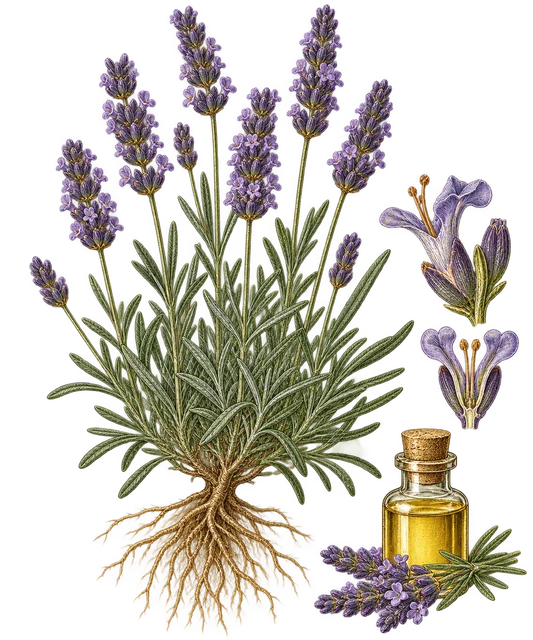
Lavandula angustifolia Mill.; flowers, usually the dried flower drug. Lavandin (L. × intermedia), spike lavender (L. latifolia) and Spanish lavender (L. stoechas) are distinct materials.
Ingredient details, preparation and research
Source plant or material
Lavandula angustifolia Mill.; fresh or dried flowers, with the medicinal flower drug defined as dried flowers.
Plant family / material: Lamiaceae (mint family).
Forms and route
Food-grade flowers for culinary flavor and tea; specified oral flower tinctures; fragrant flower bath preparations and dry sachets. Distilled essential oil, hydrosol and manufactured oral oil capsules are separate preparations.
Vitamins and minerals
Food-grade flowers are generally a small flavoring or are infused and strained. Reliable serving-specific micronutrient values were not verified. Do not describe lavender tea as a meaningful vitamin/mineral source or apply essential-oil composition to edible flowers; topical use supplies no dietary nutrients.
Absorption and preparation
Water infusion, alcoholic tincture and distillation extract different mixtures. Neither a stronger scent nor a longer steep establishes a predictable absorbed dose. No validated absorption-enhancing food pairing for ordinary lavender-flower tea was identified.
Food notes
For culinary use, specify food-grade Lavandula angustifolia flowers and use sparingly because the perfume can become bitter or overwhelming. Culinary sugar or baked-good flavoring is separate from medicinal tea and essential oil. Do not substitute craft lavender, fragrance oil, lavandin or another lavender species without its own food specification. Tiny flavoring portions are not a meaningful vitamin serving.
Traditional and reported uses
- Culinary and household use: floral flavor in food or tea, fragrant sachets, and scented washing/bathing traditions.
- European traditional medicine: flower tea or specified tincture for mild mental stress, exhaustion and settling for sleep.
- Traditional skin/body care: fragrant flower washes and baths for comfort. Clinical healing, anti-acne or hair-regrowth effects from a household flower infusion are not established.
- Small amounts of food-grade English-lavender flowers for culinary fragrance.
Contraindications and cautions
- Use correctly identified food/herbal-tea flowers for ingestion, not perfumed decorative material. Never replace them with drops of aromatherapy oil.
- Avoid with lavender allergy; a flower wash can also irritate skin. Do not use homemade infusions on wounds, burns, eyes or an inflamed scalp.
- EMA does not recommend medicinal flower preparations below age 12 or during pregnancy/breastfeeding. Ordinary culinary exposure is different.
- Medicinal preparations may impair alertness. Discuss use with sedating medicines and before surgery; additive sedation is a precaution, not a proven interaction for every cup of tea.
- A water infusion is not a preserved cosmetic. Prepare only what will be used promptly, discard leftovers, and do not add it to a stored cream or shampoo.
- If stress or sleep symptoms persist or worsen while using a medicinal flower preparation, consult a qualified healthcare professional rather than continuing self-treatment indefinitely.
- Flower tinctures can contain ethanol. Check the finished product’s alcohol labeling and suitability; a tincture is not an alcohol-free substitute for tea.
- The German lavender-flower bath record reviewed by EMA lists major skin injuries, acute skin disease, severe fever or infection, heart failure and high blood pressure as contraindications to medicinal baths. These precautions concern full-bath use, not culinary seasoning.
Similar items and how they compare
- Lavender essential oil
Same L. angustifolia source and some shared floral volatiles.
Distillation concentrates volatile molecules; flowers retain nonvolatile compounds and may be prepared as tea.
- Rosemary leaf
Another aromatic Lamiaceae herb used in food and traditional bath/body care.
Rosemary has a more camphoraceous volatile profile and different digestive and bath indications.
Skin and household tradition
Lavender has a long association with scented baths, washing and perfumery. Whole flowers can provide fragrance in a bath sachet or a labeled bath preparation. This preserves their body-care history without assigning the results of oil studies to a flower wash.
Human evidence and the capsule distinction
Human studies of manufactured oral lavender-oil products cannot establish equivalent benefit from flower tea. NCCIH describes flower-tea findings as preliminary. Neither those results nor mixed-oil scalp studies establish that a household flower rinse grows hair. The 1998 scalp trial’s authors, in their 1999 reply, describe alternating allocation, a predictable method that weakens the original claim of randomization.
Practical external use and storage
Choose a finished, labeled bath product for repeat use. If making a simple flower infusion for intact-skin fragrance, use clean utensils, cool and strain it before contact, use promptly and discard the remainder. This is a cautious hygiene approach, not a validated therapeutic recipe or preservation method. Do not add infusion to stored cosmetics.
Route-specific cautions
Avoid known lavender allergy. EMA medicinal flower guidance excludes children under 12 and does not recommend pregnancy/breastfeeding use; the label may warn about driving. Food seasoning is a different exposure. Discuss concentrated or regular medicinal use alongside sedatives and before surgery.
Similar items
The companion lavender-oil card explains the concentrated volatile fraction. Rosemary leaf is another aromatic mint-family food/bath herb, with a different chemistry and traditional role. Similar fragrance or plant family does not establish interchangeable preparations.
Entry sources
- EMA: Final lavender flower monograph, 2012
- EMA: Final assessment of lavender flowers and oil, 2012
- Kew: English lavender, Lavandula angustifolia, family and uses
- NCCIH: Lavender, updated February 2025
- Demasi et al., 2022: Drying and phenolic composition of lavender flower decoctions
- FDA: Microbiological safety and cosmetics
- Kew Plants of the World Online: Salvia rosmarinus Spenn.
- Hay et al., 1998: Mixed essential oils for alopecia areata, trial reported as randomized; see 1999 allocation clarification
- Hay and Ormerod (1999): Author reply clarifies alternating allocation in the 1998 alopecia trial
- Royal Horticultural Society: Edible flowers
- University of Minnesota Extension: Edible flowers
- Paola Legarre, Herb Society of America (2025): Lavender in the Kitchen
Reference entry 93 · Recorded content review: 2026-10-07 · Review scope and dates